“US Army Unveils Next-Gen FPV Bumblebee V2 Drone”
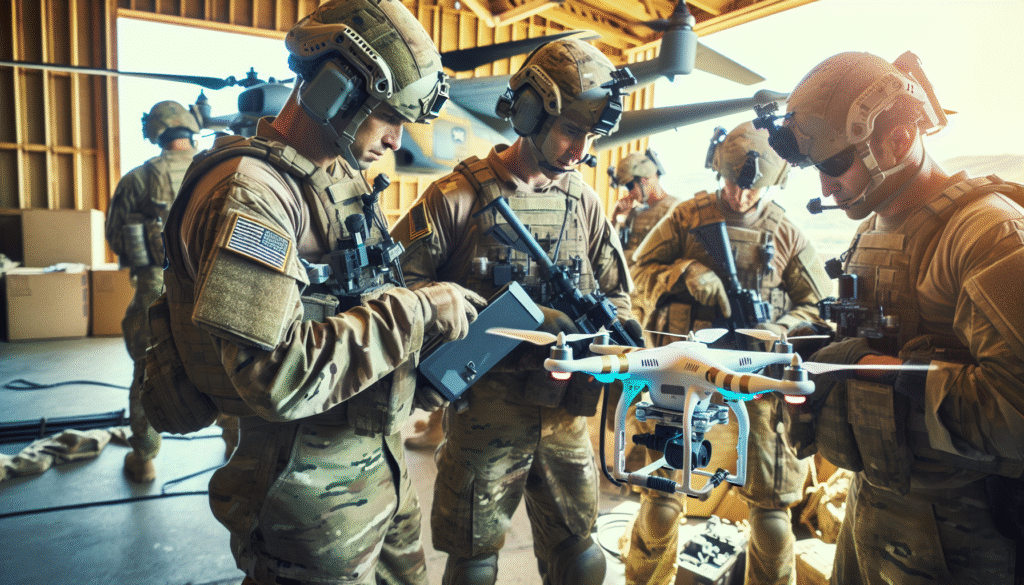
In a significant advancement in military technology, the U.S. Army is set to unveil its latest innovation in the realm of unmanned aerial vehicle (UAV) defense, as reported by Military Times in “US Army to Debut FPV Bumblebee V2 Drone Interceptor Next Month.” The development of the FPV Bumblebee V2 drone interceptor marks a pivotal step in enhancing the military’s capabilities to counter the increasing threat posed by hostile drones on the battlefield.
The FPV Bumblebee V2 is poised to address a critical need for efficient and rapid-response solutions to intercept and neutralize enemy drones that have become an ever-present challenge in modern combat scenarios. As drones continue to evolve and proliferate, so too does the technology required to mitigate their potential threats. The U.S. Army’s Department of Defense initiative to integrate this sophisticated drone interceptor reflects a commitment to staying ahead of adversarial technology curves.
First-person view (FPV) technology enhances the operator’s ability to maneuver the interceptor with unprecedented precision, facilitating a more agile and controlled pursuit of target drones. The Bumblebee V2 stands out for its lightweight design and advanced targeting systems, which enable it to swiftly engage and bring down rogue UAVs. This agile approach contrasts with earlier, more cumbersome systems, underscoring a trend in military strategies that prefer nimbleness and adaptability on the battlefield.
The unveiling of the FPV Bumblebee V2 is set against the backdrop of a global arms race in drone technology, spurred by conflicts where UAVs have played a transformative role. Military strategists and technology experts assert that innovative drone interceptors like the FPV Bumblebee V2 are crucial in maintaining a strategic advantage over potential adversaries who are investing heavily in drone capabilities.
The implications of this new technology extend beyond the immediate tactical advantages. The integration of FPV systems highlights a paradigm shift towards more operator-centered control mechanisms, potentially offering increased effectiveness in rapidly changing combat environments. By leveraging real-time data and immersive control features, the U.S. Army aims to enhance its defensive posture significantly.
As the U.S. Army gears up for the public debut of the FPV Bumblebee V2, military analysts and defense officials will no doubt be keenly watching how this new asset performs and what it will mean for the future of drone warfare. The competitive landscape of military technology continues to evolve rapidly, and developments like these are essential to ensuring that the U.S. military maintains its technological edge.
In these dynamic times, as emerging technologies redefine the possibilities of modern warfare, the introduction of systems like the FPV Bumblebee V2 serves as a reminder of the constant innovation required to safeguard national security interests. The coming months will be critical in evaluating the operational impact of this advanced interceptor as it becomes a fixture in the U.S. Army’s arsenal.