Trump’s Foreign Policy Recast as Interventionist
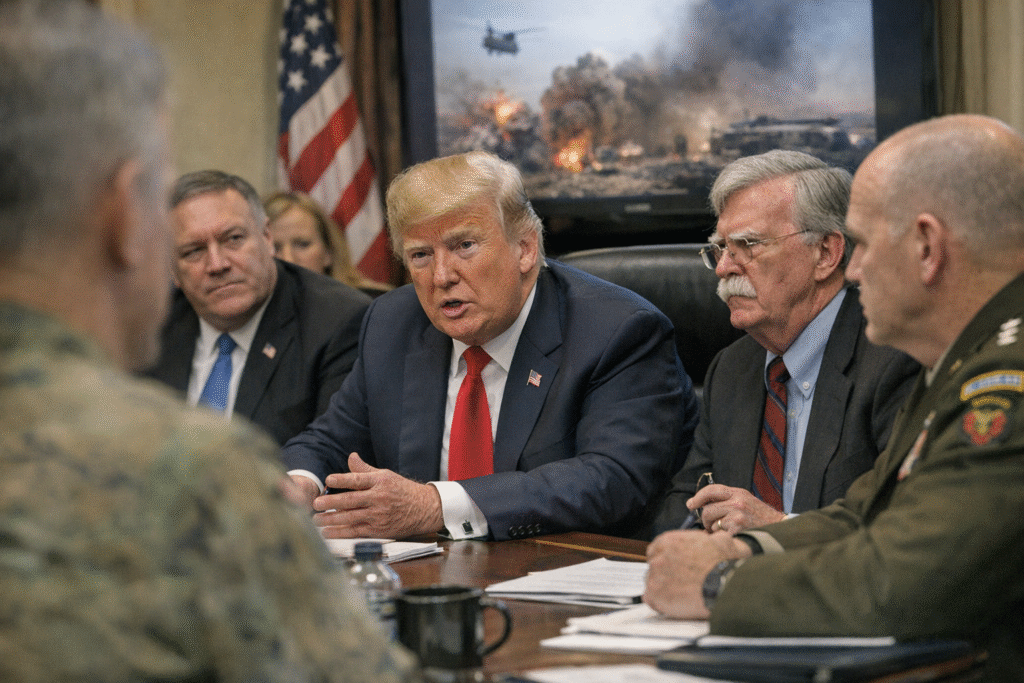
A recent opinion piece published by the Washington Free Beacon, titled “Say His Name: Neocon Don,” casts former President Donald Trump in a sharply revised ideological light, arguing that his foreign policy record aligns more closely with longstanding interventionist traditions than with the anti-war posture often attributed to him.
The article contends that Trump’s presidency, frequently characterized by supporters as a departure from the interventionism of prior administrations, in fact reflected continuity with elements of so-called neoconservative thinking. It points to decisions such as increased military spending, targeted strikes in the Middle East, and a willingness to confront adversaries like Iran as evidence that Trump governed in ways consistent with a muscular, assertive U.S. foreign policy.
According to the Free Beacon’s analysis, Trump’s authorization of the 2020 strike that killed Iranian General Qassem Soleimani stands out as a defining moment, demonstrating a readiness to employ military force in a manner historically associated with neoconservative doctrine. The piece also highlights the administration’s broader posture toward China and its support for certain NATO commitments as further examples of policies that diverge from isolationist rhetoric.
At the same time, the article acknowledges the tension between Trump’s campaign messaging—often critical of “endless wars” and nation-building—and the governing record it describes. This discrepancy, it argues, has contributed to a complex and sometimes contradictory understanding of Trump’s foreign policy legacy among both supporters and critics.
The Free Beacon article suggests that labeling Trump strictly as an anti-interventionist oversimplifies a more nuanced reality. Instead, it proposes that his approach blended nationalist rhetoric with selective but consequential uses of American power abroad, complicating traditional ideological categories.
The reassessment comes as debates within the Republican Party continue over the future direction of U.S. foreign policy. With factions divided between a more restrained, populist approach and a return to assertive global engagement, interpretations of Trump’s record have taken on renewed relevance.
By framing Trump as “Neocon Don,” the Free Beacon’s piece seeks to challenge prevailing narratives and prompt a reconsideration of how his presidency fits within the broader trajectory of American foreign policy in the post-Cold War era.