Tech Transforms Military Strategy in Indo-Pacific Region
As geopolitical tensions in the Indo-Pacific region sharpen, the integration of cutting-edge military technology is rapidly transforming how armed forces operate, gather intelligence, and prepare for potential conflict. According to a recent analysis titled “How Modern Technology Is Reshaping Military Operations in the Indo-Pacific,” published by Breaking Defense, regional powers are accelerating adoption of advanced capabilities to deter adversaries and protect strategic interests amid an increasingly contested maritime landscape.
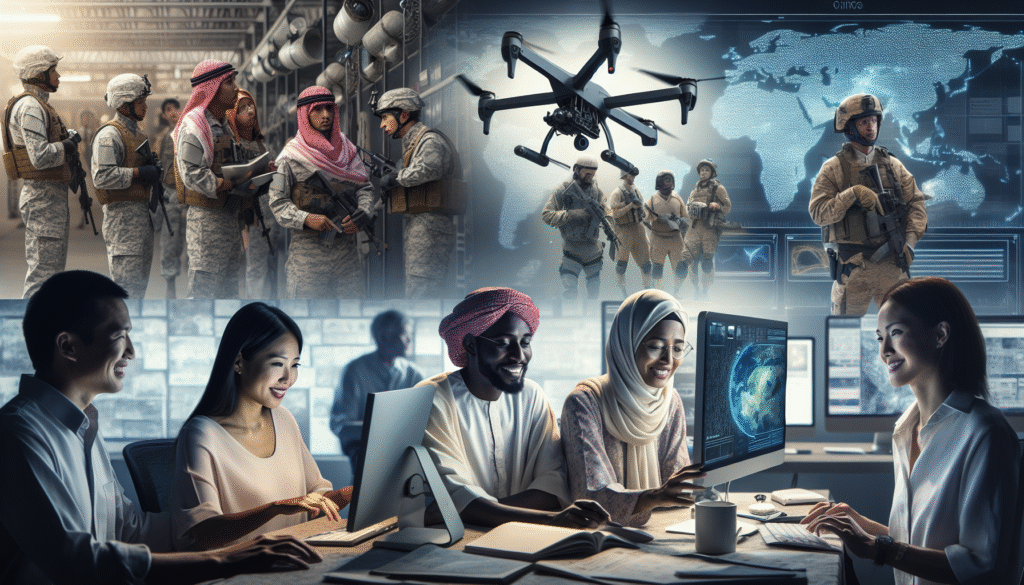
The report highlights the growing emphasis on distributed operations, artificial intelligence, autonomy, and resilient communications systems as cornerstones of modern military planning in the region. These technological investments aim to counterbalance the operational challenges posed by geographic distances, electromagnetic spectrum congestion, and the threat of rapid escalation in contested areas such as the South and East China Seas.
The U.S. military, in particular, is reengineering its force posture to emphasize agile, dispersed units capable of operating independently yet cohesively across vast expanses of ocean and archipelagic terrain. Platform integration across services — such as the U.S. Navy, Marine Corps, and Air Force — is being refined through experimentation and joint exercises, many conducted in partnership with allies including Japan, Australia, and the Philippines.
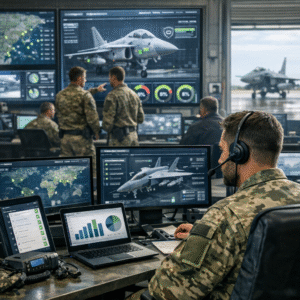
One focal point of these developments is the leveraging of artificial intelligence and machine learning to enhance decision-making speeds and reduce reaction times in high-stakes scenarios. Smart sensors and autonomous systems are increasingly able to mine large volumes of data in real time, providing commanders with actionable intelligence while minimizing human exposure to risk.
The Breaking Defense article also underscores the importance of resilient communications networks. In a region marked by vast distances and frequent electronic interference, militaries are prioritizing technologies that ensure connectivity even in degraded or contested environments. Satellite communications, edge computing, and mesh networks are being fine-tuned to provide persistent, secure links between dispersed units.
For regional partners, investment in these capabilities also reflects a broader strategic recalibration. Nations such as Australia and Japan are not only expanding defense budgets, but also embedding technological innovation into doctrine and procurement processes. Autonomous maritime systems, hypersonic weapons development, and cyber capabilities are all areas of focus for Indo-Pacific nations looking to bolster their strategic autonomy while deepening interoperability with allies.
However, the integration of these technologies is not without challenges. Organizational adaptation, training pipelines, and ethical considerations surrounding artificial intelligence remain ongoing matters for policymakers and military leadership. Moreover, adversaries are developing countermeasures of their own, contributing to a dynamic technological arms race in the region.
Ultimately, as the Indo-Pacific continues to shape the trajectory of global security in the 21st century, the role of modern technology — as described by Breaking Defense — is set to become even more central. Whether through autonomous surface drones patrolling contested waters or AI-enhanced command centers coordinating joint operations, the future of deterrence and defense in the region will rely heavily on the seamless fusion of human judgment and machine precision.