Tactical Assault Kit Powers Modern Mission Success

The Tactical Assault Kit (TAK), a digital situational awareness and coordination tool widely adopted across the U.S. military and government agencies, continues to evolve as an indispensable asset for troops operating in complex environments. In a recent article published by Breaking Defense titled “Evolution And Future Of The Tactical Assault Kit For Soldiers And Special Operators,” the military technology’s development and expanded use were examined, revealing a trajectory shaped by innovation, operational necessity, and cross-agency collaboration.
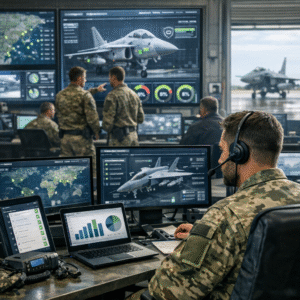
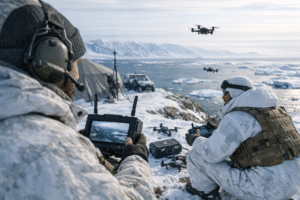
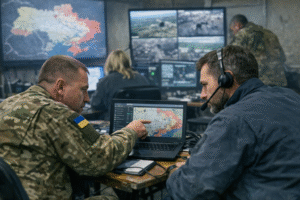
Initially conceived to enhance real-time communication and map-based awareness for small units, TAK has become a cornerstone system not just for U.S. Special Operations Forces, its original user base, but for the broader Department of Defense, civilian law enforcement, and emergency management organizations. TAK provides a common digital environment in which users can see friendly and enemy positions, share messages and video from drones or body cameras, and receive critical mission data through secure and customizable plug-ins.
As the article notes, TAK’s flexibility lies in its modular architecture, which allows users to tailor its capabilities to diverse mission sets. The software can be loaded on various devices, including smartphones and ruggedized tablets, offering both Android and Windows compatibility. This adaptability has made it a preferred tool for not only warfighters on the front lines but also firefighters managing natural disasters or federal agents coordinating complex operations.
Col. Kevin Murray, the director of TAK Product Center, emphasized in the Breaking Defense article that the platform’s growth has been largely user-driven, incorporating feedback from operators in the field to refine functionality. This iterative development process reflects the military’s broader shift toward agile software solutions that can quickly adapt to operational realities.
Looking forward, TAK is expected to incorporate advancements in artificial intelligence and machine learning to assist teams in processing large volumes of sensor data more efficiently. One emerging focus includes enhanced data fusion from unmanned systems, enabling commanders to rapidly generate actionable insights. Furthermore, as battlefield conditions increasingly demand interaction across joint and allied forces, TAK’s interoperability features are being enhanced to support secure information sharing among coalition partners.
Another area of emphasis is cybersecurity. Given the sensitive information transmitted through TAK, developers and Pentagon officials are prioritizing end-to-end encryption and rigorous vetting of third-party plug-ins. Ensuring both resilience and conformity with national security standards will be key to the system’s continued viability.
The Defense Department has also formalized TAK’s development structure through the creation of the TAK Product Center at the Air Force Research Laboratory. This hub oversees the platform’s roadmap and ensures consistent integration across users, marking an institutional commitment to TAK’s long-term evolution.
From coordinating raids in austere environments to tracking wildfire evacuation routes, TAK’s versatility underscores a broader trend in U.S. defense and homeland security: the convergence of military and civilian technology ecosystems. As Breaking Defense’s analysis highlights, the continued advancement of the Tactical Assault Kit reflects the Pentagon’s embrace of digital tools that empower dispersed teams to operate with greater speed, precision, and safety across a rapidly changing operational landscape.