T-7A Red Hawk Takes Flight in USAF Training Milestone
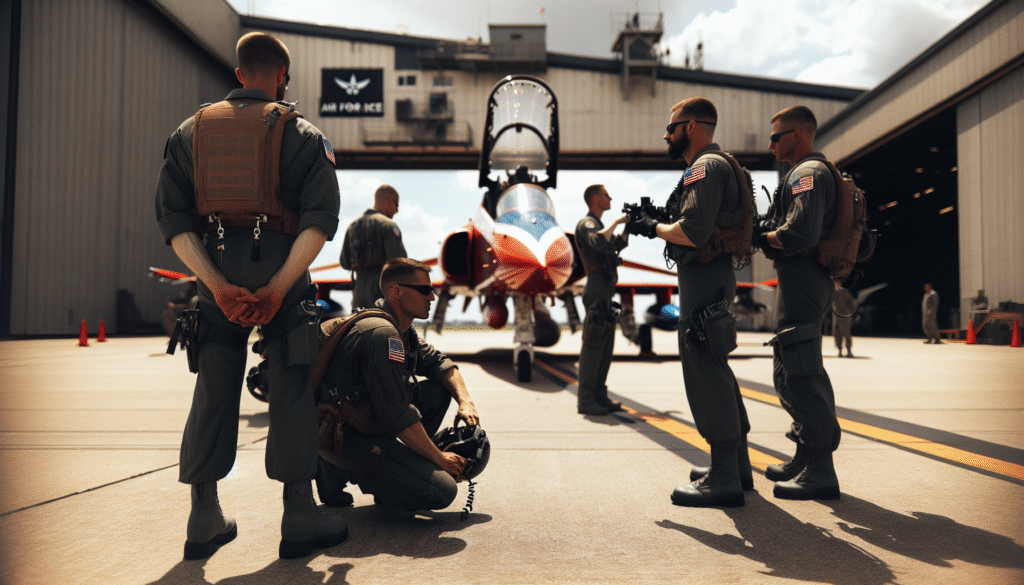
In a pivotal step toward modernizing its pilot training infrastructure, the U.S. Air Force has begun incorporating the T-7A Red Hawk into its instruction regimen, with select instructor pilots flying the jet for the first time. As reported in the December 10 article “US Air Force instructor pilots have first T-7 in training milestone” published by Defense News, this milestone signals the beginning of a new phase for the Air Force’s future aviators and underscores the service’s intent to replace the aging T-38 Talon fleet.
The historic flights took place at Edwards Air Force Base in California, where Air Force instructor pilots completed their initial sorties on the T-7A. Developed by Boeing in partnership with Swedish aerospace firm Saab, the T-7A is a next-generation training aircraft designed to better prepare pilots for the advanced performance demands of modern fighter jets such as the F-22 and F-35.
The successful integration of instructor pilots into the T-7A program marks the culmination of several years of development, following a 2018 contract award to Boeing worth up to $9.2 billion. The program, however, has faced multiple delays related to technical issues, including problems with the escape system and software integration.
Despite the setbacks, the T-7A was conceived from the start as a digital engineering demonstration, leveraging advanced modeling and simulation from design through production. Air Force officials and Boeing executives have touted this approach as a model for faster, more cost-effective acquisition programs in the future.
Lt. Col. Charles “Tank” Ekman, commander of the 416th Flight Test Squadron and among the first Air Force pilots to fly the T-7A, emphasized the jet’s agility and adaptability. Speaking to Defense News, Ekman described the aircraft as more responsive and digitally integrated than its predecessor, features that will allow students to transition more seamlessly to frontline combat aircraft.
The T-38, which entered service in the 1960s, has long been due for replacement. Training today’s pilots on legacy systems has become increasingly difficult as modern fighters demand proficiency with newer avionics and higher-performance flight profiles. The T-7A’s fly-by-wire controls, high angle-of-attack capability, and embedded training systems offer a much-needed leap in realism and fidelity.
In total, the Air Force plans to procure 351 T-7A aircraft and 46 simulators once the platform clears its final development hurdles. Production is expected to ramp up in the coming years, with delivery of the first operational units previously projected for 2025. While no new timeline has been confirmed in light of ongoing issues, the instructor pilot familiarization flights constitute a concrete advancement in the service’s efforts.
The successful completion of these initial manned training flights represents not just progress in the maturation of this multibillion-dollar acquisition, but also a step toward reshaping how the next generation of pilots is trained. As the T-7A continues through testing and evaluation, its performance will be closely scrutinized by Pentagon officials eager to deliver on promises of speed, efficiency, and modern capability.