Sweden Advances Air Power with Future Jet and Gripen Upgrades

As Sweden deepens defense cooperation amid increasing geopolitical tensions in Europe, the Swedish Air Force is sharpening its focus on future combat aircraft development and innovative roles for its current fleet. In a recent interview titled “Swedish air chief talks next-gen warplane, Gripen’s anti-drone role,” published by Defense News, Maj. Gen. Jonas Wikman, chief of the Swedish Air Force, outlined his service’s modernization strategy and evolving priorities in air defense.
Wikman emphasized Sweden’s engagement in the Future Combat Air System (FCAS) collaboration with the United Kingdom and Italy—a multinational effort to develop a sixth-generation fighter jet. The initiative, seen as crucial for maintaining air superiority through the 2040s and beyond, is in the concept and assessment phase, with feasibility studies ongoing. Wikman noted that though no formal acquisition decision has been made, the Swedish Air Force is actively contributing expertise and assessing how its unique operational environment can shape the aircraft’s final configuration.
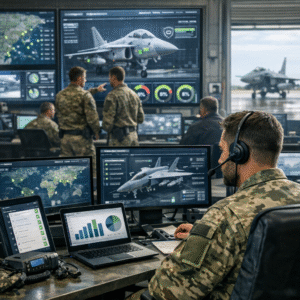
The future fighter jet is expected to integrate seamlessly into a highly networked battlespace, incorporating autonomous systems, advanced sensors, and artificial intelligence. There’s a particular emphasis on modularity, allowing the aircraft to adapt rapidly to technological advances and evolving threat landscapes. Sweden sees its participation in FCAS not only as an opportunity to influence design to suit its operational needs—marked by dispersed basing and Arctic conditions—but also to strengthen industrial ties and capabilities with key European partners.
In parallel with next-generation planning, Sweden continues to refine the combat roles of its current fleet of JAS 39 Gripen fighters. Notably, the Swedish Air Force is exploring how Gripens can support counter-unmanned aerial system (C-UAS) operations—a role not traditionally assigned to fighter aircraft.
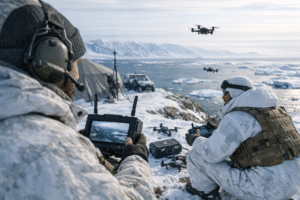
Wikman described how the Gripen platform could be adapted to engage or neutralize hostile drones, either directly or by acting as a node in broader counter-drone operations. This could include coordination with electronic warfare assets, ground-based radar systems, and other platforms capable of detecting and mitigating drone threats. As the battlefield becomes increasingly saturated with unmanned systems, the Swedish Air Force is looking to stay ahead by making its existing assets as versatile as possible.
Sweden’s robust defense posture is further underscored by its formal accession to NATO, pending final ratifications. The country’s integration into the alliance is expected to enhance interoperability with member air forces and strengthen collective deterrence on NATO’s northern flank. With the Nordic region returning to strategic prominence in the context of deteriorating relations with Russia, Swedish air power is gaining increased significance.
Wikman reiterated the importance of resilience, survivability, and adaptability across all air operations, reflecting on Sweden’s Cold War-era doctrine of dispersal, which is once again informing contemporary planning. The high north, in particular, remains a critical theater for Swedish defense strategy.
As the air domain evolves with advances in technology, cyber capabilities, and autonomous systems, Sweden is positioning itself to navigate the twin demands of readiness today and innovation for tomorrow. Whether through broadening the capabilities of the Gripen or shaping the contours of a future European fighter, the Swedish Air Force is adapting with purpose to meet a complex strategic environment.