“Steel Knight 25: Advancing Kill Web Warfare Concepts”

In an era characterized by rapid technological advancement and evolving warfare strategies, the Steel Knight 25 military exercise emerged as a critical learning platform for the application of cutting-edge combat concepts. As reported in Breaking Defense’s article, “Lessons Learned at Steel Knight 25: Operating Within and as a Kill Web,” the exercise underscored the significance of integrating modern warfare technologies to enhance operational efficacy.
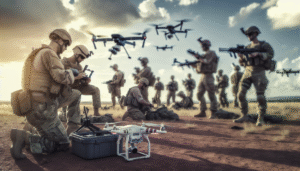
Conducted by the U.S. Marine Corps, Steel Knight 25 provided an enlightening opportunity to explore the potential of a “kill web,” a flexible networked combat approach designed to improve situational awareness and strategic coordination on the battlefield. This novel concept diverges from traditional rigid structures by emphasizing agility, connectivity, and adaptability. It leverages advanced technologies such as unmanned systems and artificial intelligence, aiming to create an interwoven network of sensors and shooters capable of rapidly disseminating information and executing precise operations.
The exercise illuminated several key insights on operating within and as a kill web, reflecting a shift in military thinking from static, hierarchical chains of command to dynamic decision-making processes. Units participating in Steel Knight 25 demonstrated an enhanced ability to adapt quickly to evolving situations, thus optimizing their readiness to face complex, uncertain combat scenarios. The ability to share intelligence swiftly across units and platforms stands out as a core advantage of the kill web concept, fostering a cohesive operational environment where command and control are continuously refined.
Furthermore, Steel Knight 25 highlighted the importance of interoperability among various branches of the armed forces and allied partners. The seamless integration of different systems and platforms encapsulates the essence of the kill web strategy, ensuring that diverse units can effectively collaborate and respond as a unified front. This collaborative approach not only amplifies operational strength but also serves as a deterrent to adversaries who may seek to exploit disjointed or vulnerable areas within a traditional combat framework.
Lessons from Steel Knight 25 are expected to shape future military doctrines, informing the strategic development of technologies and techniques that can further tighten the linkages within and between kill webs. As adversaries continue to innovate, maintaining a technological and tactical edge requires constant evaluation and adaptation of new methodologies. This adaptability was a central theme throughout Steel Knight 25, emphasizing that success on the modern battlefield depends on the ability to integrate, innovate, and respond with speed and precision.
Overall, the insights gained from Steel Knight 25 underscore the transformative impact of advanced networking concepts on military operations. As the U.S. Marine Corps continues to explore and refine these strategies, the outcomes of such exercises are likely to influence defense planning and execution on a global scale. With the evolving nature of warfare, the ability to operate within and as a kill web represents a forward-looking approach that could redefine military engagement in the 21st century.