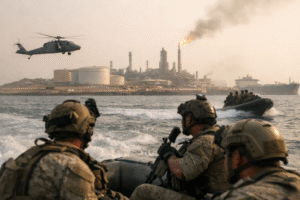
Revitalizing Amphibious Power in the Marine Corps
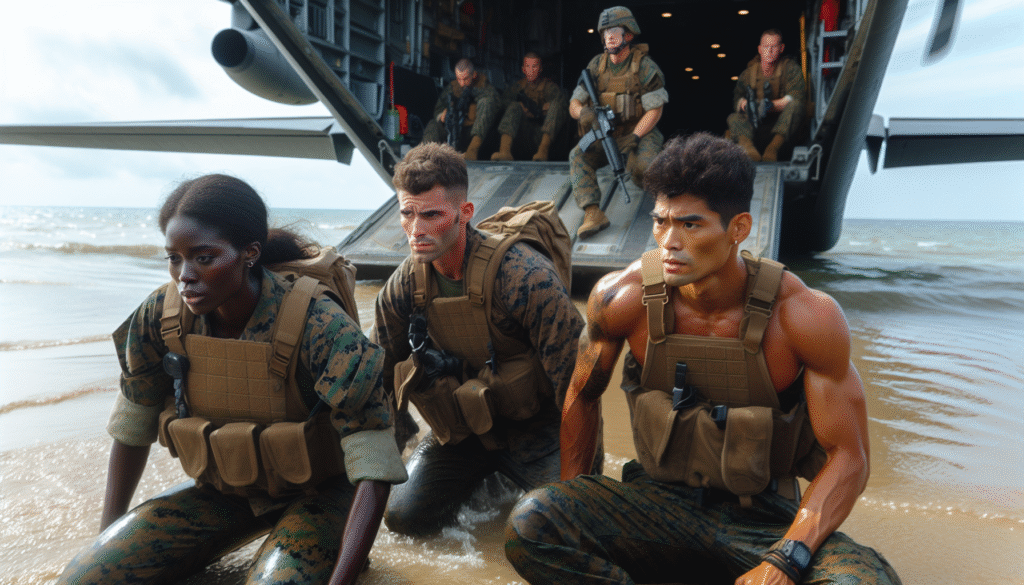
As the Marine Corps continues to chart its path through a complex and evolving global threat landscape, senior leaders have begun refocusing attention on the service’s amphibious roots. In a detailed analysis published by USNI News titled “Keeping the Marine Corps Amphibious,” journalist Megan Eckstein explores the service’s renewed commitment to prioritizing naval integration and littoral operations after years of engagement in land-centric conflicts.
The article outlines the Marine Corps’ ongoing efforts to adapt its force design and acquisition priorities in line with operational realities in the Indo-Pacific region. Central to this shift is the reemphasis on amphibious capability—not only as a nod to tradition but as a strategic necessity in an era increasingly defined by peer competition and contested maritime terrain. Senior Marine Corps officials interviewed by USNI note that amphibious readiness is essential for maintaining flexibility across a range of missions, from crisis response to expeditionary warfare in denied environments.
At the heart of this renewed focus is Force Design 2030, an initiative launched by Commandant Gen. David Berger and continued under his successors. While the plan has drawn both support and criticism over its aim to divest legacy equipment in favor of lighter, more mobile capabilities, it has also catalyzed serious discussions with the Navy about the future of amphibious operations. In particular, the Marine Corps’ call for a fleet of at least 31 amphibious warships—combining large, traditional L-class ships with a new class of smaller Light Amphibious Warships (LAWs)—has become a central pillar of its transformation.
According to the USNI report, the Marines argue that without a reliable fleet of amphibious vessels, their ability to respond to emerging threats—especially in the Western Pacific—would be severely constrained. However, budgetary pressures and differing priorities between the Navy and Marine Corps have complicated procurement efforts. While congressional mandates have temporarily saved programs like the America-class amphibious assault ships, future funding remains uncertain amid growing demands across the Department of Defense.
The article also underscores the practical challenges of regaining atrophied amphibious competencies after two decades of ground operations in Iraq and Afghanistan. Rebuilding that proficiency requires rigorous training, increased time at sea, and sustained collaboration with the Navy. The Corps has launched several new exercises and experiments to revalidate its core doctrines, including operations by the newly formed Marine Littoral Regiments, which are designed to operate in dispersed formations across island chains with minimal logistical footprints.
USNI’s analysis further points to the imperative of deterring aggression in the Indo-Pacific without sparking escalation. Amphibious forces—with their ability to maneuver from sea to shore without permanent basing—offer an alternative to the large, fixed installations that have historically drawn attention from adversaries. As one senior official quoted in the article notes, such flexibility allows the U.S. to “show up anywhere, anytime,” making amphibious capabilities a critical tool for diplomacy as well as deterrence.
Ultimately, “Keeping the Marine Corps Amphibious” illuminates a pivotal debate within the broader defense establishment: how to balance readiness for high-end conflict with the need for versatile, forward-deployed forces. For the Marine Corps, the path forward appears to hinge not just on theoretical doctrines, but on the nation’s willingness to invest in the ships, training, and inter-service coordination required to make amphibious operations viable in the 21st century.