Rethinking AI in Military Aviation Strategy

The ongoing debate over the role of artificial intelligence in military aviation has intensified, revealing deep divisions among policymakers, defense analysts, and military leadership. However, in a recent critique titled “The AI Aircraft Debate Rages, But Both Sides Are Wrong,” published by Breaking Defense, defense contributor Mark Thompson challenges the foundational assumptions of both camps, arguing that the discourse has become more ideological than practical.
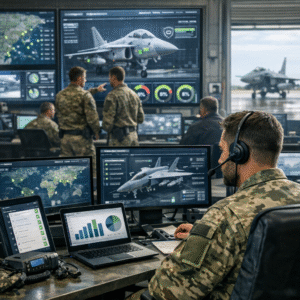
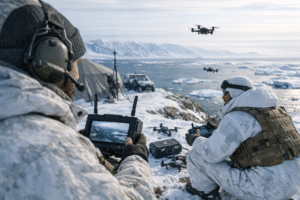
Proponents of AI-enabled aircraft assert that autonomy will transform aerial warfare by reducing the risk to human pilots, enabling faster decision-making, and streamlining operations. Backers of this view champion platforms like the Air Force’s Collaborative Combat Aircraft (CCA) program, which envisions swarms of AI-powered drones working in tandem with manned fighter jets. On the other side, skeptics caution that overreliance on artificial intelligence could lead to unintended consequences, such as loss of operator control, vulnerabilities to cyberattack, and problematic accountability in combat scenarios.
Thompson argues that the debate is mired in a false binary—framed as either embracing AI as a revolutionary force or rejecting it outright for ethical and operational concerns. He contends that both stances oversimplify a far more complex challenge: integrating AI into the existing military framework in a way that maintains human oversight while enhancing battlefield capabilities. According to Thompson, the issue is not whether AI aircraft are good or bad, but how they are implemented—what roles they are assigned, how decisions are made, and who ultimately bears responsibility.
The article draws parallels to previous technological inflection points in defense history, such as the introduction of nuclear weapons and precision-guided munitions. In each instance, rapid technological advancements outpaced established doctrine, forcing militaries to rethink longstanding assumptions. Similarly, the challenge with AI is not just developing the tools, but crafting the policies, protocols, and ethical frameworks that govern their use.
Particularly notable is the skepticism aimed at the current enthusiasm from military leadership, which Thompson suggests could lead to an overcommitment to unproven systems. He warns that treating AI programs as silver bullets runs the risk of leaving the force vulnerable, especially given the known limitations in machine learning models, such as brittleness in unfamiliar contexts and the lack of true situational awareness.
At the same time, the outright dismissal of AI capabilities, often grounded in philosophical or ethical resistance, fails to acknowledge the accelerating pace of technological development, including advancements by strategic competitors. As Thompson puts it, American defense planning cannot afford to be constrained by nostalgia or fear.
While the Breaking Defense article is skeptical of both prevailing viewpoints, it ultimately calls for a sober reevaluation of how AI is integrated into combat systems. This includes recognizing that AI is not a monolith; there are varying degrees of autonomy, reliability, and purpose-built applications. A drone acting as a reconnaissance wingman poses vastly different risks and benefits than one empowered to make lethal decisions independently.
In essence, the AI aircraft debate reflects a broader tension in defense circles: how to balance innovation with restraint. As policymakers and military strategists chart the future of aerial combat, Thompson’s criticism stands as a cautionary reminder that neither uncritical enthusiasm nor conservative resistance adequately addresses the mounting complexities. The challenge, as he outlines, is not simply to choose sides—but to design systems that are as thoughtful as they are powerful.