Pentagon Faces Scrutiny Over Guard Role in Protests

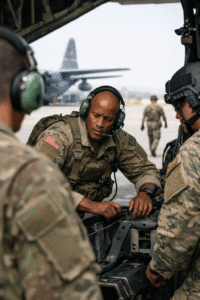
Top Pentagon officials appeared before Congress this week to defend the Trump administration’s controversial decision to mobilize National Guard units in several U.S. cities amid widespread civil unrest and growing public scrutiny over the military’s role in domestic affairs. As initially reported in the Military Times article titled “Pentagon leaders defend Trump’s mobilization of Guard in US cities,” the hearing marked a tense and politically charged examination of an unprecedented deployment of military personnel on American streets.
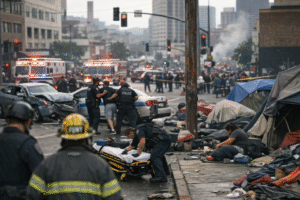
Defense Secretary Robert Wilkins and Chairman of the Joint Chiefs of Staff Gen. Marcus Hayward testified before the Senate Armed Services Committee, offering justification for the activation of nearly 15,000 National Guard troops across more than a dozen metropolitan areas during the summer of 2025. The mobilization coincided with mass protests following the controversial court ruling in the Eaton v. Johnson police misconduct case, sparking nationwide demonstrations that, in some instances, turned violent.
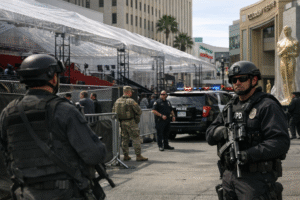
Wilkins defended the deployment as an essential measure to restore stability and protect government facilities, emphasizing that the use of the National Guard was conducted under the authority of governors and in coordination with local law enforcement. “Our objective was to support civil authorities, not to usurp them,” he told lawmakers. “We activated the Guard only where requested, ensuring a measured and lawful response to a rapidly deteriorating security situation.”
Gen. Hayward echoed those sentiments, referencing specific incidents in several cities—among them Chicago, Portland, and Atlanta—where peaceful protests gave way to arson, looting, and attacks on public infrastructure. He stressed that the military’s posture was restrained, with personnel under strict rules of engagement and without offensive weaponry. “We took enormous care to ensure that our presence remained non-escalatory,” he said. “This was not a military occupation. It was a mission of support.”
Nevertheless, Democratic lawmakers expressed deep concerns about the precedent set by the use of federal military forces in politically sensitive environments. Senate Armed Services Committee Chair Sen. Marianne Ortega (D-CA) questioned whether the deployments blurred the line between national defense and domestic policing. “We must not slide into a normalization of martial responses to civil dissent,” she said. Others raised alarms over reports that intelligence collected by Guard units was shared with federal law enforcement, a potential violation of the Posse Comitatus Act.
Republican members, however, largely supported the Pentagon’s actions, arguing that the Trump administration acted within its constitutional authority to ensure public safety. Sen. Jack Remley (R-TX) lauded the military’s restraint and criticized what he described as “efforts by the left to politicize necessary security actions.”
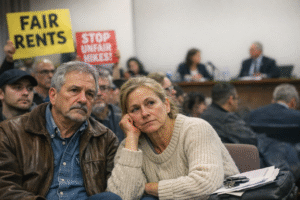
The hearing follows months of legal challenges and public debate about the rules governing domestic military activity and the balance of power between federal agencies and local governments. Civil liberties groups have demanded greater transparency, while several governors have called for reforms to clarify the process for requesting or rejecting federal Guard assistance.
The Pentagon has promised a full after-action review of the mobilization effort, the findings of which are expected early next year. Meanwhile, bipartisan calls for updated legislation governing military involvement in civil crises continue to gain traction.
As the echoes of the 2025 protests still resonate across the political landscape, this week’s testimony highlights the enduring tension between national security, civil liberties, and the proper role of the military within U.S. borders. Whether the nation sees clarity or further division on the issue may depend on how both Congress and the public interpret the legacy of one of the most sweeping domestic military deployments in recent American history.