Pakistan’s Quiet Role in Possible Mideast Realignment
Amid intense focus on negotiations surrounding a possible Saudi-Israeli normalization agreement, some analysts are urging observers to pay attention to a quieter geopolitical variable: Pakistan. In an article titled “Watch Pakistan Closely, the Other ‘Deal’ That Could Upend the Middle East,” published on the Substack site of analyst Spencer Guard, the author argues that developments involving Islamabad could become an overlooked but consequential factor in the region’s evolving diplomatic landscape.
Guard’s analysis suggests that Pakistan’s political and economic vulnerabilities, combined with its deep ties to Gulf monarchies, could place it at the center of a broader realignment if Saudi Arabia moves toward formal relations with Israel. Such a shift, while speculative, would represent a dramatic break with Pakistan’s longstanding stance of refusing to recognize Israel until the establishment of a Palestinian state.
Pakistan has historically positioned itself as a vocal supporter of the Palestinian cause, reflecting both ideological commitments and domestic political sensitivities. Successive governments have maintained that recognition of Israel is contingent on progress toward Palestinian statehood. Public opinion within Pakistan remains strongly sympathetic to the Palestinian position, and Islamist parties in particular have consistently opposed any suggestion of normalization.
However, Guard’s article argues that Pakistan’s economic dependence on Gulf partners, especially Saudi Arabia and the United Arab Emirates, creates conditions in which diplomatic adjustments could become conceivable under certain circumstances. Islamabad has repeatedly relied on financial assistance, deposit programs, and oil credit arrangements from Gulf states to ease recurring balance-of-payments crises and stabilize its economy. In periods of acute financial stress, these relationships have proven critical.
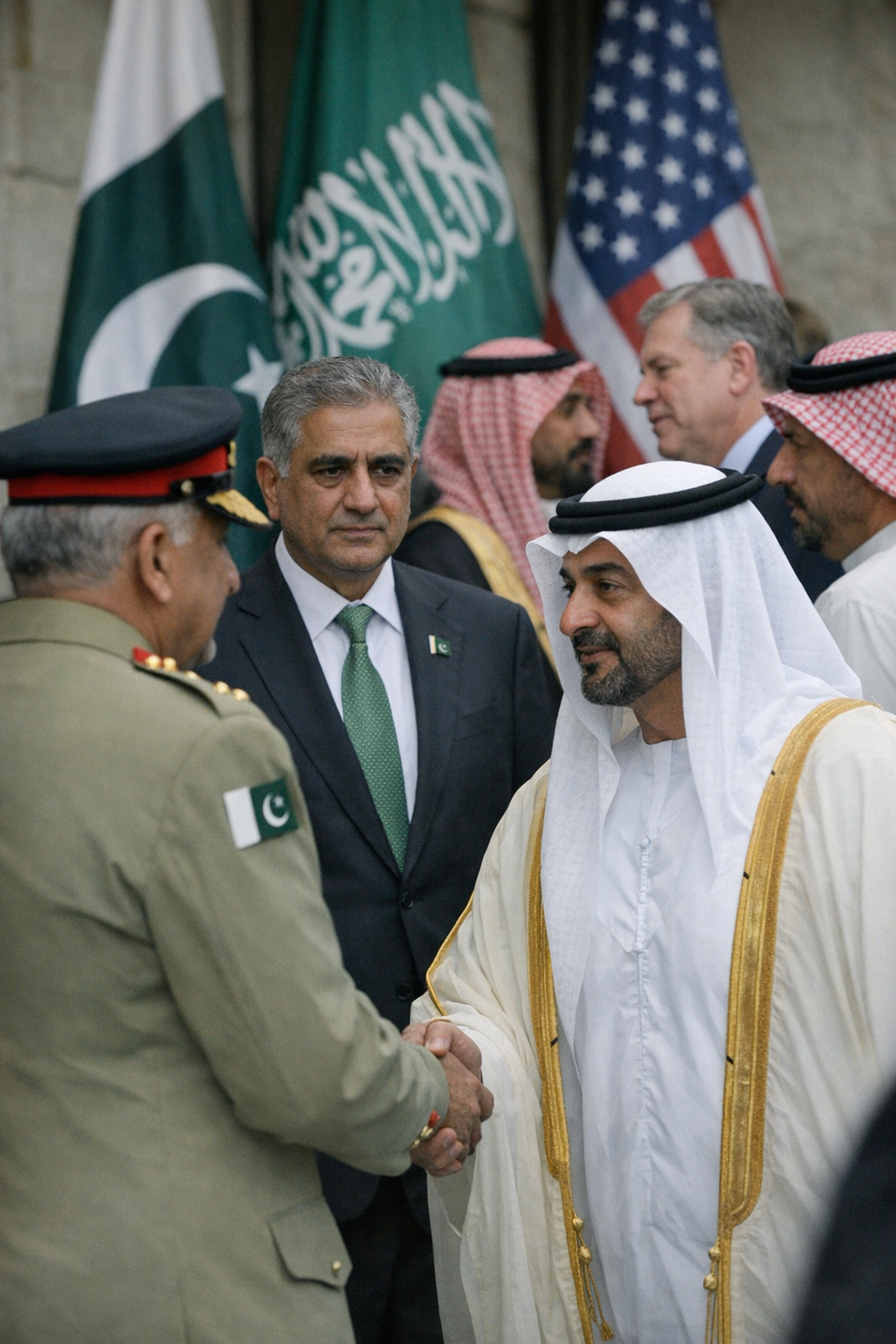
The article suggests that if Riyadh were to advance toward normalization with Israel as part of a broader strategic agreement with the United States, pressure or incentives could emerge for Pakistan to reconsider its own policy. Saudi Arabia’s influence over Pakistan is not only economic but also strategic; the two countries maintain close military ties, and Pakistan has historically provided training and advisory support to Saudi armed forces.
Guard frames the possibility as part of a wider transformation that has already begun reshaping regional diplomacy since the Abraham Accords of 2020, which brought the United Arab Emirates and Bahrain into formal relations with Israel, later joined by Morocco and Sudan. Those agreements demonstrated that Arab governments could move toward normalization despite unresolved Palestinian issues, particularly when motivated by security concerns or strategic partnerships with Washington.
Still, the article emphasizes that Pakistan faces constraints that differentiate it from the Arab states that joined the Abraham Accords. Pakistan’s identity as the world’s second-largest Muslim-majority country, combined with its domestic political dynamics, makes policy reversals on Israel particularly sensitive. Any move toward normalization could provoke strong public backlash and become a flashpoint in already turbulent domestic politics.
Another complicating factor is Pakistan’s relationship with Iran, which shares a border with Pakistan and opposes normalization with Israel. Islamabad has historically tried to balance its ties between Gulf Arab states and Iran while avoiding entanglement in regional rivalries. A dramatic shift toward Israeli recognition could strain that delicate balancing act.
Guard also notes that Pakistan’s security establishment would likely weigh broader strategic calculations, including the country’s rivalry with India and its expanding partnership with China. These considerations add further complexity to any potential diplomatic shift involving Israel.
While the prospect of Pakistan recognizing Israel remains uncertain and would face significant hurdles, the article argues that the possibility deserves closer scrutiny. In Guard’s view, discussions about Middle Eastern diplomacy often focus almost exclusively on Arab states, overlooking the ways in which non-Arab Muslim countries with major strategic weight could influence the trajectory of normalization efforts.
If Saudi Arabia ultimately proceeds with a landmark agreement involving Israel and the United States, the ripple effects could extend beyond the Arab world. As Guard writes in “Watch Pakistan Closely, the Other ‘Deal’ That Could Upend the Middle East,” Pakistan’s response to such changes could shape not only its own foreign policy but also the broader diplomatic architecture emerging across the region.