Navy and Palantir Launch New Sub Building Platform
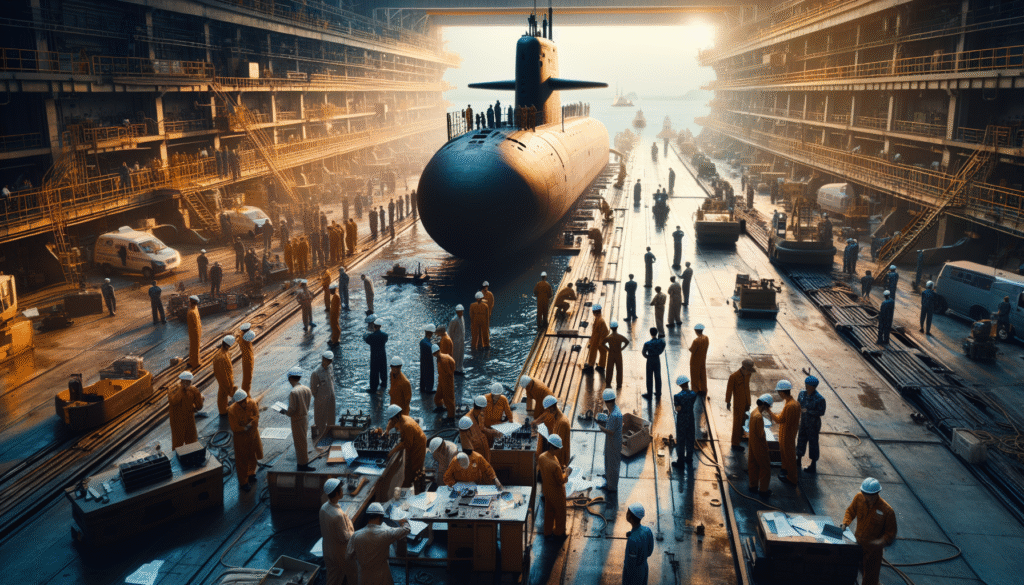
In a move that underscores growing concern about the pace and scale of U.S. submarine production, the U.S. Navy and software company Palantir Technologies have jointly launched a new digital platform aimed at modernizing the shipbuilding process for nuclear-powered submarines. As reported in the article “Navy, Palantir Unveil SHIPOS In A Bid To Boost Nuclear Sub Production,” published on Breaking Defense, the system—dubbed the Shipbuilding Industrial Planning Optimization Software (SHIPOS)—promises to address long-standing inefficiencies in the submarine production pipeline by integrating data across industry partners and government agencies.
The initiative comes at a time of heightened strategic competition with China and renewed focus on strengthening undersea deterrence. The U.S. Navy, in particular, is looking to expand the production of Virginia-class attack submarines and Columbia-class ballistic missile submarines—vessels considered central to the Pentagon’s long-term national security architecture. However, persistent delays and supply chain vulnerabilities have plagued shipyards in recent years, casting doubt on the feasibility of sustaining accelerated construction timelines.
SHIPOS is designed to function as a centralized digital backbone for submarine industrial planning, leveraging Palantir’s data integration and analytics capabilities to coordinate activities across multiple stakeholders. According to defense officials, the platform will offer real-time insights into supplier health, workforce capacity, material flow, and other key metrics, creating a more responsive and transparent production ecosystem.
Navy Secretary Carlos Del Toro characterized SHIPOS as a “leap forward” in the Navy’s effort to overcome systemic bottlenecks, stating that the tool could significantly enhance the service’s ability to deliver submarines on schedule and at scale. Officials noted that the platform has already begun limited operations with select contractors and will be scaled more broadly in 2026.
The move to enlist Palantir—a controversial yet increasingly prominent player in the defense technology space—reflects the Pentagon’s broader effort to revitalize industrial base management through digital modernization. Palantir has previously partnered with entities such as the Army and U.S. Space Command to deliver similar data-driven platforms, drawing both praise for performance and criticism over data privacy and vendor lock-in concerns.
In this latest partnership, the Navy and Palantir are also seeking to future-proof the shipbuilding process against labor shortages, cyber threats, and geopolitical shocks. By simulating various demand scenarios and supply risks, SHIPOS aims to allow for better contingency planning and resource allocation throughout submarine production networks.
Though early indicators of SHIPOS’s effectiveness remain anecdotal, naval leadership and congressional defense committees alike are closely watching its development. With submarine manufacturing timelines already pressing—and under increasing strain due to AUKUS commitments and escalating demands for Indo-Pacific deterrence—a more efficient and resilient industrial base is seen as vital to U.S. strategic priorities.
As emphasized in the Breaking Defense article, SHIPOS does not represent a silver bullet, but it may mark a significant step toward aligning 21st-century digital tools with the legacy-heavy needs of U.S. naval shipbuilding. Whether this initiative will materially reduce delays remains to be seen, but the willingness to innovate in coordination with private sector technology firms points to a potential turning point in how the Navy manages its most complex acquisition programs.