Marines Launch New Logistics Units in Japan Pivot
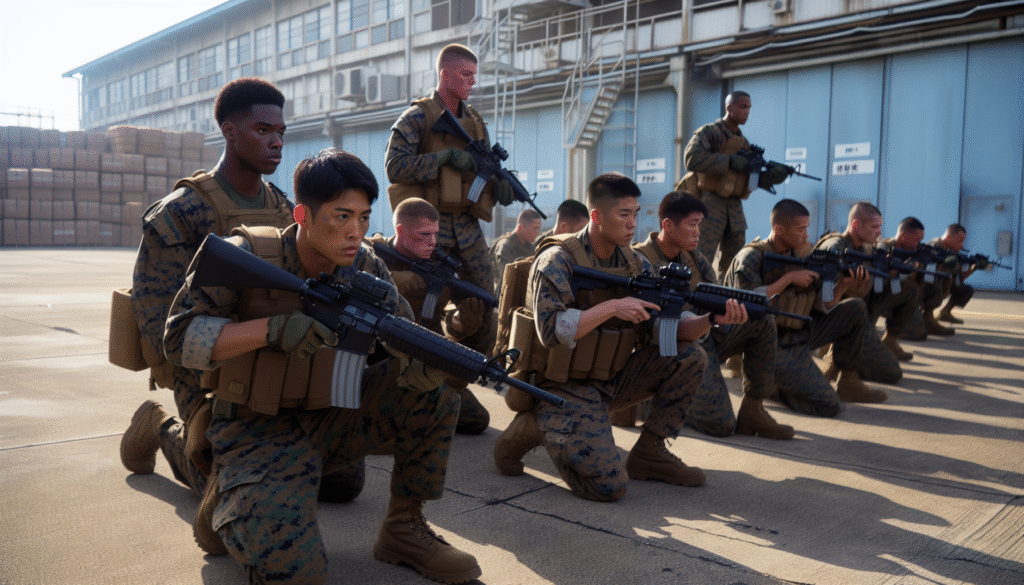
In a significant move to bolster its regional presence and logistical capabilities, the U.S. Marine Corps has established three new combat logistics companies in Japan, according to a December 2 article titled “US Marine Corps stands up 3 new combat logistics companies in Japan” published by Military Times. The creation of these units marks a pivotal step in the Corps’ ongoing effort to modernize and adapt to evolving security challenges in the Indo-Pacific region.
The newly formed logistics companies are deployed under the 3rd Marine Logistics Group and represent a recalibration toward more agile and distributed combat support. Positioned across key strategic sites in Japan, including Okinawa, the units are intended to enhance the Corps’ ability to sustain operations in remote or contested environments—a reflection of the Pentagon’s larger shift in focus toward potential high-end conflicts, particularly in the Western Pacific.
Marine officials said the new units will play a crucial role in supporting stand-in forces, a central concept of the Marine Corps’ Force Design 2030 initiative. This strategic transformation envisions smaller, highly mobile Marine units operating close to adversarial front lines, requiring robust and flexible supply chains to maintain their effectiveness. The addition of these logistics companies is aimed at resolving precisely this challenge.
“Having these companies in place empowers the force to operate and sustain itself in a decentralized environment,” said Col. Jason Perry, commanding officer of Combat Logistics Regiment 3. “It’s about being able to maintain combat effectiveness even when isolated.”
The deployment of these logistics elements also reaffirms the U.S.-Japan alliance, as both nations look to deepen defense cooperation amid rising tensions in the Taiwan Strait and the broader Indo-Pacific. With China’s expanding naval footprint and assertive territorial claims, particularly in the South and East China Seas, U.S. military planners have prioritized operational resilience and responsiveness. These logistics companies contribute directly to that objective by ensuring supply routes and maintenance operations are not centralized or easily disrupted.
While the Marine Corps has undertaken several structural and doctrinal changes in recent years, the establishment of new logistics units overseas adds a tangible layer to its combat readiness. It underscores how support capabilities—often overshadowed by combat power in military discourse—are integral to sustained deterrence and effective forward presence.
According to Military Times, the Marines began staffing and training personnel for these units earlier this year, highlighting the urgency with which the Corps is moving to align its force posture with anticipated future demands. These developments also follow recent joint military exercises with Japanese Self-Defense Forces, which emphasized interoperability and logistical coordination across dispersed island chains.
The activation of these companies, while technical in nature, embodies a broader message of preparedness and strategic clarity. As geopolitical competition intensifies in the Pacific, the Marine Corps’ emphasis on distributed logistics reveals an understanding that operational success will depend as much on supply lines and maintenance crews as on combat prowess.
These changes reflect a wider doctrinal evolution within the U.S. military, one that prioritizes flexibility, endurance, and the ability to operate effectively in contested, communications-degraded environments. As 2025 approaches, the frontiers of modern warfare are as defined by MOS codes and motor pools as they are by missiles and maneuver units. The Marine Corps’ latest move ensures it will be ready for all of the above.