Marine Corps Expands Drone Training to All MOS
In a significant expansion of its unmanned systems capabilities, the Marine Corps has launched six new drone training programs made available to Marines across all Military Occupational Specialties (MOS), a move that underscores the service’s evolving vision of future warfare. As detailed in the Dec. 30 article titled “Marine Corps launches six drone training programs open to any MOS” by Military Times, the initiative reflects a broader institutional shift toward integrating distributed operations and enhancing small-unit autonomy through emerging technologies.
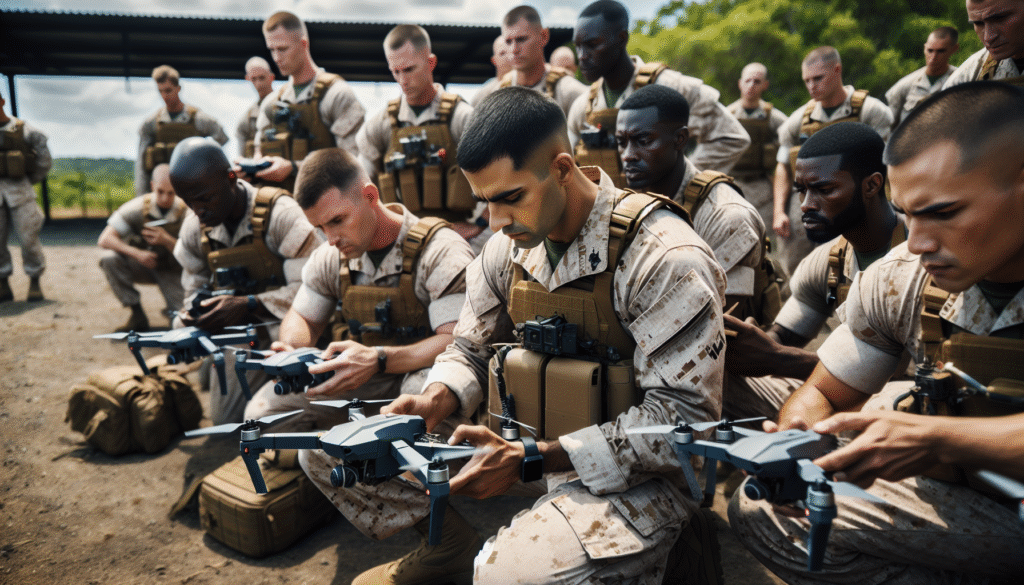
The training pathways, officially named Uncrewed Aerial Systems Employment Courses (UEC), are designed to upskill Marines in operating a range of commercial and military-grade drones. Notably, these programs are not limited to Marines already designated for aviation or intelligence roles. Instead, by opening enrollment to all active-duty personnel, including those in roles traditionally seen as unrelated to drone operations, the Corps demonstrates a deliberate push to democratize access to unmanned platforms.
“Whether you’re a rifleman or a radio operator, you’re going to be expected to understand and employ drones in the near future,” said Capt. Brendan Aljets, one of the early coordinators of the program, in remarks shared during the initiative’s announcement. Aljets emphasized that the courses were designed not only to provide technical instruction but to cultivate a new operational mindset—one in which Marines can integrate real-time aerial intelligence directly into small-unit decision-making.
Held at multiple training installations, including Camp Lejeune in North Carolina and Twentynine Palms in California, the UEC programs aim to be scalable and responsive to the Corps’ needs. Marines who complete the coursework will gain certifications in various drone systems, including the commercial DJI Mavic and more military-specific capabilities such as the Skydio 6X. These certifications will then be accessible for commanding officers to verify via military records, ensuring standardized credentialing across units and commands.
According to the Military Times report, the Marine Corps sees such training as core to the implementation of Force Design 2030, an ambitious restructuring blueprint focused on preparing Marines for future conflicts in contested environments. By equipping Marines at every level with the ability to collect, process, and share aerial data, the service hopes to enhance its adaptability and resilience in operational theaters increasingly characterized by electronic warfare and asymmetrical threats.
This strategic investment in broad-based drone literacy represents a marked departure from past practice, where such skills were confined largely to niche roles within aviation and intelligence domains. The shift is reflective of the broader military trend of integrating unmanned systems deeper into tactical operations—a trend already visible in recent conflicts where small drones have proven critical for surveillance, target acquisition, and even strike coordination.
With these six newly established drone courses, the Marine Corps positions itself not only to meet current technological demands but to prepare for an operational paradigm where every Marine may serve, to some extent, as a sensor and a node in a wider battlefield network. As unmanned technologies evolve and proliferate, the ability to adapt across all ranks and specialties may prove essential to maintaining battlefield relevance in an increasingly autonomous age.