Hegseth Claims US Sank 120 Iranian Vessels
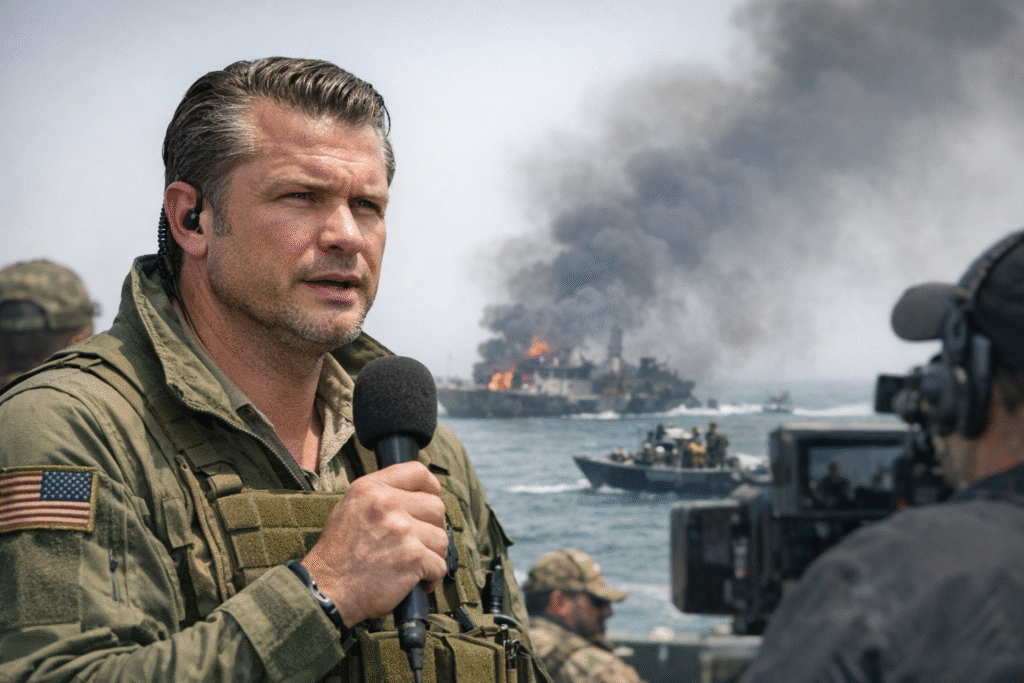
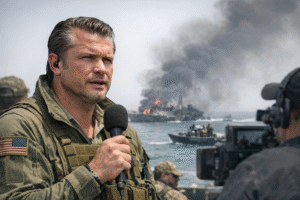
U.S. Defense Secretary Pete Hegseth said the United States has sunk more than 120 vessels associated with Iran’s Islamic Revolutionary Guard Corps Navy (IRGCN), underscoring what he described as an ongoing maritime confrontation in the Persian Gulf and surrounding waterways. The remarks were reported in an article titled “We’ve Decided to Share the Ocean With Iran — We’ve Given Them the Bottom Half — United States Has Sunk More Than 120 Islamic Republic Ships, Hegseth Says,” published by the Washington Free Beacon.
According to the report, Hegseth characterized U.S. naval operations as a sustained effort to deter Iranian aggression and protect commercial shipping lanes in a region critical to global energy markets. His comments reflect a more forceful framing of U.S. actions against Iran, suggesting that American naval forces have imposed significant costs on Tehran’s maritime capabilities.
While U.S. officials have long accused Iran of using its naval forces to harass commercial vessels, seize tankers, and challenge freedom of navigation, the figure cited by Hegseth represents a notable escalation in publicly acknowledged impacts. The Washington Free Beacon article presents the statement as part of broader rhetoric emphasizing U.S. resolve in the region.
The Pentagon has historically taken a more measured approach in publicly detailing direct engagements with Iranian forces, often citing operational security and diplomatic sensitivities. It remains unclear how the figure referenced by Hegseth aligns with previously disclosed incidents or whether it includes both kinetic strikes and other forms of maritime interdiction.
Analysts note that tensions between the United States and Iran at sea have ebbed and flowed over decades, with flashpoints including tanker seizures, drone incidents, and confrontations involving fast-attack craft operated by the IRGCN. The strategic waterways of the Strait of Hormuz and nearby routes remain particularly sensitive, as disruptions there can have immediate global economic consequences.
The Washington Free Beacon’s report highlights the increasingly assertive tone among some U.S. defense officials, reflecting a broader debate in Washington over how to counter Iran’s regional activities. However, independent verification of the specific claim regarding the number of vessels sunk was not immediately available, and U.S. Central Command has not publicly provided a detailed accounting corresponding to Hegseth’s figure.
The remarks are likely to draw attention from allies and adversaries alike as policymakers continue to weigh deterrence, escalation risks, and the stability of maritime trade routes in a region that remains a focal point of geopolitical competition.