Estonia Builds Border Bunkers Amid Russia Tensions
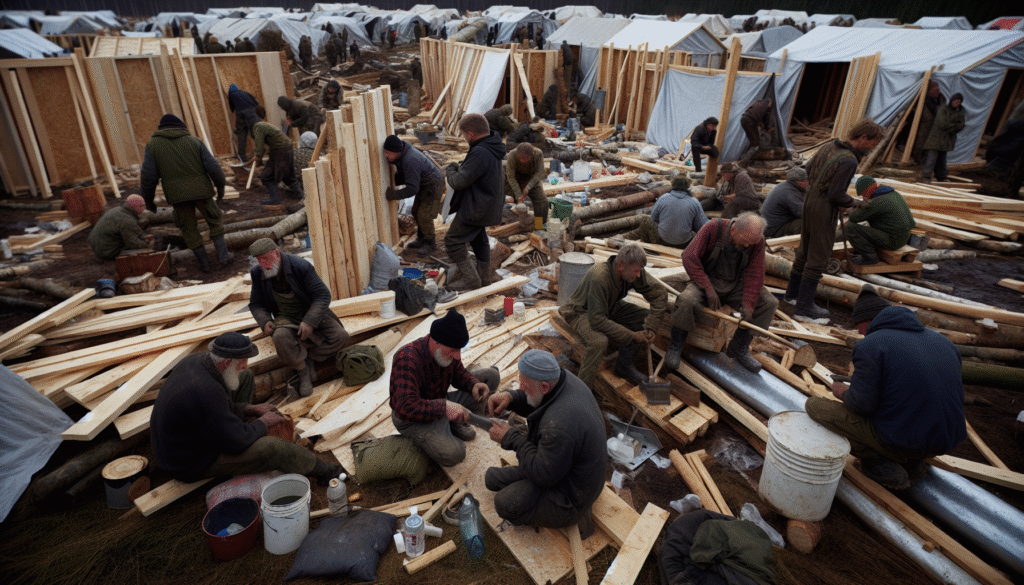
Estonia has initiated construction on what is being described as a significant new defensive measure along its eastern border with Russia, marking a deeper shift in the Baltic state’s security posture amid heightened regional tensions. According to the article titled “Estonia erects first of 600-strong ‘Baltic bunker’ wall on Russia border,” published by Defense News, the country has installed the first in a series of 600 reinforced modular bunkers designed to fortify its frontier against potential military incursions.
The move, announced by Estonia’s Defense Ministry, is part of a comprehensive plan to strengthen NATO’s northeastern flank in the wake of Russia’s full-scale invasion of Ukraine in 2022. Estonian officials emphasize that the bunkers will enhance the country’s ability to conduct sustained, decentralized resistance in the event of a large-scale conflict. Constructed with steel-reinforced concrete and outfitted to withstand artillery fire, the bunkers will be deployed in clusters across key strategic points along the 294-kilometer border shared with Russia.
Estonia’s Defense Minister Hanno Pevkur said the initiative was driven by the recognition that, in his words, “deterrence requires credible defense capabilities.” The $60 million project is expected to be fully implemented by 2025 and constitutes a new phase in the Baltic state’s deterrence strategy, which already includes joint NATO exercises, the presence of allied troops, and growing investment in air-defense systems.
While Estonia has framed the project as a purely defensive measure, its implications are likely to reverberate across the region. Relations between Russia and the Baltic states remain acutely strained, with Moscow routinely condemning NATO’s eastern expansion and military buildup as provocative. In that context, the introduction of 600 fortified bunkers along a heavily militarized border is expected to draw strong reactions from the Kremlin.
The initiative also underscores the evolving nature of NATO’s defense plans in the Baltic region. Member states such as Latvia, Lithuania, and Poland have increasingly emphasized the need for static, in-place defenses capable of slowing or deterring a surprise attack—a departure from previous doctrines focused more heavily on rapid response through maneuverable troops.
Analysts suggest that Estonia’s approach reflects lessons drawn from the war in Ukraine, where entrenched positions and prepared defenses have played a pivotal role in shaping battlefield dynamics. The so-called “Baltic bunker” wall is envisioned not as a continuous physical barrier, but as a network of hardened positions that can be activated swiftly and resupplied discreetly in the event of hostilities.
As the geopolitical environment in Eastern Europe continues to evolve, Estonia’s large-scale investment in border fortifications reflects broader anxieties among frontline NATO members. With Russia showing no signs of de-escalation, the small but strategically situated Baltic nation appears determined to make clear that it is prepared to defend its sovereignty with a combination of political will, international partnerships, and physical infrastructure.