Drones: Revolutionizing Modern Military Strategy
The rapidly evolving realm of military technology has reached a critical turning point, with drones emerging as a transformative force in modern warfare. This sentiment was echoed by the US Army’s Chief of Aviation, who highlighted the profound impact of drones on combined arms combat in a recent article by the Military Times, titled “Drones change everything about combined arms combat, US Army aviation chief says.”
The use of drones in military operations is not a novel concept; however, their integration into various facets of combat has expanded dramatically in recent years. The Army Chief underscored how these unmanned aerial systems are reshaping strategies, increasingly influencing the outcomes of complex military engagements. This technological shift necessitates a reevaluation of traditional combat roles and strategies.
Drones bring a host of advantages to the battlefield. Chief among these is their ability to provide real-time intelligence, surveillance, and reconnaissance (ISR), offering commanders a detailed overview of terrain and enemy activities. This situational awareness is crucial for making informed, timely decisions, effectively coordinating actions across different branches of the armed forces. Furthermore, drones extend operational reach beyond the capabilities of manned systems, carrying out missions in environments deemed too risky for human operators.
Another significant aspect of drone technology is its capacity for precision strikes. Equipped with advanced targeting systems and guided munitions, drones can neutralize threats with remarkable accuracy, minimizing collateral damage and civilian casualties. This precision has become particularly valuable in asymmetrical warfare, where identifying and engaging dispersed or concealed targets often pose significant challenges.
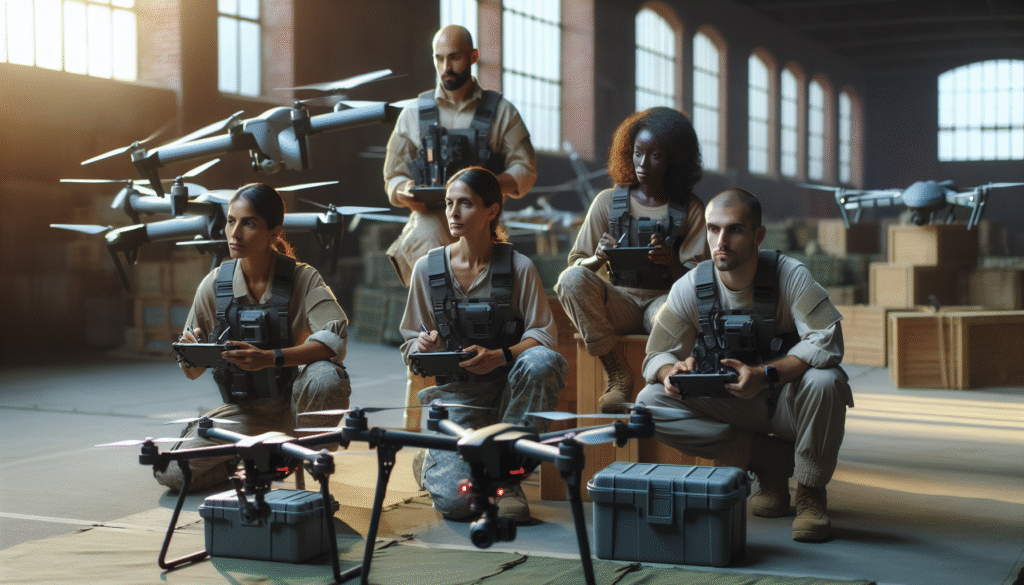
The evolving role of drones in combat operations also presents new considerations for military strategy and doctrine. As drone capabilities expand, so too does the need to integrate these systems seamlessly into existing military frameworks. This requires comprehensive training programs to prepare personnel for operations in drone-enhanced combat environments. Additionally, the proliferation of drone technology underscores the need for robust cybersecurity measures to protect sensitive data and safeguard these systems from adversarial interference.
While the integration of drone technology offers substantial advantages, it is not without challenges. The military must balance the deployment of sophisticated drones with budgetary constraints, ensuring the sustainability of these systems over long periods. Moreover, ethical considerations surrounding autonomous weapons systems demand ongoing dialogue and regulation to align military practices with international humanitarian law.
As global military powers continue to prioritize drone technology, the landscape of modern warfare will undoubtedly continue to evolve. The US Army’s recognition of drones as game-changers in combined arms combat is a testament to the technological advancements shaping contemporary military strategy. As these advances continue, they will redefine not only how wars are fought but also how peace is maintained in an increasingly complex world.