Drone Wingmen Drive Global Race for Air Dominance
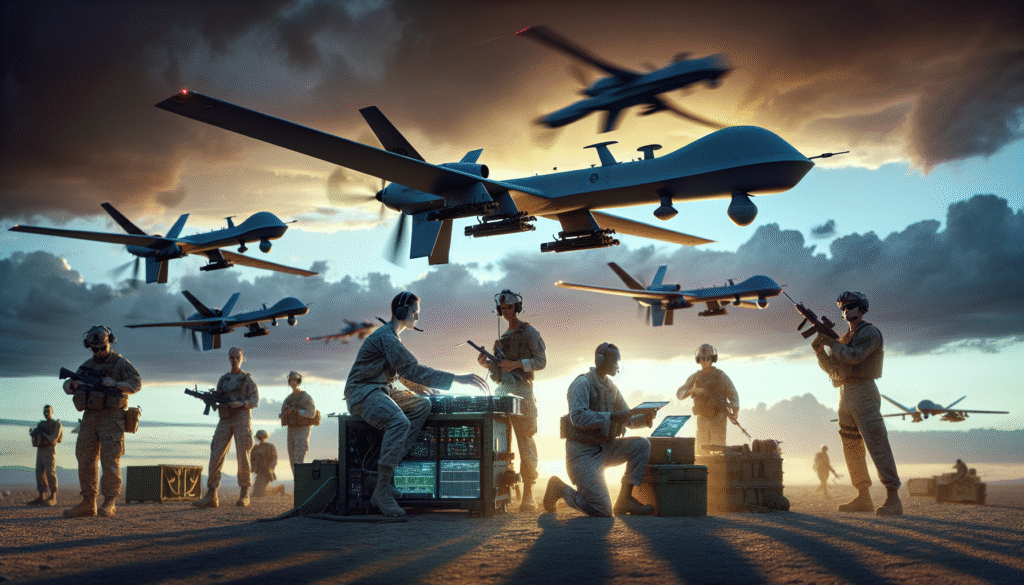
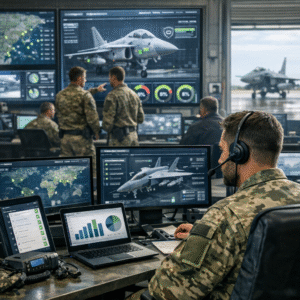
As military competition intensifies among global powers, the race to develop autonomous air combat systems is accelerating rapidly. The emergence of uncrewed aerial vehicles (UAVs) as force multipliers for manned fighter aircraft—popularly referred to as “drone wingmen”—marks a pivotal shift in modern military doctrine and procurement priorities. A recent article by Breaking Defense, titled “The Drone Wingman Race Kicks Into Higher Gear: 2026 Preview,” outlines the increasingly competitive field as nations seek to integrate AI-enabled combat drones into their frontline squadrons.
According to the report, 2026 is poised to be a decisive year as multiple international programs transition from prototypes and experiments to operational capabilities. The U.S. Air Force is deepening its investment in the Collaborative Combat Aircraft (CCA) initiative, a program designed to pair autonomous drones with sixth-generation fighters to perform missions ranging from surveillance and electronic warfare to direct engagement with enemy assets. This effort is central to the Air Force’s Next Generation Air Dominance (NGAD) strategy, aimed at preserving aerial superiority in contested environments.
Breaking Defense notes that leading defense contractors—including Boeing, Lockheed Martin, and Northrop Grumman—are vying for dominance in the CCA domain, unveiling high-performance drone prototypes capable of semi-autonomous maneuvering, target acquisition, and mission execution. The Department of the Air Force has signaled that it may procure as many as 1,000 of these collaborative systems, a scale that underscores the strategic value attributed to drone wingmen.
On the international stage, Australia is pushing forward with its MQ-28 Ghost Bat program, formerly known as Loyal Wingman, developed by Boeing Australia. The Ghost Bat has already begun limited flight testing and may offer a template for interoperability with allied forces. Meanwhile, the United Kingdom’s Project Mosquito was recently replaced by the broader Spirit Mosquito initiative under the UK’s Future Combat Air System (FCAS), demonstrating the dynamic and sometimes volatile nature of next-generation UAV development.
China and Russia, too, are making rapid strides. China’s GJ-11 Sharp Sword and Russia’s S-70 Okhotnik are at advanced stages of development and testing, suggesting that American drone superiority cannot be taken for granted. Military analysts caution that the fast pace of global advancement in unmanned combat aerial vehicles could compress the strategic edge currently held by NATO air forces.
The Breaking Defense article emphasizes that 2026 could be a watershed year not only for technological breakthroughs but also for establishing doctrinal norms and rules of engagement. Integrating autonomous systems into manned formations presents complex challenges in communication, trust, and command authority. U.S. defense officials continue to stress the importance of a “human-in-the-loop” model to ensure responsible deployment, though the long-term future may tilt toward greater degrees of UAV autonomy.
As budget deliberations and testing schedules unfold over the next year, policymakers and defense planners will be watching closely. The outcome of current programs will likely shape airpower strategy well into the 2030s. One thing is clear: the convergence of artificial intelligence and aerial combat capabilities is no longer theoretical—it is the defining competition of the coming decade.