Deadly US Drone Strikes Target Narco Boats in SOUTHCOM
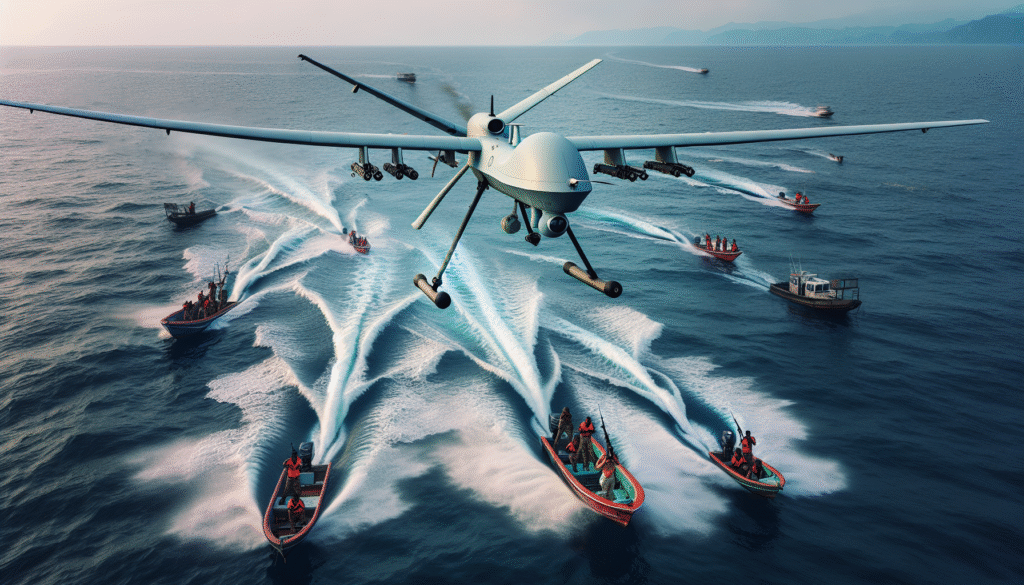
Eight individuals were killed in a series of U.S.-led strikes targeting suspected narcotics trafficking vessels in the U.S. Southern Command (SOUTHCOM) area of responsibility, according to a report published by USNI News titled “8 Killed in Strikes on 5 Suspected Narco Boats in SOUTHCOM.” The strikes, which occurred off the coast of Central America, were part of an ongoing campaign to counter illicit drug trafficking routes used by transnational criminal organizations operating in the region.
The U.S. military utilized unmanned aerial vehicles (UAVs) armed with precision-guided munitions to engage five maritime targets believed to be involved in narcotics transportation. The incident marks one of the deadliest incidents linked to U.S. counter-narcotics operations in the region in recent months. U.S. officials confirmed that all five vessels were destroyed or rendered inoperable and that evidence of narcotics trafficking was recovered from the sites of the strikes.
According to the USNI News article, the individuals killed were believed to be operatives for cartels or trafficking networks that utilize rapid-moving go-fast boats to transport illegal drugs northward from South America. Intelligence leading up to the operation was reportedly gathered through a combination of maritime surveillance, signals intelligence, and coordination with regional partners. However, U.S. defense officials have not disclosed the identities or nationalities of those killed, nor have they provided details on the specific narcotics involved.
A Pentagon spokesperson emphasized that the operation was carried out under established rules of engagement and with the aim of disrupting the flow of drugs that contribute to widespread domestic and regional public health and security concerns. The use of lethal force in maritime interdiction operations has increased in frequency as drug trafficking organizations adopt more aggressive tactics to evade capture, including evasive maneuvers and attempts to scuttle vessels at sea.
Human rights and transparency advocates have reacted with some concern, calling for greater disclosure regarding the criteria for targeting suspected traffickers and the oversight mechanisms in place to ensure accountability in lethal operations carried out far from U.S. shores. While international law permits the interdiction of vessels engaged in illicit narcotics transport on the high seas under certain conditions, the use of drone strikes in such contexts remains a subject of legal and ethical debate.
The U.S. Southern Command has long coordinated with law enforcement and military partners across the Caribbean, Central America, and northern South America to monitor and intercept maritime and aerial drug trafficking routes. Analysts note that while interdiction efforts can yield tactical victories, they rarely produce lasting strategic results in the absence of broader efforts to address the root causes of drug production and smuggling.
The operation described in USNI News underscores both the growing role of military assets in anti-narcotics efforts and the increasingly blurred lines between law enforcement and armed conflict in the region. As U.S. agencies continue to grapple with the challenges of transnational crime, the implications of using strike capabilities typically associated with counterterrorism campaigns in counter-drug missions are likely to remain a contentious issue in both domestic policy and international law.