Could US Israel Strikes Halt Irans Nuclear Push
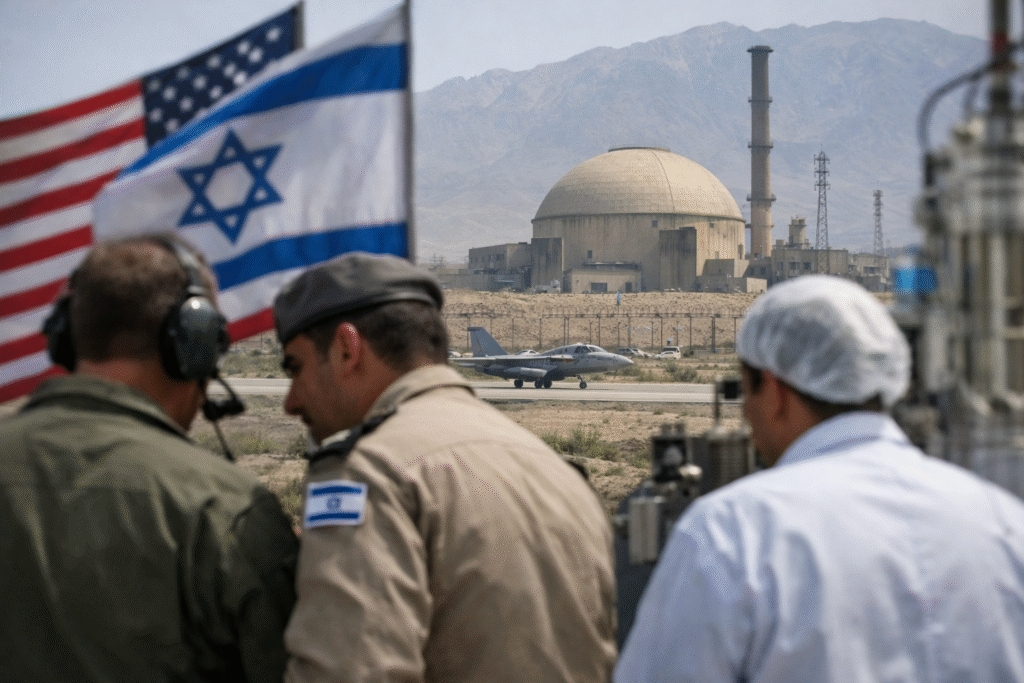
Debate over how the United States and Israel should respond to Iran’s advancing nuclear program has resurfaced with renewed urgency among policymakers and security analysts. In the Substack publication Spencer Guard, the article titled “Can the United States and Israel…” examines whether coordinated military action could realistically halt Iran’s nuclear ambitions or whether such a strategy would carry risks that outweigh its potential benefits.
The piece argues that the central question confronting Washington and Jerusalem is not simply whether Iran can be prevented from developing nuclear weapons, but whether military force would meaningfully delay the program. Iran’s nuclear infrastructure is widely believed to be dispersed, fortified, and in some cases buried deep underground, making any strike campaign technically complex and uncertain. Destroying key facilities might set back enrichment activity temporarily, but analysts continue to debate how long such a delay would last.
As the Spencer Guard article notes, past Israeli operations against nuclear facilities, such as strikes on reactors in Iraq in 1981 and Syria in 2007, are often cited as precedents. Yet Iran’s program is far more advanced and geographically distributed than those earlier cases. Multiple enrichment sites, research infrastructure, and stockpiles of nuclear materials would complicate any attempt to eliminate the program outright through air power alone.
The article also highlights the strategic calculations facing the United States. While Israel has long signaled its willingness to act unilaterally if it believes Iran is approaching a nuclear weapons capability, the logistical demands of a large-scale strike campaign would likely require at least tacit American support. U.S. military assets, intelligence capabilities, and specialized munitions designed for penetrating hardened underground facilities could play a decisive role in determining the operation’s effectiveness.
At the same time, the Spencer Guard analysis emphasizes the potential consequences of such an operation. A strike on Iranian nuclear sites could trigger regional escalation, including attacks by Iranian proxy groups throughout the Middle East and possible disruption to global energy markets. Retaliatory strikes against American or Israeli interests are widely expected in most military scenarios considered by analysts.
Diplomatically, the prospect of military action also raises questions about whether it would foreclose negotiations or, alternatively, create renewed pressure for a diplomatic settlement. Supporters of coercive measures argue that credible military deterrence strengthens leverage at the negotiating table. Critics counter that an attack could push Iran to accelerate efforts to obtain a nuclear weapon as a deterrent against future strikes.
The debate reflects a broader strategic dilemma confronting Western governments: whether the risks of preventive military action are greater than the long-term implications of a nuclear-capable Iran. The Spencer Guard article frames this as a choice without easy answers, noting that both military and diplomatic pathways carry significant uncertainties.
As Iran continues to expand its enrichment capacity and accumulate nuclear material, the question posed in “Can the United States and Israel…” is likely to remain central to international security discussions. Whether policymakers prioritize deterrence, diplomacy, or force will shape not only the future of Iran’s nuclear program but also the stability of the wider Middle East.