Could the Cybertruck Shape Future Battlefields
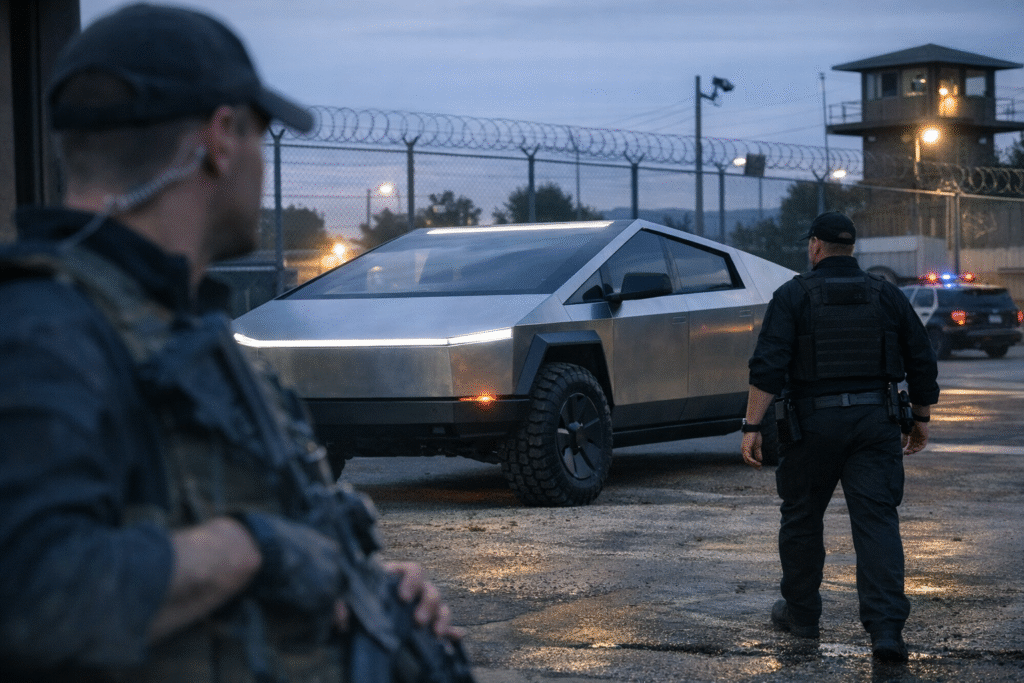
An opinion piece published by Defense News, titled “Tesla’s Cybertruck may be wrong for some — could it be right for the battlefield?”, raises a provocative question about whether a vehicle designed for civilian consumers could find a role in modern military operations. While the Cybertruck has drawn attention for its unconventional design and mixed reception in the commercial market, the article argues that some of its underlying features may align with evolving battlefield needs.
At the center of the discussion is the Cybertruck’s electric powertrain, which offers both advantages and limitations in a military context. Electric vehicles provide a significantly reduced acoustic and thermal signature compared to internal combustion engines, characteristics that could be valuable in reconnaissance, special operations, or logistics missions where stealth is critical. The absence of engine noise and reduced heat emissions make detection by both human observers and infrared sensors more difficult, a capability that has long been sought in military vehicle design.
The Defense News article also highlights the potential logistical benefits of electrification. Electric vehicles can, in theory, reduce reliance on complex fuel supply chains, which are often vulnerable targets in conflict zones. If paired with deployable charging infrastructure or renewable energy sources, such vehicles could enhance operational resilience. However, the piece acknowledges that these advantages depend heavily on the availability and reliability of power generation in forward environments, an issue that remains unresolved at scale.
Durability and practicality present another set of considerations. The Cybertruck’s stainless steel exterior and simplified construction could offer some benefits in harsh conditions, potentially improving resistance to environmental wear and minor impacts. Yet the vehicle was not designed to meet military standards for armor, payload capacity, or battlefield survivability. The article suggests that while the Cybertruck might not replace purpose-built military vehicles, it could inspire adaptations or serve niche roles where high-end survivability is less critical.
Range and charging time remain significant constraints. In contested environments, the time required to recharge could limit operational flexibility, particularly when compared to the rapid refueling of conventional vehicles. The Defense News analysis notes that advances in battery technology and field-expedient charging solutions would be necessary before electric platforms could be widely adopted in combat roles.
The broader implication of the article is less about the Cybertruck itself and more about what it represents: a shift in how militaries might evaluate emerging commercial technologies. As defense organizations increasingly look to the private sector for innovation, unconventional platforms may warrant consideration, even if they require substantial modification.
Ultimately, the Defense News piece does not present the Cybertruck as a ready-made solution for the battlefield. Instead, it frames the vehicle as a case study in how civilian engineering trends—particularly electrification—could influence future military mobility. The question it poses is less about whether this specific vehicle belongs in combat, and more about how militaries might adapt to, and possibly leverage, the technologies it embodies.