Confronting Iran’s Illusion of Power with Strategy

In a provocative recent editorial titled “It’s Time To Challenge Tehran’s Illusion Of Strength With Reality” published by The Daily Wire, political commentator Richard Goldberg urges the United States to reexamine its posture toward Iran, warning that decades of policy rooted in deterrence and negotiation have failed to curb Tehran’s regional ambitions or nuclear aspirations. He argues that sanctions-only approaches and diplomatic overtures have emboldened Iran’s leadership, allowing them to project a false sense of power while continuing destabilizing activities across the Middle East.
Goldberg’s central thesis is that the West—particularly the United States—has consistently mistaken Iran’s propaganda and aggressive posture for actual strength, neglecting opportunities to impose meaningful costs on the regime. This, he asserts, has contributed to a geopolitical environment in which Iran feels empowered to act as both aggressor and victim, without facing decisive consequences. The result has been a series of escalatory actions by Tehran, from proxy attacks across the region to rapid nuclear development that now places it closer than ever to a nuclear weapons capability.
The editorial outlines several components of what Goldberg considers Tehran’s “illusion of strength,” including its use of proxy militias, threats against Israel, and ballistic missile testing. He contends that while these behaviors may appear to signal influence or deterrence, they actually mask serious vulnerabilities inside Iran—economic instability, domestic discontent, and reliance on asymmetric warfare to compensate for conventional military shortcomings.
Crucially, Goldberg argues that the Biden administration’s attempts to revive the 2015 Joint Comprehensive Plan of Action (JCPOA) have further undermined Western leverage. He points to escalating uranium enrichment and Iran’s increasing defiance of international nuclear inspectors as signs that Tehran no longer fears diplomatic isolation. Instead, he calls for a more robust U.S. policy that combines military readiness with economic pressure to expose what he characterizes as Iran’s underlying fragility.
While critics of this approach warn it risks sparking direct conflict and undermining alliances in Europe and the Persian Gulf, Goldberg insists that only a demonstration of strength will compel Iran to reconsider its strategies. He proposes that Washington act unilaterally if necessary, suggesting moves such as reimposing broader sanctions on Iranian oil sales, targeting regime elites, and bolstering regional deterrence through military deployments.
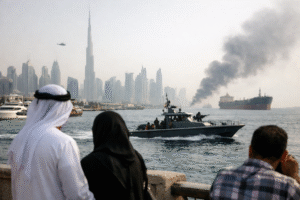
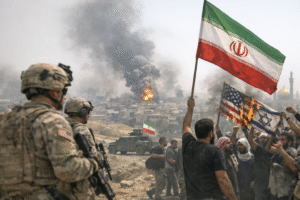
The article arrives at a time of heightened tension in the region, with recent incidents in the Strait of Hormuz, proxy attacks on U.S. forces in Iraq, and renewed concerns over Iran’s nuclear breakout timeline. It adds to an ongoing debate in Washington over whether engagement or confrontation is best suited to curtail Iran’s ambitions—and whether the U.S. has the resolve and clarity of purpose to do either effectively.
As policymakers weigh options ahead of looming U.S. elections and increasing global instability, Goldberg’s argument reflects a growing impatience among some in the foreign policy establishment who see the current trajectory as untenable. Whether his call to challenge “Tehran’s illusion of strength with reality” gains broader traction remains to be seen. But it underscores the enduring complexity of U.S.-Iran relations and the mounting pressures facing those who seek to shape its next chapter.