Combat Medicine Evolves Amid Ukraine War Lessons
As modern warfare evolves, so too does the medicine that sustains those who fight. In a recent article titled “Lessons For Combat Medicine From The Ukraine Conflict,” published by Breaking Defense, military analysts and medical experts underscore the transformative impact of the Russia-Ukraine war on battlefield medical protocols, equipment, and strategy. The ongoing conflict, marked by high-intensity combat and technological sophistication, has forced a reconsideration of long-standing doctrines in trauma care and casualty evacuation.
According to the report, one of the most pressing lessons drawn from Ukrainian combat operations is the increased significance of rapid hemorrhage control and autonomous first-line care. In many cases, Ukrainian soldiers have had to administer life-saving interventions in the field with minimal outside assistance, due to the immediacy and unpredictability of drone and artillery threats that prevent traditional medevac practices. This dynamic has brought renewed attention to the critical role of training not just medics, but all service members, in advanced tactical combat casualty care (TCCC).
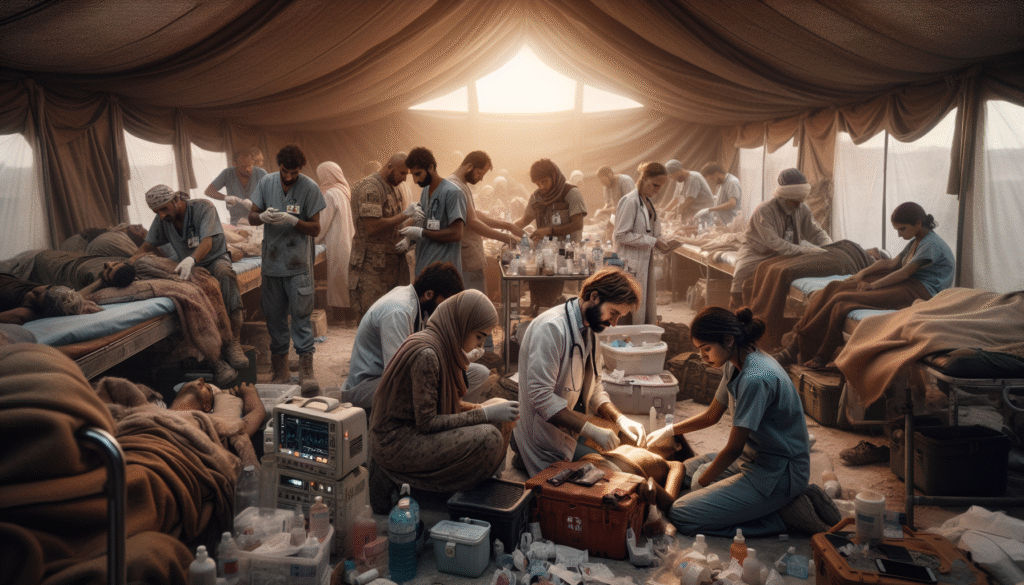
The Ukraine war has also emphasized the importance of decentralized and mobile medical facilities. With established hospitals and medical infrastructure frequently targeted by long-range strikes, the Ukrainian military has relied heavily on mobile surgical units and field clinics positioned close to the front lines. These units, some housed in armored vehicles or underground bunkers, are essential for stabilizing critically wounded personnel before long-range evacuation can be safely conducted.
Another key insight involves the psychological resilience of both caregivers and patients operating in prolonged combat conditions. Breaking Defense reports that battlefield fatigue and accumulated stress have become major challenges for frontline medics, many of whom work with limited supplies and under fire. This has prompted Western militaries, particularly the U.S. Department of Defense, to invest more heavily in combat stress management programs and real-time mental health monitoring tools.
Additionally, the role of technology has taken center stage in adapting to the modern combat environment. The Ukraine conflict has showcased the utility of unmanned aerial systems and AI-based decision tools for casualty tracking and triage, enhancing commanders’ situational awareness and allowing for more efficient resource allocation. There is also growing interest in wearable biometrics and telemedicine capabilities to monitor and remotely assist wounded soldiers awaiting evacuation.
The U.S. military, among others, has been closely observing these developments. At recent symposia and joint training exercises, officials have identified specific policy and procurement changes aimed at integrating these lessons into future doctrine. Chief among these is the need to redesign personal medical kits, prioritize field-forward blood transfusion capabilities, and bolster logistical planning around casualty surges in near-peer engagements.
As the nature of conflict shifts toward more distributed operations and technologically dense battlespaces, the Ukraine war illustrates that strategic innovation in combat medicine is not optional—it is essential. The insights presented in Breaking Defense’s “Lessons For Combat Medicine From The Ukraine Conflict” offer a formative blueprint for Western militaries, highlighting the urgent need to recalibrate battlefield healthcare for the realities of 21st-century warfare.