Chevron’s Venezuela Return and a CIA-Linked Go-Between
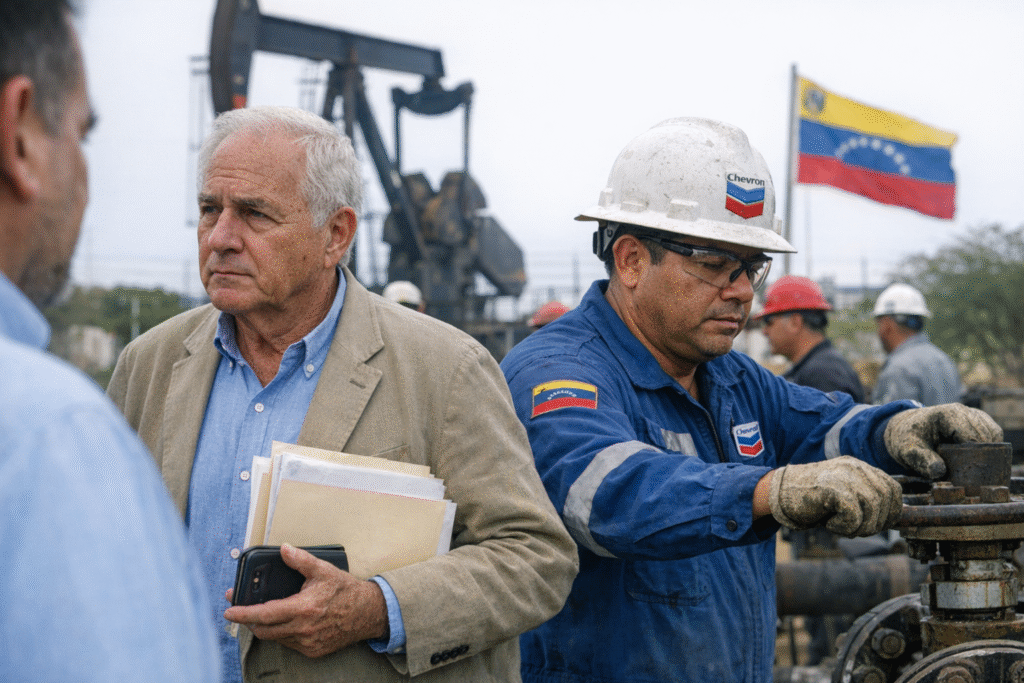
The complex relationship between U.S. energy giant Chevron and Venezuela’s government has entered a new phase, shaped by geopolitics, sanctions policy, and the involvement of a well‑connected intermediary. As detailed in the Wall Street Journal article “Chevron’s Venezuela Fixer With CIA Ties,” published by The Wall Street Journal, behind‑the‑scenes negotiations involving former Chevron executive Ali Moshiri helped reopen channels between the company and officials in Caracas during a period of shifting U.S. policy.
Chevron has long maintained a presence in Venezuela, despite years of political upheaval, economic collapse, and sweeping U.S. sanctions aimed at President Nicolás Maduro’s government. The company’s ability to preserve its stakes in major joint ventures with the state oil company Petróleos de Venezuela SA (PDVSA) has given it a unique position among Western oil majors, many of which exited the country as the crisis deepened.
According to reporting by The Wall Street Journal, Moshiri—who spent decades at Chevron and once oversaw the company’s operations in Africa and Latin America—emerged as a key intermediary in efforts to reestablish cooperation between the company and Venezuelan authorities. His role drew attention because of his longstanding network of contacts in the region and past connections to U.S. intelligence circles, a background that has fueled speculation about the broader diplomatic dynamics surrounding Chevron’s return to productive operations in the country.
After years of strict U.S. sanctions that severely restricted oil industry activity in Venezuela, Washington began adjusting its approach in recent years. The Biden administration authorized limited permissions allowing Chevron to resume some activities intended to recover and export Venezuelan crude under tightly controlled conditions. These measures were framed as part of a broader strategy linking sanctions relief to potential political negotiations between the Maduro government and the Venezuelan opposition.
Within this context, intermediaries capable of navigating both corporate and political landscapes became particularly valuable. People familiar with the situation told The Wall Street Journal that Moshiri’s relationships with Venezuelan officials and his familiarity with Chevron’s long-running operations in the country placed him in a position to facilitate dialogue.
Chevron’s interests in Venezuela date back decades. The company holds stakes in several joint ventures with PDVSA that collectively possess significant production potential, though output has declined sharply amid sanctions, underinvestment, and infrastructure deterioration. Even limited stabilization of these operations could help Venezuela restore some oil export capacity while providing Chevron access to resources that were once central to its Latin American portfolio.
Yet the reactivation of Chevron’s role in Venezuela has not been without controversy. Critics of the Maduro government argue that easing restrictions risks funneling revenue to an authoritarian regime without guaranteeing meaningful democratic reforms. Supporters of the policy counter that carefully calibrated engagement can encourage negotiations while preventing Venezuela’s oil sector from falling further under the influence of geopolitical rivals such as Russia and China.
The involvement of a figure like Moshiri highlights the blurred lines between corporate diplomacy and state interests in a highly politicized energy environment. Senior industry figures and former officials often serve as informal conduits between governments and multinational companies, particularly in regions where formal channels remain constrained by sanctions or political tensions.
Chevron has maintained that its activities in Venezuela strictly comply with U.S. sanctions and are conducted under licenses issued by the U.S. Treasury Department. Those licenses impose clear conditions, including limits on financial flows to PDVSA and oversight of exports and payments tied to the joint ventures.
For Venezuela, even modest increases in oil production carry significant economic implications. The country holds some of the world’s largest proven oil reserves but has struggled for years with collapsing output. Restoring foreign technical expertise and investment is widely viewed as essential for reversing that decline.
The broader geopolitical significance of Chevron’s presence also extends beyond oil markets. Venezuela’s political future remains uncertain, and Washington continues to weigh sanctions relief against demands for electoral reforms. Energy diplomacy, therefore, has become closely intertwined with efforts to shape the country’s political trajectory.
As The Wall Street Journal’s reporting in “Chevron’s Venezuela Fixer With CIA Ties” illustrates, the interplay of energy interests, intelligence networks, and diplomatic maneuvering underscores how corporate actors can become entangled in geopolitical strategy. In Venezuela’s case, the convergence of these forces reflects the enduring global importance of oil and the equally persistent role of political negotiation in determining who benefits from it.