Cartels Mirror Ukraine Drone Tactics in Alarming Shift

Criminal organizations in Latin America are increasingly adopting battlefield tactics observed in the Ukraine conflict, signaling a troubling evolution in the use of drone technology. According to a recent article titled “How cartels are adopting drone tactics from Ukraine,” published by Defense News, drug cartels—mainly based in Mexico—are now deploying uncrewed aerial vehicles (UAVs) in ways that mirror strategies employed by both Ukrainian and Russian forces.
Law enforcement and security analysts report that cartels have adapted commercially available drones for surveillance, smuggling, and—increasingly—direct attack. The escalation in capabilities includes the use of modified quadcopters equipped with improvised explosive devices, marking a significant tactical shift and raising concerns about the domestic proliferation of weapons once primarily confined to military battlefields.
Experts believe the conflict in Ukraine, where drones have become central to reconnaissance and strike missions, has served as both a tutorial and an inspiration for cartel operators. Open-source footage of drone strikes, widely shared on social media and encrypted messaging platforms, demonstrates techniques that non-state actors can replicate at relatively low cost and with minimal training.
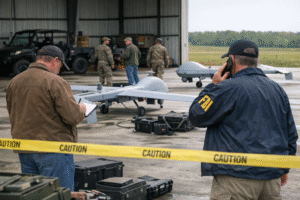
While criminal organizations have previously experimented with UAVs, recent incidents show marked advances. Authorities in Mexico have recovered drones with makeshift munitions, seemingly modeled after those used in Ukraine for dropping grenades or small bombs—a practice seen frequently in the ongoing war. The emulation extends to tactics as well, including swarm operations and the use of drones to disable surveillance infrastructure or distract security forces during ground assaults.
Security officials warn that this evolution could dramatically alter the threat landscape in regions plagued by organized crime. The deployment of drones capable of striking with pinpoint accuracy poses new challenges for law enforcement agencies unprepared to counter aerial threats from criminal entities. Unlike state militaries, these agencies often lack both the technology and legal frameworks needed to identify, track, and neutralize drones before they are deployed in attacks.
Increased access to global communication tools, 3D-printing technology, and cross-border networks has also accelerated this weaponization process. Defense News notes that cartels are not only learning from war zones but also adapting tactics to suit the urban and rural environments in which they operate.
The strategic implications of this development go beyond Mexico’s borders. U.S. officials have raised concerns about the possible spillover of these tactics into American territory, particularly near the southern border. Additionally, as other transnational criminal groups observe and replicate such tactics, the threat could expand across the continent and globally.
Policy experts emphasize the urgent need for international cooperation to regulate drone use, share intelligence on UAV threats, and invest in counter-drone technology for civilian and law enforcement agencies. Without a concerted response, analysts fear that what is currently a tactical innovation may become a standard tool in the militant and criminal arsenal.
The spread of battlefield UAV techniques into criminal activity reflects a growing convergence between conventional warfare and asymmetric threats, a trend that complicates both national and regional security strategies. As the Ukraine conflict continues to redefine modern combat, its lessons—both intended and unintended—are being absorbed far beyond the front lines.