B-52 Begins Testing with Advanced New Radar System
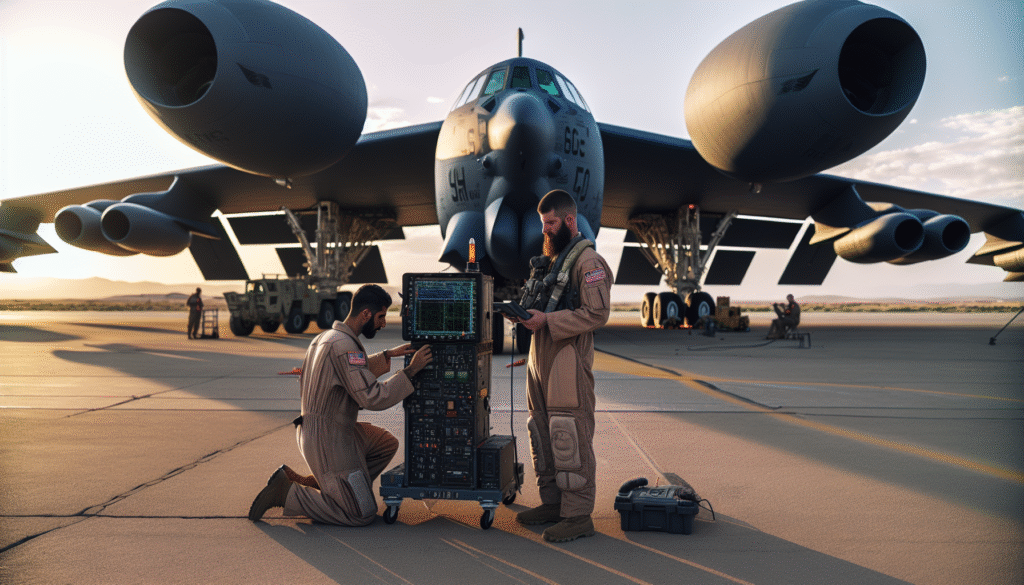
The U.S. Air Force’s iconic B-52 Stratofortress has taken a significant step toward its modernization goals as the first aircraft equipped with a new radar system has flown to Edwards Air Force Base in California for testing. According to Defense News in its December 15 article, “B-52 with key radar upgrade flies to Edwards for testing,” the long-range bomber, designated BU 60-0050, arrived at the base bearing the active electronically scanned array (AESA) radar, a critical enhancement intended to dramatically improve the aircraft’s targeting and navigation capabilities.
The radar upgrade is part of a sweeping series of modifications planned under the B-52 Radar Modernization Program (RMP), which replaces the Cold War-era radar systems with technology derived from the F/A-18E/F Super Hornet’s Raytheon AN/APG-79 radar. While much of the aircraft remains visually indistinguishable from earlier models, the internal changes signify a technological leap that military planners hope will ensure the aircraft’s relevance for decades to come. The Air Force has stated its intention to keep the B-52 operational until at least 2050.
Testing at Edwards Air Force Base will evaluate how well the upgraded radar integrates with the aircraft’s existing systems and supports a wider array of modern weaponry. Engineers will assess its ability to detect and track targets with greater fidelity, operate in complex threat environments, and provide full-spectrum situational awareness across a variety of missions.
Beyond military operational capabilities, the radar upgrade also reflects a broader logistical and strategic shift: by standardizing components with other Air Force and Navy platforms, the modernization may reduce maintenance costs and simplify pilot training over time. Furthermore, this update complements broader efforts to refit the B-52 fleet with new Rolls-Royce F130 engines, digital cockpits, and updated electronic warfare systems.
The Air Force plans to retrofit 70 B-52s in total and re-designate the aircraft as the B-52J once all modernization efforts are complete. Officials say the radar system should reach initial operational capability in 2027, with the broader modernization timeline stretching into the next decade.
For defense analysts and military historians alike, the B-52’s continued evolution underscores its enduring role as a backbone of U.S. strategic air power. Originally introduced in the 1950s, the aircraft has survived numerous attempts at retirement thanks to its versatility, payload capacity, and global reach. The integration of state-of-the-art radar keeps the bomber viable in an era where near-peer adversaries are rapidly advancing their own long-range precision strike systems.
As the testing phase begins at Edwards, Air Force leaders remain cautiously optimistic. If successful, the radar upgrade could significantly extend the effectiveness of the B-52 in high-end combat scenarios — ensuring that another generation of airmen can rely on the venerable aircraft for global deterrence and power projection.