Australia’s Navy Chief Identifies Undersea Cable Protection as a Critical National Security Priority Amid Rising Indo-Pacific Tensions
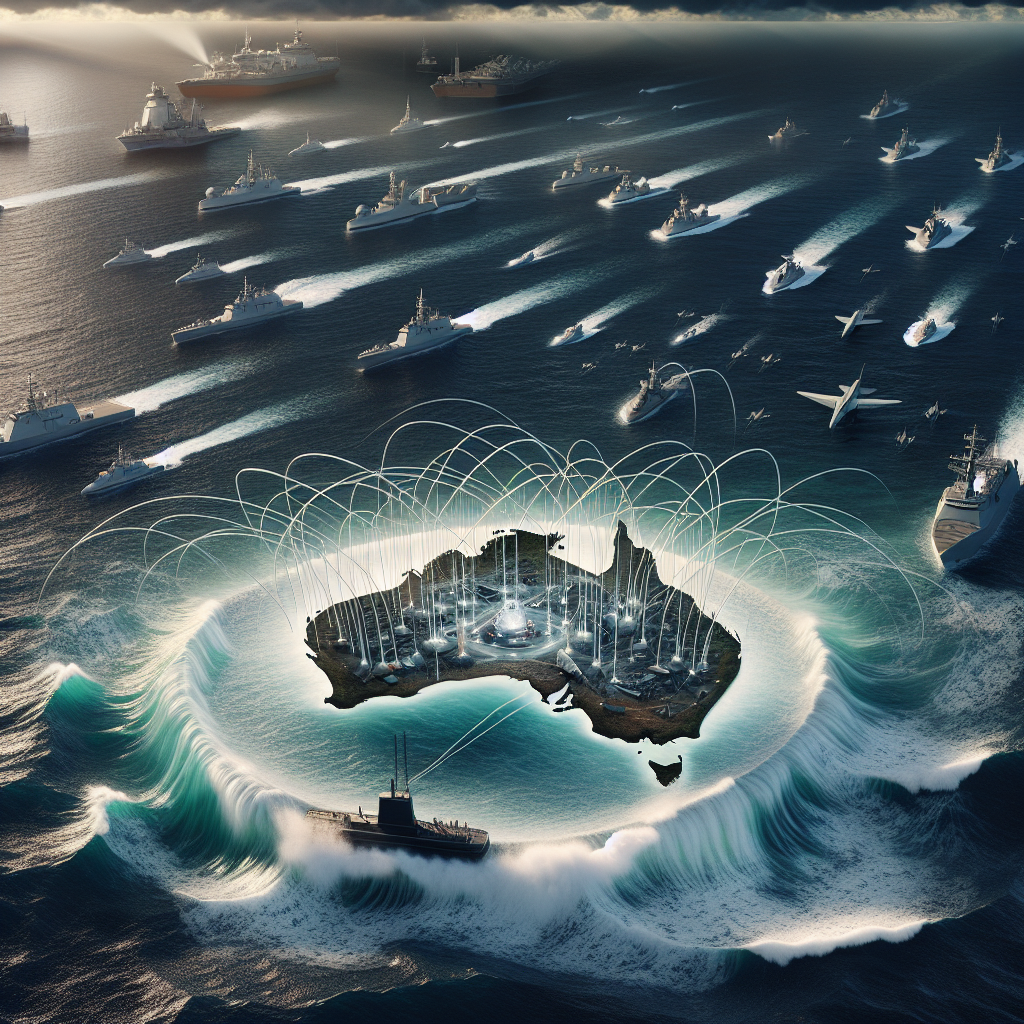
In a candid assessment that underscores evolving maritime threats in the Indo-Pacific, the head of the Royal Australian Navy has identified the protection of undersea cables as an “existential” challenge for national security. In a report published by Breaking Defense titled “Greatest vulnerability: Australian Navy Chief says protecting undersea cables is ‘existential,’” Vice Adm. Mark Hammond underscored the growing vulnerability of the fiber-optic infrastructure that underpins global communications, trade, and intelligence networks.
Speaking during a maritime security forum in Sydney, Vice Adm. Hammond emphasized that adversary nations are increasingly targeting submarine cable infrastructure as part of multidomain hybrid warfare strategies. With over 95 percent of global data traffic—including financial transactions and military communications—reliant on undersea cables, experts warn that attacks or disruptions could have severe ramifications for both governments and the private sector.
“The undersea domain is no longer a sanctuary,” Hammond stated, warning that hostile state actors recognize the cables as critical arteries of connectivity that can be exploited in times of rising geopolitical tension. He pointed to incidents involving suspected Russian efforts to map or interfere with cable networks as harbingers of the future strategic contest beneath the waves.
Australia, like many technologically advanced democracies, finds itself particularly exposed due to its geographic isolation and reliance on a limited number of submarine cables for both domestic and international data traffic. Government officials and defense analysts have frequently cautioned that a severance or compromise of these cables—whether by covert ships, submarines, or unmanned systems—could cripple essential services and create strategic confusion at the outset of a broader conflict.
To address the threat, the Royal Australian Navy is considering a suite of measures including enhanced undersea surveillance, closer coordination with private cable operators, and potentially new classes of military assets tailored for subsea domain awareness. The Department of Defence is also working in concert with regional allies, including the United States and Japan, to ensure redundancy and resilience in cable infrastructure across the Pacific.
Vice Adm. Hammond advised that deterrence in the undersea theatre will increasingly depend on the capability to attribute malicious activity and respond proportionally. “An adversary that thinks they can attack this part of our infrastructure with impunity is one we must prove wrong,” he said.
His comments come amid a broader reappraisal of non-kinetic threats faced by modern navies, which now encompass cyber warfare, electromagnetic spectrum dominance, and hybrid operations carried out by paramilitary or unflagged vessels. Protection of maritime infrastructure—including not only cables but also offshore energy platforms and ports—has moved rapidly up the list of defense priorities.
As Canberra continues to recalibrate its defense posture in an increasingly contested Indo-Pacific environment, the role of the Royal Australian Navy in defending unseen but vital systems becomes ever more pivotal. The undersea realm, once hidden and out of sight, is now emerging as a central domain in the strategic competition between democracies and authoritarian powers.