Army Streamlines Ground Autonomy Amid Budget Pressures
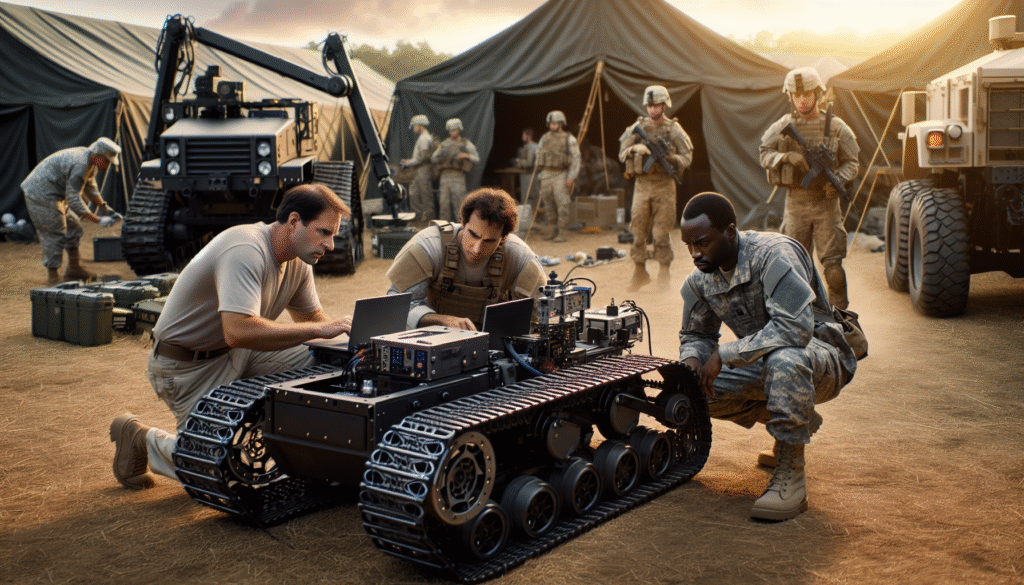
As the U.S. Army continues its push toward integrating more advanced autonomy into its ground vehicle fleet, officials are signaling a fresh round of program consolidations and potential funding cuts aimed at streamlining overlapping initiatives. According to a report titled “More Cuts Loom As Army Streamlines Ground Vehicle Autonomy Efforts: Official,” published by Breaking Defense, service leaders are reassessing their portfolio of autonomous vehicle programs to eliminate redundancy and sharpen focus on mission-critical technologies.
At the center of this reassessment is the Army’s recognition that years of experimentation and overlapping development efforts have led to a convoluted autonomy ecosystem, with multiple projects often targeting similar capabilities. While officials have hailed autonomy as a transformative capability for future ground operations—offering improved survivability, reduced logistics burdens, and increased precision—the road to fielding reliable and scalable autonomous platforms has been marked by technical hurdles and budget pressures.
Maj. Gen. Glenn Dean, Program Executive Officer for Ground Combat Systems, conveyed to Breaking Defense that the Army now aims to “converge and rationalize” its various autonomous vehicle initiatives. The plan, he explained, is to identify core technologies that can be matured and scaled across mission sets, rather than pouring resources into duplicative or narrowly scoped programs. This would involve a more disciplined investment strategy that ensures limited funds are directed toward efforts most likely to deliver operational benefits in the near to medium term.
The evolving approach comes amid a broader shift within the Department of Defense toward selecting fewer high-priority modernization projects capable of yielding faster returns. In particular, the Army is reprioritizing its acquisition roadmap against the backdrop of flat or declining future defense budgets. Recent years have seen the service take similar pruning measures across other modernization portfolios, such as long-range fires and network integration.
The reevaluation of the Army’s autonomous ground vehicle efforts aligns with past critiques from oversight bodies that have warned of inefficient program management and a lack of clearly defined capability objectives. By consolidating programs and aligning them with well-understood operational needs, the Army hopes to accelerate fielding timelines and reduce integration complexity for units on the ground.
Dean emphasized that rather than halting development outright, the shift represents a move toward building common, scaleable autonomy solutions—an approach that could eventually serve platforms ranging from robotic combat vehicles to supply convoys. Such standardization may also improve interoperability with industry partners and other military branches, offering a flexible framework for future expansion.
Despite this strategic realignment, questions remain about how such cuts and consolidations will affect timelines for autonomous vehicle deployment and the roles of traditional defense contractors and emerging tech startups. The Army has invested heavily in recent years in cross-sector partnerships to spur rapid innovation in autonomy, artificial intelligence, and sensors—technologies that remain crucial to the success of any future ground autonomy strategy.
As the Army works to strike a balance between innovation and practicality, the defense community will be closely watching how this new phase of portfolio refinement unfolds and what it signals for the future of autonomous operations in a contested environment.