Army Launches Western Hemisphere Command Shift
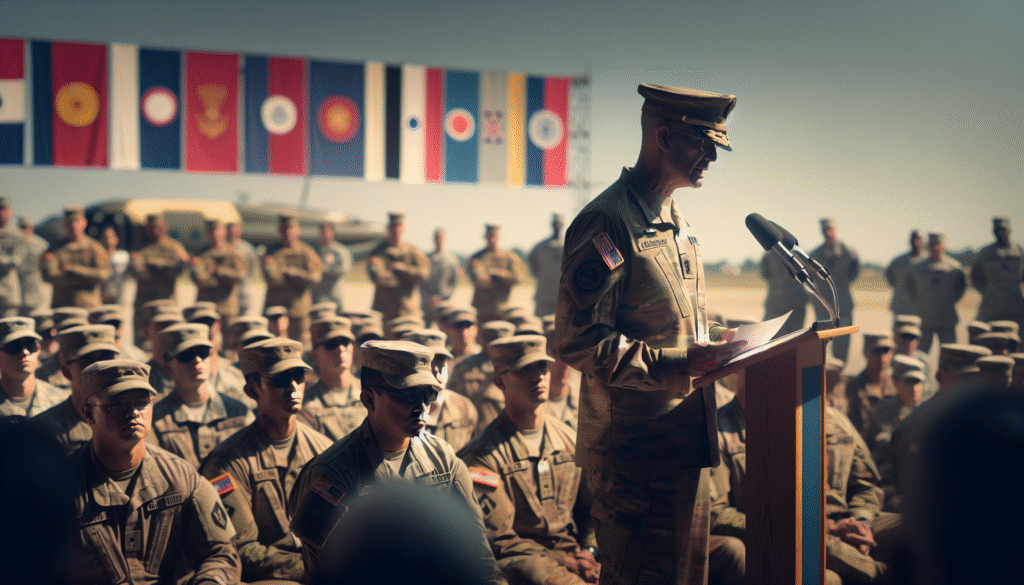
In a significant strategic move, the U.S. Army has formally established a new high-level command focused on the Western Hemisphere, signaling a shift in military priorities toward bolstering homeland defense and enhancing regional integration. As reported in “Army stands up Western Hemisphere Command, prioritizing homeland defense, consolidation” by Breaking Defense, the new Western Hemisphere Command (WHC) is designed to consolidate and coordinate efforts across the North and South American continents, with the goal of confronting evolving security threats that continue to blur the line between foreign and domestic theaters.
The command, which became operational in late 2025, reflects a growing recognition within the Pentagon that traditional geographical boundaries no longer adequately reflect the nature of modern threats. From cyber disruptions and transnational criminal networks to the increasing presence of near-peer competitors in the Americas, military and civilian leaders say the Western Hemisphere faces complex challenges that demand a more unified and agile organizational response.
According to Army officials cited by Breaking Defense, the WHC will streamline command structures that have historically been spread across multiple combatant commands and enable faster, more coherent responses to incidents that span territories and domains. By doing so, the Army aims not only to improve homeland defense readiness but also to deepen interoperability with partner nations and state-level emergency management agencies.
The establishment of the WHC comes amid broader discussions in defense circles about the balance of focus between overseas commitments and domestic preparedness. While the U.S. military has maintained a global orientation for decades, recent geopolitical shifts and the resurgence of strategic competition in the Western Hemisphere, most notably from China and Russia, have prompted analysts to rethink where and how resources are allocated.
In particular, the WHC is expected to have operational oversight of Army North, Army South, and various homeland defense initiatives, creating a centralized command structure akin to the way the Indo-Pacific and European theaters are managed. Officials noted that while U.S. Northern Command (NORTHCOM) remains the lead combatant command for homeland defense, the new WHC will serve as the Army’s dedicated lead for land operations within that domain.
Breaking Defense reports that the WHC will also play an important role in coordinated disaster response, humanitarian missions, and security cooperation activities—missions that traditionally have spanned multiple commands and often lacked unified leadership or strategic alignment. By providing a focused chain of command, the Army hopes to quicken response times and improve synergy among domestic agencies and international allies.
This move is consistent with the Department of Defense’s recent strategic guidance, which emphasizes resilience, integration, and speed of response as key tenets of modern military planning. Analysts see the WHC as a logical evolution in the Army’s force posture—one that aligns with the realities of 21st-century conflict, which often includes gray-zone activities, supply chain sabotage, and influence operations aimed at undermining national stability from within.
While full operational capacity for the new command is expected to be achieved by mid-2026, Army leaders have already begun integrating WHC into ongoing exercises and joint planning processes. Its long-term success, experts say, will hinge not only on bureaucratic efficiency but also on its ability to foster trust and collaboration across a mosaic of federal, state, and foreign actors.
The creation of the WHC is one of the most consequential organizational changes for the U.S. Army in recent years, reflecting a strategic recalibration aimed at enhancing readiness, resilience, and responsiveness closer to home. As global instability increases and challenges grow more complex, the Army’s renewed focus on the Western Hemisphere may well mark a pivotal turn in American defense posture.