Apache Helicopters Down Drones in Europe Test
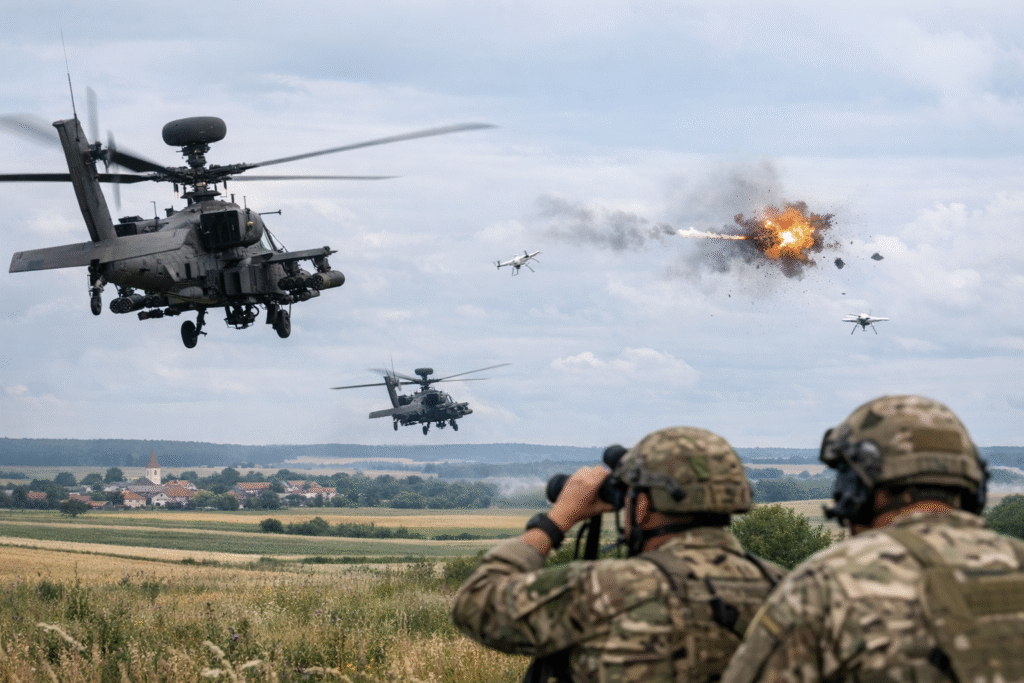
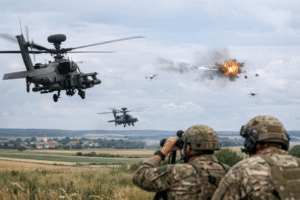
In a development that underscores the growing urgency of counter-drone warfare, U.S. Army AH-64 Apache helicopters have successfully engaged and destroyed unmanned aerial systems during a live combat exercise in Europe, marking what officials describe as a first for the platform in that operational context.
According to the Military Times article “Apache helicopter shoots down drones in Europe for first time in combat exercise,” the demonstration took place as part of a broader effort to adapt legacy combat systems to the rapidly evolving threat posed by small, low-cost drones. The exercise, conducted with U.S. forces stationed in Europe, aimed to test how effectively attack helicopters can detect, track, and neutralize unmanned aircraft in realistic battlefield conditions.
Military officials say the exercise reflects a strategic shift as drones become a central feature of modern conflicts, particularly following their widespread use in Ukraine. The Apache, traditionally designed for anti-armor and close air support missions, is now being evaluated for its ability to counter aerial threats that are smaller, cheaper, and often more numerous than conventional targets.
During the exercise, Apache crews employed onboard sensors and weapon systems to identify and engage drone targets. While details about the specific munitions used were limited, the results were described as successful and indicative of the helicopter’s potential role in layered air defense. The ability to use existing platforms for counter-drone operations could offer militaries a flexible and cost-effective supplement to dedicated air defense systems.
The demonstration also highlighted the increasing importance of adaptability in military doctrine. Rather than relying solely on specialized systems, armed forces are exploring ways to integrate counter-drone capabilities across a wider range of assets. This approach is seen as critical in environments where adversaries deploy drones in large numbers to overwhelm defenses.
U.S. Army officials emphasized that the exercise was not only a technical milestone but also a step toward refining tactics and coordination between air and ground units. Lessons learned from the drills are expected to inform future training and operational planning, particularly in Europe, where NATO forces are focused on deterring and responding to potential threats from near-peer adversaries.
As drone technology continues to advance and proliferate, the question facing militaries is not whether to adapt, but how quickly they can do so. The Apache’s performance in this exercise suggests that even long-established platforms can find new relevance in an increasingly drone-centric battlefield.