AI Emerges as Key Tool for Modern Intelligence Work

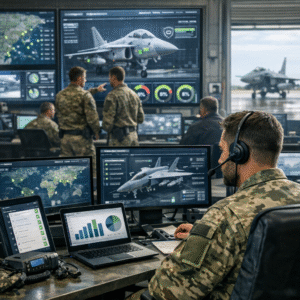
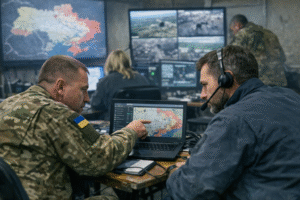
As the volume of global intelligence data expands at an unprecedented pace, defense and national security communities are increasingly leveraging artificial intelligence to keep pace. The growing integration of AI into intelligence workflows was the focus of a recent report by DefenseScoop, titled “Too much data, too few analysts: How AI offers a force multiplier for intelligence analysts.” The article highlighted the U.S. Department of Defense’s efforts to address a mounting imbalance: vast data inflows paired with a shortage of trained human analysts.
Modern warfare and surveillance generate terabytes of unstructured data from satellites, sensors, communications, and open sources each day. For intelligence personnel, processing this ever-increasing stream within operationally relevant timeframes has become a central challenge. According to DefenseScoop, AI tools—particularly advanced machine learning and large language models—are being viewed as essential to solving this imbalance by enabling analysts to sift through data more efficiently and at greater scale.
One of the key takeaways from the DefenseScoop article is the Defense Department’s recognition that artificial intelligence is not a one-size-fits-all solution, but rather a tool that must be adapted to specific mission sets and operational requirements. In practice, this means pairing automated systems with human judgment to guide decisions more effectively. For example, AI can rapidly flag anomalies within petabytes of imagery or communications data, allowing human analysts to focus on verifying and contextualizing only the most relevant information.
The report also emphasized the Pentagon’s long-term investment in making AI tools more usable for the average analyst, not only elite data scientists or software engineers. This includes developing models that can generate natural-language summaries or query datasets in plain English, a shift that could significantly expand the number of personnel who can benefit from AI capabilities.
Nevertheless, concerns persist around the limitations and potential risks of relying too heavily on AI in a domain where accuracy, ethics, and context are paramount. Experts interviewed by DefenseScoop cautioned that models remain vulnerable to biases and hallucinations—instances where the system generates false or misleading results with high confidence. As such, human oversight and rigorous testing remain critical components of any AI integration plan.
In addition to technical development, policy and procurement hurdles still impede rapid AI adoption. Differing data standards across intelligence agencies and bureaucratic resistance to new technologies can delay implementation. Yet, officials acknowledge that failing to modernize may leave the U.S. vulnerable to adversaries who are already deploying similar technologies for cyber operations, information warfare, and battlefield intelligence.
With peer competitors such as China making significant investments in AI-driven military capabilities, Pentagon officials have grown more vocal about the strategic imperative to keep pace. As underscored in DefenseScoop’s reporting, intelligence is one area where a well-deployed AI system can not only save time, but potentially reshape outcomes on the battlefield.
As the U.S. Defense Department advances its AI agenda, balancing speed, innovation, and responsibility will remain a delicate equation. But one point is increasingly clear: in an era of information overload, AI is emerging as a necessary ally for the modern intelligence analyst.