Admiral Cooper Balances Force and Diplomacy on Iran
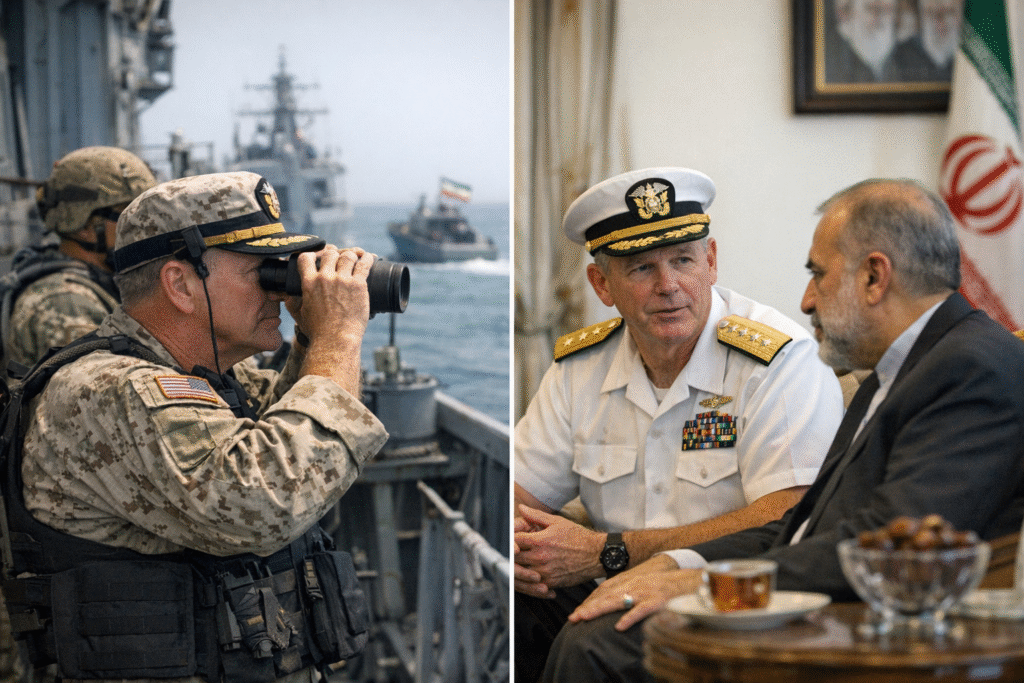
In a recent profile, The Wall Street Journal examined the role of a senior U.S. naval commander navigating the intersection of military pressure and diplomatic signaling amid heightened tensions with Iran. The article, titled “Admiral Cooper, the Warrior-Diplomat Running Trump’s War in Iran,” portrays a figure whose responsibilities extend beyond battlefield command into the delicate realm of international diplomacy.
According to The Wall Street Journal, Admiral Brad Cooper has emerged as a central figure coordinating American military strategy in the Middle East during a period marked by escalating confrontation with Tehran. A career naval officer known for his measured demeanor and strategic patience, Cooper has been tasked with overseeing operations that blend conventional naval power with efforts to contain regional spillover and manage relations with U.S. allies.
The newspaper describes Cooper as embodying the dual role of combat leader and diplomatic interlocutor, a balancing act increasingly common for senior U.S. commanders operating in politically sensitive theaters. In the current environment, military actions against Iranian assets and proxy networks often carry implications far beyond immediate tactical outcomes. Each move at sea, in the air, or through covert channels can influence regional alliances and risk widening the conflict.
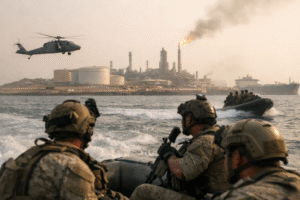
The Wall Street Journal reports that Cooper’s responsibilities include coordinating maritime security across vital shipping corridors while maintaining a multinational coalition presence designed to deter Iranian aggression. The Persian Gulf, Gulf of Oman, and surrounding waters remain some of the most strategically significant trade routes in the world. Any disruption, particularly involving energy shipments, has the potential to reverberate through global markets.
The article details how U.S. naval operations under Cooper’s command have increasingly focused on countering Iranian-linked threats such as missile launches, drone attacks, and harassment of commercial vessels. American and allied naval forces regularly patrol the region, monitor shipping traffic, and respond to incidents involving Iranian Revolutionary Guard units or affiliated militia groups. These missions often require rapid decision-making that blends tactical judgment with an awareness of diplomatic consequences.
Yet the Wall Street Journal article suggests that Cooper’s role extends well beyond command of ships and aircraft. The admiral has become a frequent point of contact with regional military leaders and diplomats, helping maintain cooperation among partners whose interests do not always perfectly align. Middle Eastern governments, European allies, and regional security organizations all play roles in maritime security initiatives designed to counter destabilizing activity.
Such engagement reflects a broader shift in how senior commanders operate. Modern military leaders are expected not only to direct combat operations but also to sustain fragile coalitions, reassure regional partners, and communicate strategic intent to adversaries. In the case of Iran, this challenge is particularly acute. The United States seeks to deter hostile actions without triggering a broader war, while still signaling readiness to respond forcefully.
The Wall Street Journal notes that Cooper’s approach emphasizes careful calibration. Naval deployments and responses to Iranian activity are designed to demonstrate capability while avoiding unnecessary escalation. This strategy involves visible patrols, coordinated defensive operations, and intelligence-sharing among allied countries. It also requires constant communication between military commanders and civilian policymakers in Washington.
Observers quoted in the article describe Cooper as well suited to the assignment because of his experience working with multinational forces and his reputation for disciplined decision-making. Such qualities are critical in a region where incidents can escalate quickly and political stakes remain high.
At the same time, the strategic environment remains volatile. Iranian-backed groups continue to operate across the Middle East, and maritime confrontations persist intermittently. Attacks involving drones, missiles, and small craft have highlighted the evolving nature of the threat landscape facing naval forces in the region.
In “Admiral Cooper, the Warrior-Diplomat Running Trump’s War in Iran,” The Wall Street Journal presents a portrait of a commander operating at the intersection of military power and statecraft. The article suggests that in today’s security environment, the distinction between the two has grown increasingly blurred.
For the United States, maintaining stability in the Middle East requires not only formidable military capabilities but also a steady ability to manage risk. As the newspaper’s account illustrates, those responsibilities now rest heavily on leaders like Cooper, whose decisions are shaped as much by geopolitical calculation as by the immediate demands of naval command.