Electronic Warfare Gaps Are Leaving U.S. Air Power Exposed Against Modern Adversaries
The U.S. Air Force faces a growing EW capability gap as adversaries field advanced integrated air defense systems.

The U.S. Air Force is confronting an increasingly urgent capability deficit in electronic warfare, as near-peer adversaries continue to field sophisticated integrated air defense systems that challenge American air superiority in ways kinetic firepower alone cannot resolve. A detailed analysis published by Air Space Forces Magazine lays out the structural and budgetary reasons the service must treat EW not as a niche specialty but as a foundational combat requirement — one that has atrophied in the post-Cold War era even as adversary systems have advanced. The stakes extend well beyond air-to-air engagements, touching on the broader question of whether U.S. forces can reliably operate in contested electromagnetic environments at all. That question becomes more consequential as the Pentagon’s strategic focus shifts toward high-end conflict with China or Russia, where electromagnetic spectrum dominance is a prerequisite for nearly every other mission.
The analysis arrives as the Air Force navigates difficult budget trade-offs across its modernization portfolio — a context that makes the will to fight calculus of potential adversaries directly relevant to how Washington prioritizes EW investment. Adversaries who believe they can neutralize U.S. airpower through advanced surface-to-air missile systems and electronic attack capabilities have strong incentive to escalate; closing that belief gap requires demonstrable EW capability, not just kinetic overmatch.
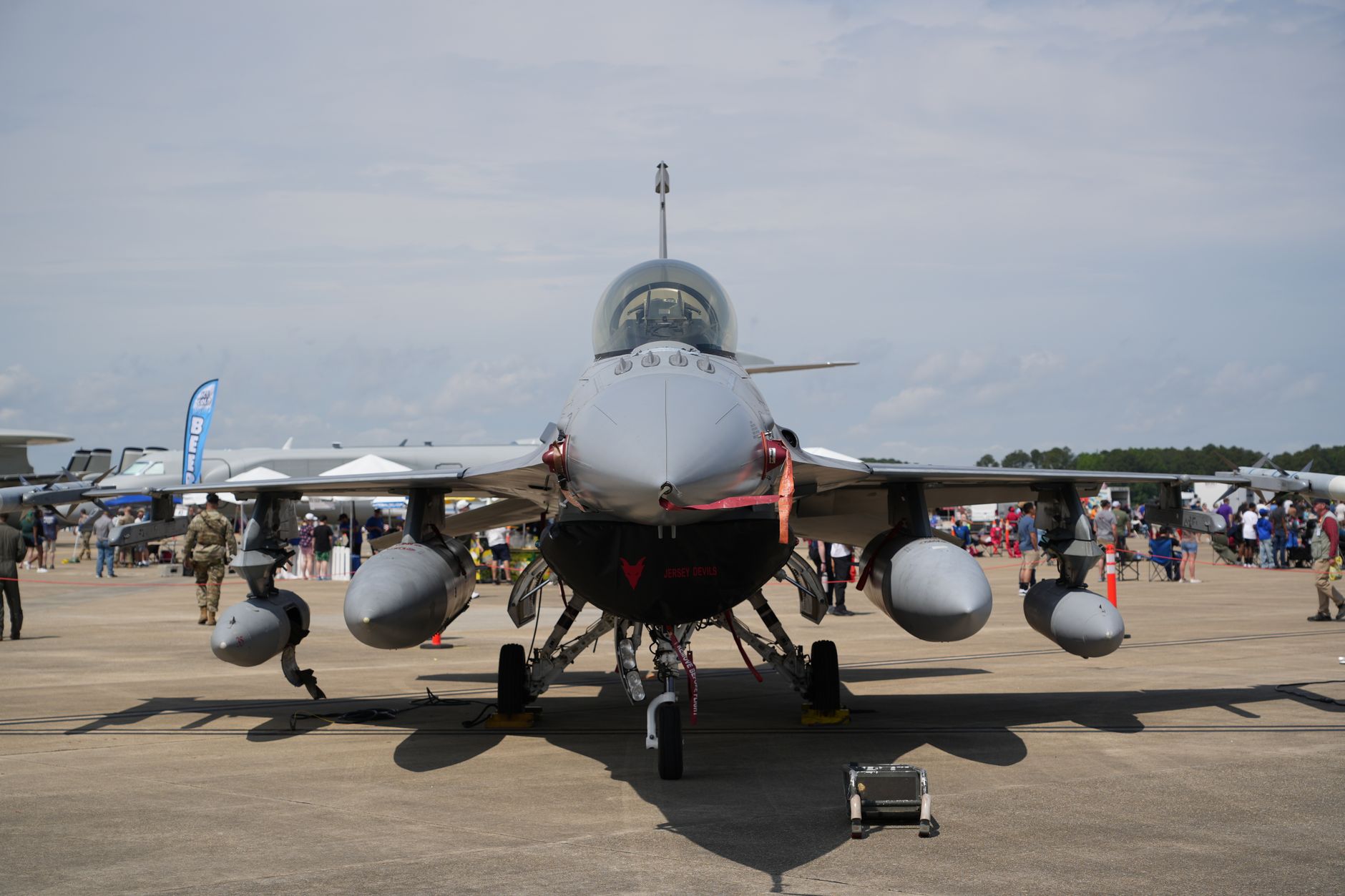
A Capability That Was Allowed to Erode
Following the Cold War, the Air Force systematically reduced its dedicated electronic warfare capacity, operating under the assumption that U.S. technological superiority and precision-strike capabilities would suffice in the low-threat environments that defined operations in the 1990s and 2000s. The retirement of specialized EW platforms and the reduced emphasis on spectrum operations left the service without the layered, dedicated electronic attack options it once maintained. China and Russia, meanwhile, studied U.S. operational patterns and invested heavily in integrated air defense systems and electronic jamming capabilities specifically designed to exploit that gap.
The result, according to the Air and Space Forces Magazine assessment, is a mismatch between what the Air Force can deliver in the electromagnetic domain and what a high-end conflict scenario would demand. Modern adversary air defense networks do not rely on a single radar or missile battery that can be individually suppressed; they are networked, redundant, and designed to operate even under partial degradation. Defeating or disrupting them requires persistent, sophisticated electronic attack — the kind the Air Force currently lacks the depth to sustain at scale.
The Path Forward for EW Investment
Restoring meaningful EW capability requires investment across multiple lines simultaneously: dedicated platforms, trained personnel, and the underlying technology base that supports both. The Air and Space Forces Magazine analysis stresses that electronic warfare cannot be treated as an add-on to existing aircraft or a software patch to legacy systems; it demands deliberate program investment and a service culture that values the electromagnetic fight as much as it values stealth or speed. The Air Force has acknowledged the gap in various planning documents, but acknowledgment has not consistently translated into sustained budget commitment.

The broader implications extend to joint force operations. Air Force EW assets are not exclusively service tools — they underwrite the electromagnetic protection of Army ground forces, Navy surface combatants, and allied coalition partners operating in contested airspace. Deficiencies in Air Force EW capacity therefore carry cascading risk across the joint fight, a point that adds urgency to what might otherwise be treated as a service-internal procurement discussion. As the Pentagon continues to define what next-generation strike capabilities look like against integrated defenses, the electromagnetic dimension of that fight deserves equal priority alongside the kinetic one.