Ukraine War Exposes a Structural Speed Problem at the Heart of NATO Training
NATO trainers returning from Ukraine say peacetime bureaucracy cannot match the battlefield’s pace of change — and the gap is widening.

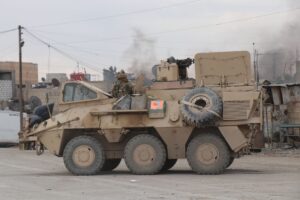
NATO officers who have trained Ukrainian forces say the experience has made one institutional failure unmistakably clear: the alliance’s peacetime systems — from doctrine manuals to procurement cycles — operate at a tempo that would be dangerous in a high-intensity conflict. The observation, reported by Business Insider, is emerging as a quiet consensus among commanders who have rotated through training missions and watched Ukraine adapt to battlefield realities far faster than Western institutions can formally respond. That contrast is now shaping a broader internal debate inside NATO about what structural reforms are actually necessary before a potential Article 5 contingency.
The urgency is underscored by conditions on the ground. A separate Business Insider report on front-line casualties found that Ukrainian troops are sustaining losses simply moving in and out of their own trenches — a measure of how lethal and unforgiving the operational environment has become. That intensity compresses the timeline for every decision, from individual tactics to unit-level logistics, in ways that peacetime training schedules were never designed to accommodate. It is precisely this compression that NATO trainers say their home institutions struggle to replicate or even acknowledge. The alliance’s air defense doctrine has already undergone significant revision in response to the drone and missile threat landscape Ukraine revealed — but trainers argue that doctrinal adaptation is still moving too slowly across the board.
The Manual Problem: Annual Updates on a Month-by-Month Battlefield
One of the most concrete illustrations of the speed mismatch involves training manuals. According to a related Business Insider report citing a NATO commander, Western training manuals update on annual cycles — a cadence that is structurally incapable of tracking a battlefield where tactics evolve month to month or faster. Ukrainian forces have had to absorb lessons about drone countermeasures, electronic warfare adaptation, and trench defense through informal channels and unit-level experience rather than through any formal curriculum that NATO trainers brought with them. The commander cited in that report described the mismatch as a systemic challenge, not an individual failure.
This disconnect between the pace of battlefield learning and the pace of institutional documentation is not simply an inconvenience. In a peer conflict, it translates directly into training that is partially obsolete before it is delivered. NATO trainers working with Ukrainian units have reportedly had to improvise, drawing on real-time observations from the front rather than validated doctrine — an effective workaround in this specific context, but one that highlights how dependent effective training has become on proximity to an active conflict rather than on the alliance’s own institutional machinery.
Procurement and Institutional Bureaucracy: A Parallel Lag
The training tempo problem is one dimension of a wider institutional sluggishness that extends into procurement and capability development. Alliance members have repeatedly acknowledged delays in ammunition production, equipment delivery, and industrial scaling since Russia’s full-scale invasion began in February 2022. NATO trainers see the same underlying dynamic playing out in the training domain: processes that are defensible in peacetime — deliberate review cycles, multi-nation coordination, formal validation requirements — become liabilities when speed is operationally decisive. The question being raised internally is whether those processes can be accelerated without sacrificing the quality controls that make them valuable.
The problem is structural rather than political. Defense establishments across the alliance were built around planning horizons measured in years, not the weeks or months in which Ukrainian forces have had to absorb, test, and discard tactical approaches. Reforming those institutions to operate at a different tempo — without simply abandoning rigor — is a challenge that goes well beyond the training branch. It touches procurement law, budget authorization timelines, interoperability standards, and the foundational question of what a credible deterrence posture actually requires from defense funding and industrial output in the near term.

Whether NATO can translate the operational lessons being documented by its trainers in Ukraine into durable institutional change remains an open question. The trainers themselves appear to be the clearest voices inside the alliance warning that the gap between wartime learning and peacetime adaptation is not closing on its own — and that closing it will require deliberate decisions about how the alliance organizes, funds, and authorizes change at speed.