Japan and South Korea Are Reshaping Their Fleets to Counter China’s Naval Expansion
Tokyo and Seoul are accelerating warship programs, missile systems, and maritime doctrine to offset China’s growing naval reach in the Indo-Pacific.
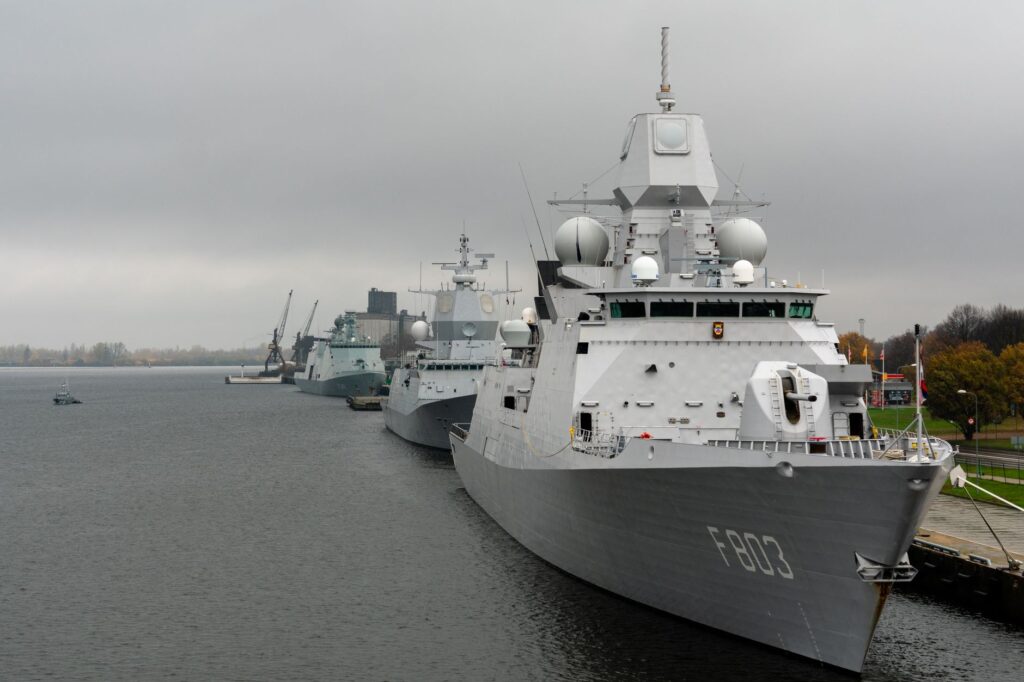
Japan and South Korea are undertaking some of the most ambitious naval modernization programs in their postwar histories, driven by a shared assessment that China’s rapidly expanding fleet presents a credible and growing threat to regional stability. According to Breaking Defense, both nations are investing heavily in new surface combatants, undersea warfare assets, and long-range strike capabilities as Beijing continues to commission warships at a pace that has consistently outpaced Western navies over the past decade. The buildup reflects not just hardware procurement but a doctrinal shift — both countries are moving toward more offensively postured maritime forces than their constitutions and postwar norms traditionally allowed.
The scale of these efforts places Tokyo and Seoul alongside other U.S. allies recalibrating their defense postures in Asia. Regional naval competition has already extended into Southeast Asia, where, as covered in earlier Philippine naval development reporting, South Korean shipbuilder Hyundai has been directly involved in expanding allied fleet capacity against a backdrop of Chinese maritime assertiveness.
Japan’s Expanding Surface and Strike Posture
Japan’s Maritime Self-Defense Force is pursuing a significant expansion of its destroyer fleet and is working to field land-attack cruise missiles that would, for the first time, give Tokyo a credible counterstrike capability against distant targets. The program represents a fundamental reinterpretation of Japan’s exclusively defensive posture, one that the government has framed under its revised National Security Strategy as a necessary response to the missile and naval threat posed by both China and North Korea. Breaking Defense reported that Japan’s defense budget trajectory — aimed at reaching two percent of GDP — is directly enabling these procurement cycles, which include upgrades to Aegis-equipped destroyers and the acquisition of extended-range munitions.
Tokyo is also investing in unmanned and undersea systems, recognizing that the waters around the Southwest Island chain, including the Nansei Shoto archipelago stretching toward Taiwan, are likely to be a primary theater in any regional contingency. Officials have described layered sea-denial and maritime domain awareness as central to Japan’s updated operational concept, though specific program timelines and unit counts remain subject to ongoing budget negotiations.
South Korea’s Carrier and Submarine Ambitions
South Korea’s naval ambitions are arguably even more expansive in structural terms. Seoul is pressing forward with plans for a light aircraft carrier — a platform that would represent a generational leap in the Republic of Korea Navy’s power-projection capability — alongside a sustained investment in KSS-III class submarines equipped with submarine-launched ballistic missiles. Breaking Defense noted that South Korea’s indigenous defense-industrial base, already one of the most competitive in the world for shipbuilding, is central to executing these programs without the delivery bottlenecks that have slowed procurement in some NATO states.
Both Seoul and Tokyo face a common operational challenge: coordinating their growing capabilities with U.S. Indo-Pacific Command in ways that are interoperable but do not subordinate their own national command authority. Trilateral exercises and intelligence-sharing arrangements have improved in recent years following diplomatic normalization efforts between Japan and South Korea, but officials have not confirmed the existence of any formal combined operational planning framework that would govern wartime coordination between the two countries’ fleets independent of U.S. leadership.
Industrial Capacity and the Long Game
Underpinning both countries’ naval ambitions is domestic industrial capacity. South Korea in particular has leveraged its commercial shipbuilding dominance to sustain naval construction at competitive cost and schedule. Japan, meanwhile, has been working to relax export restrictions that long prevented its defense manufacturers from competing internationally — a shift that could both generate revenue to fund further development and deepen allied interoperability through shared platforms.
The convergence of Japan and South Korea’s naval buildups alongside broader allied efforts — including the AUKUS submarine program and the Philippines’ own fleet expansion — suggests a structured, if loosely coordinated, effort to complicate Chinese maritime planning across the first island chain. Breaking Defense’s reporting underscores that neither Tokyo nor Seoul views its buildup as sufficient in isolation; both governments have explicitly tied their modernization timelines to the assumption of a sustained U.S. forward presence, even as they hedge against uncertainty about long-term American commitments to the region.