Ex-USS Peleliu Sent to the Bottom After Drone Boat Tore Open Its Hull in Live-Fire Sinking Drill
The Navy’s GARC autonomous surface vessel punched a hole in the decommissioned amphibious ship during a SINKEX off the California coast.
The United States Navy used a kamikaze drone boat to blow a hole in the hull of the decommissioned amphibious assault ship ex-USS Peleliu during a ship-sinking exercise, or SINKEX, off the coast of California. The exercise, reported by The War Zone, marked a notable operational demonstration of the Ghost Autonomous Racing Craft, known as GARC, as a one-way attack platform capable of delivering a lethal payload against a surface target. The development signals a broadening of how the Navy is thinking about expendable autonomous systems in fleet warfare training and, potentially, real-world maritime strike.

U.S. Central Command confirmed the event in an official statement that included imagery and video of the strike and the vessel’s subsequent sinking.
GARC’s Role as a One-Way Attack System
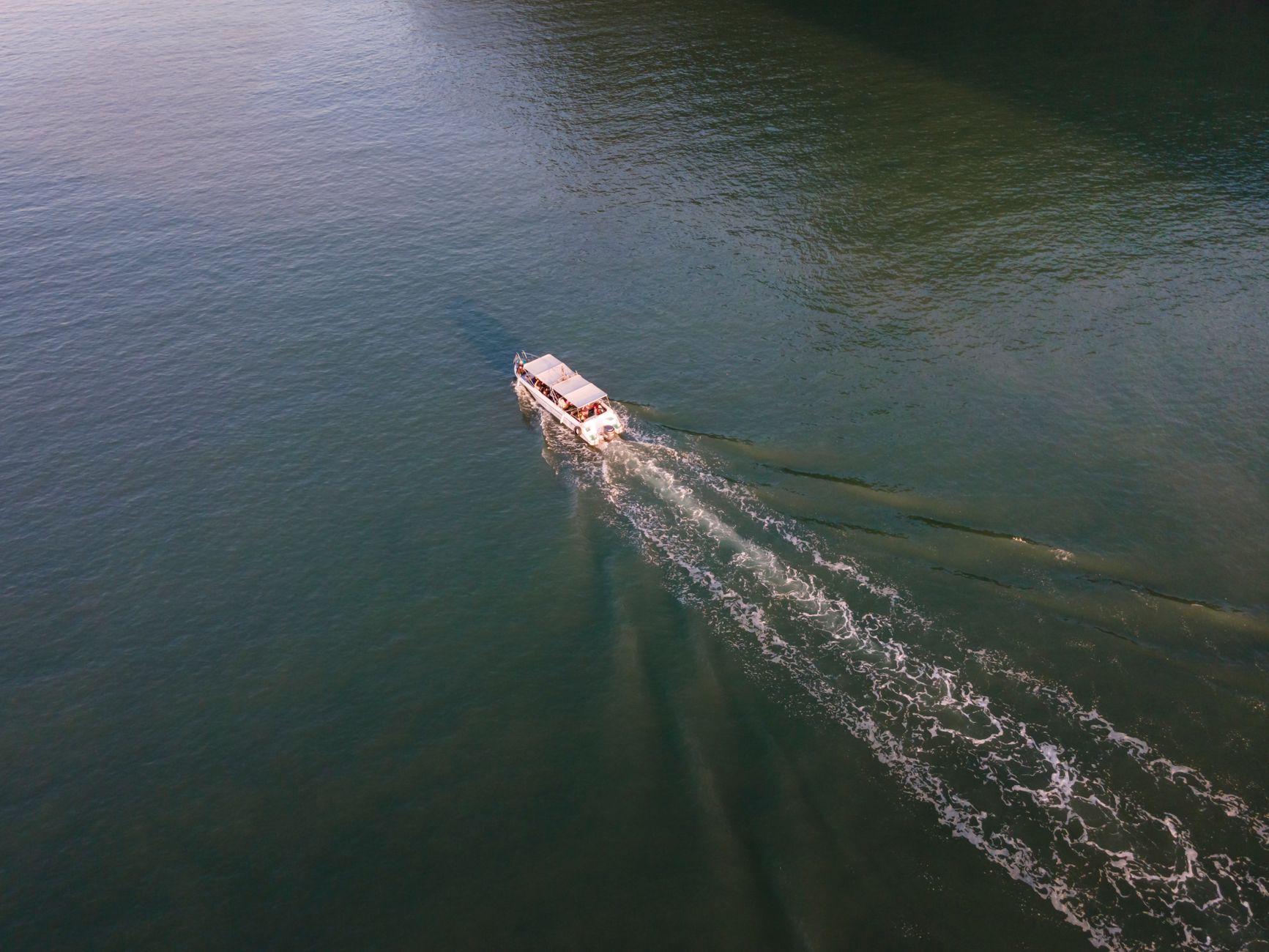
The GARC — Ghost Autonomous Racing Craft — is a small, fast autonomous surface vessel originally developed with racing-boat hull design principles to maximize speed and maneuverability on the water. In its SINKEX configuration, the platform was loaded with an explosive payload and directed autonomously toward the target hull. According to The War Zone’s reporting, the craft successfully detonated against the Peleliu and punched a hole in the ship, contributing to its eventual sinking. Specific payload weight, explosive type, and breach dimensions were not disclosed in the available source material.
The exercise illustrates how low-cost, fast-moving autonomous surface vessels can be adapted for terminal attack roles — an unmanned analog to the aerial kamikaze concept now appearing across multiple domains. The Navy’s interest in expendable drone boats has grown alongside broader unmanned surface vessel programs, and the GARC demonstration adds a documented data point to the service’s understanding of what small autonomous platforms can achieve against hardened ship structures. The broader trajectory of undersea drone detection and unmanned maritime systems development reflects how extensively the Navy is integrating autonomous vehicles across all operational layers.
Strategic Context and the Peleliu’s Final Mission
Ex-USS Peleliu, a Tarawa-class amphibious assault ship, was decommissioned in 2015 after more than three decades of service. Using the vessel as a SINKEX target gave Navy planners a full-scale, realistic hull against which to measure the actual destructive effect of a drone boat strike — data that tabletop modeling and smaller-scale tests cannot fully replicate. The breach the GARC opened in the hull provided engineers and planners with direct evidence of how such a platform performs against the layered steel structures common in warships of that class.
The timing of the demonstration is also worth noting against the backdrop of adversarial naval targeting developments globally. Drone boat attacks have featured in real-world conflicts in recent years, and navies worldwide are studying the threat profile such systems present. For the U.S. Navy, the Peleliu SINKEX offers more than a disposal event — it becomes a controlled experiment documenting the terminal effectiveness of an autonomous surface strike vehicle against a genuine warship hull, with the results now on record for program development and fleet training purposes. Officials have not confirmed whether further GARC SINKEX events are planned or whether the platform is being considered for formal acquisition beyond the current development stage.