White House Order Narrows Escape Routes for Defense Contractors Seeking Foreign-Component Exemptions
A new executive order restricts the conditions under which defense contractors can waive domestic sourcing rules for critical supply chain components.

The White House has signed an executive order tightening the rules under which defense contractors can obtain waivers from domestic sourcing requirements, a move aimed at reducing the Pentagon’s reliance on foreign-made components in critical weapons systems and military hardware. The order imposes stricter standards on the waiver process that has long allowed suppliers to sidestep Buy American and specialty metals restrictions when domestic alternatives were deemed unavailable or cost-prohibitive. The policy shift arrives as Washington continues pressing for greater defense industrial resilience amid sustained great-power competition with China and Russia.
Military Times supply chain report detailed the order’s core provisions, which direct agencies to apply more rigorous justification requirements before approving exemptions and establish new oversight mechanisms to track how frequently waivers are granted across major acquisition programs. Officials have not publicly confirmed a specific numerical cap on the total number of waivers permitted annually, but the order is described as significantly raising the evidentiary bar contractors must clear to qualify.

Closing the Waiver Loophole
The waiver system was originally designed as a practical release valve within domestic preference statutes, acknowledging that certain specialty materials or microelectronic components are not reliably produced in sufficient quantities inside the United States. Critics have argued for years that the system was exploited too broadly, with contractors routinely citing cost or schedule pressures rather than genuine domestic supply gaps to justify sourcing from foreign vendors, including suppliers with ties to adversary nations.
The new order attempts to distinguish between legitimate domestic unavailability and commercial convenience, requiring procurement officials to conduct more thorough market research before approving exemptions. It also places additional scrutiny on waivers involving materials or components that originate from countries of concern, a category that U.S. policy has increasingly defined to include China. Officials have not disclosed how the order will be enforced at the contracting officer level or what penalties, if any, attach to approvals later found to be improperly granted.
Industrial and Programmatic Implications
The practical impact on major defense programs could be significant, particularly for platforms that rely on complex global supply chains assembled over decades. Prime contractors for aircraft, missiles, and naval systems routinely depend on tiered supplier networks that include foreign-sourced raw materials, electronics, and subassemblies. Tightening waiver access without a parallel expansion of domestic manufacturing capacity risks creating schedule friction on programs already under cost and delivery pressure.
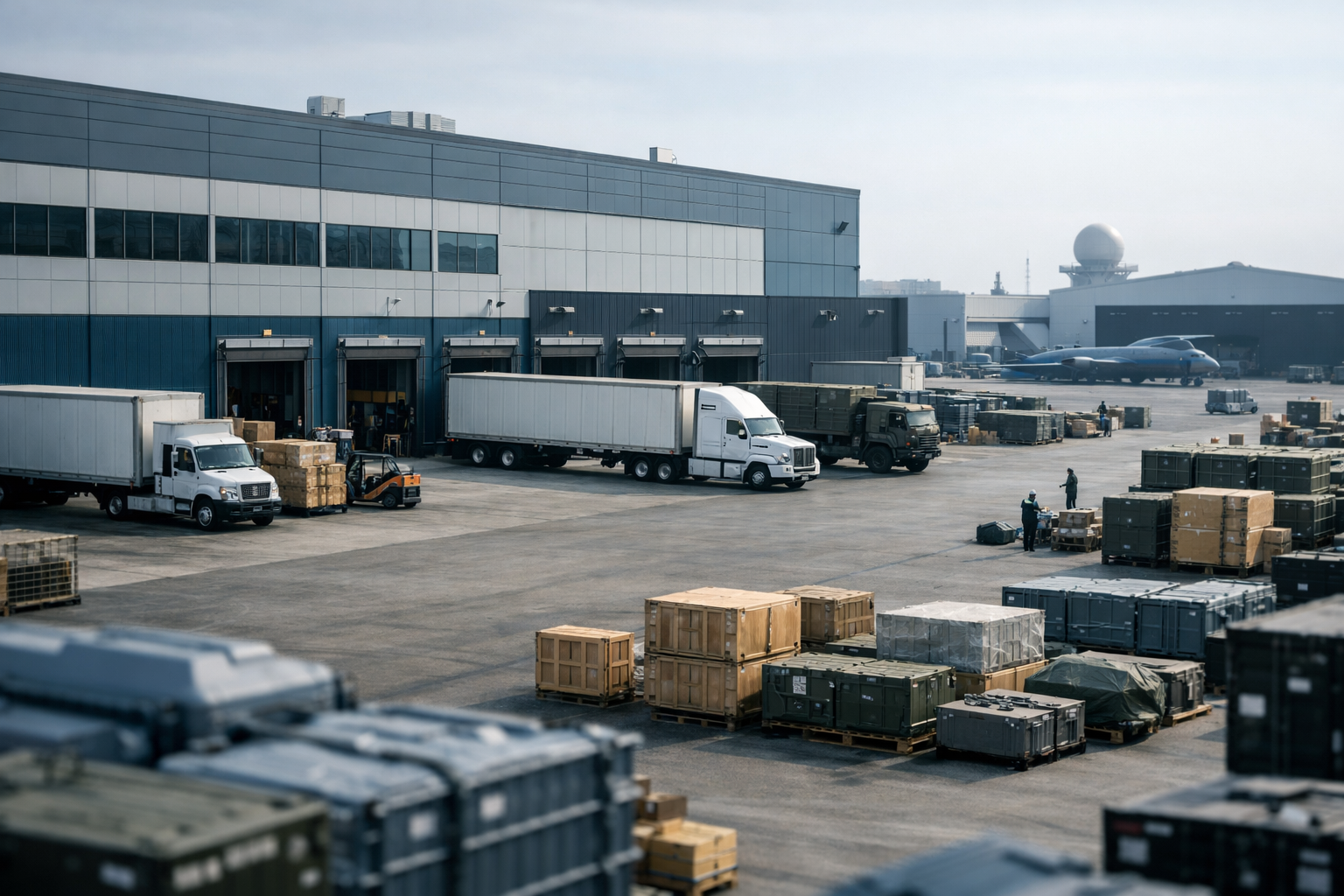
The order reflects a broader policy trajectory that has been building through legislative action as well as executive initiative. Congress has incrementally strengthened domestic preference language in successive National Defense Authorization Acts, and the Pentagon’s own supply chain reviews — accelerated following pandemic-era shortages — identified foreign dependency in specialty metals, semiconductors, and energetic materials as priority vulnerabilities. Whether the new waiver restrictions are accompanied by funded investments in domestic industrial base capacity remains, according to available reporting, an open question. The administration has signaled intent to pair the restrictions with incentives for domestic production, but specific program allocations have not been confirmed. The order’s implementation timeline and interagency coordination details had not been fully disclosed at the time of publication. Separately, the Pentagon’s broader push to modernize how it sources and sustains hardware is reflected in recent exercises testing AI logistics capabilities across the joint force.