Undeclared Chemical Sites in Syria Resurface Amid Fragile Transition and Renewed Global Scrutiny
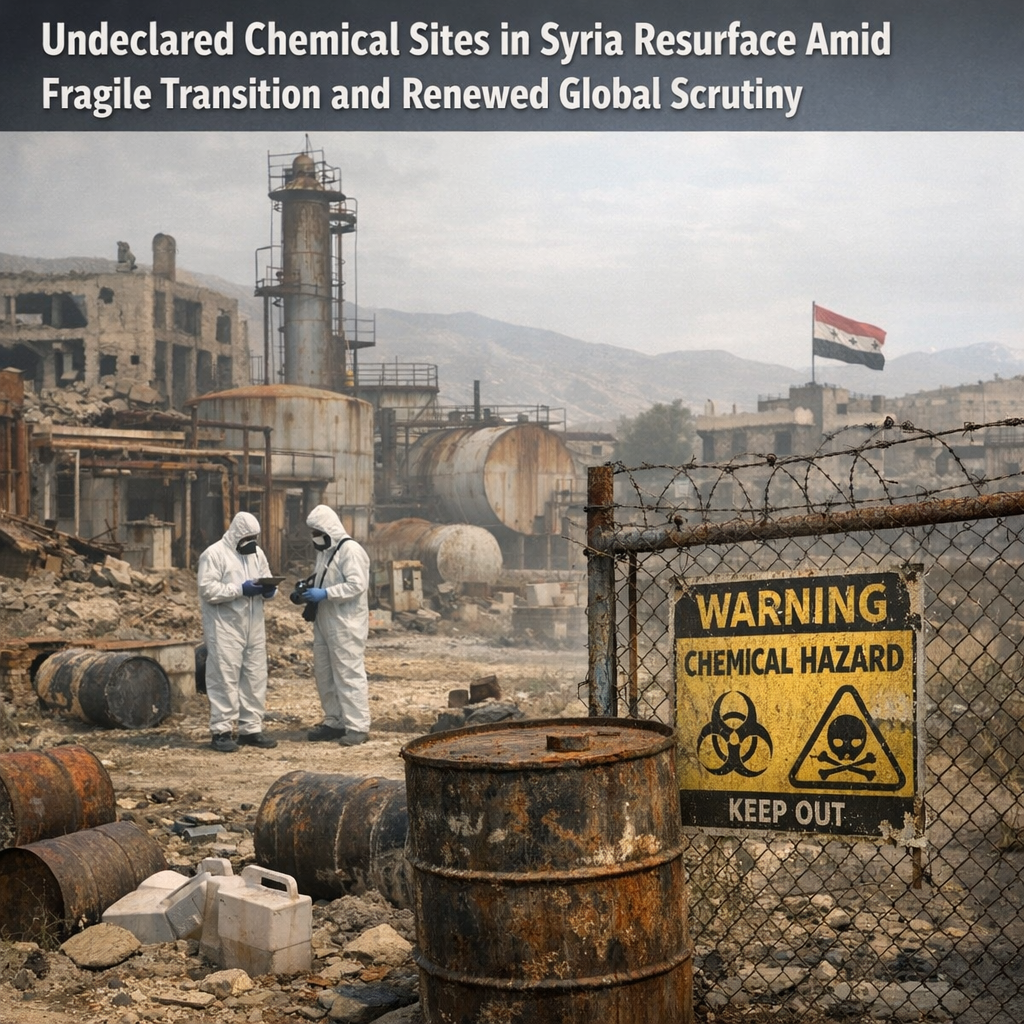
New details about the persistence of Syria’s chemical weapons infrastructure are raising concern among international observers, as the country navigates an already fragile political and security transition.
According to the article “Hidden chemical weapons sites emerge in Syria amid fragile security transition”, published by Defense News, investigators and monitoring groups have identified previously undeclared sites believed to be linked to Syria’s long-standing chemical weapons program. These revelations come at a moment when the central government’s authority remains uneven and competing armed factions continue to operate across parts of the country.
The emergence of these suspected sites underscores enduring gaps in Syria’s compliance with international disarmament obligations. Although Damascus officially agreed in 2013 to dismantle its chemical weapons arsenal under a deal brokered with international partners, including the Chemical Weapons Convention framework and oversight by the Organisation for the Prohibition of Chemical Weapons, subsequent investigations over the past decade have repeatedly suggested incomplete disclosure. The latest findings reinforce concerns that elements of the program may have been concealed, relocated, or repurposed.
Analysts cited in the Defense News report indicate that some of the newly identified locations may have been used for research, storage, or limited production activities. While there is no immediate confirmation that active stockpiles remain at each site, the discovery itself highlights how difficult it has been for watchdog organizations to maintain visibility over Syria’s capabilities, particularly amid fluctuating control on the ground.
The country’s current transitional phase complicates verification efforts. With governance structures in flux and security conditions varying widely by region, international inspectors face logistical and political barriers. Access to suspected facilities often depends on local arrangements with armed groups or regional authorities, making thorough inspections inconsistent and, at times, impossible, as noted in past reporting by the UN Security Council on Syria’s disarmament challenges.
This environment has also raised fears about proliferation risks. Experts warn that unsecured materials, equipment, or technical knowledge could be vulnerable to diversion. In a fragmented security landscape, even limited quantities of precursor chemicals or specialized expertise could pose significant dangers if they fall into the hands of non-state actors, a risk highlighted by organizations like the Nuclear Threat Initiative.
International bodies, including the Organisation for the Prohibition of Chemical Weapons, have continued to press for full transparency and access. However, enforcement mechanisms remain constrained by geopolitical divisions and the practical limits of operating inside Syria. Diplomatic efforts to compel broader disclosure have thus far produced limited results, reflecting both regional tensions and the complexity of Syria’s post-conflict transition, as also analyzed by the Arms Control Association.
The findings reported by Defense News suggest that the issue of chemical weapons in Syria is far from resolved. Rather than a closed chapter, it remains an evolving challenge intertwined with the country’s broader instability. As Syria’s political future remains uncertain, the discovery of additional undeclared sites is likely to intensify international scrutiny and renew debates over accountability, verification, and long-term safeguards.