UAE Seeks US Financial Backstop for Conflict Risk
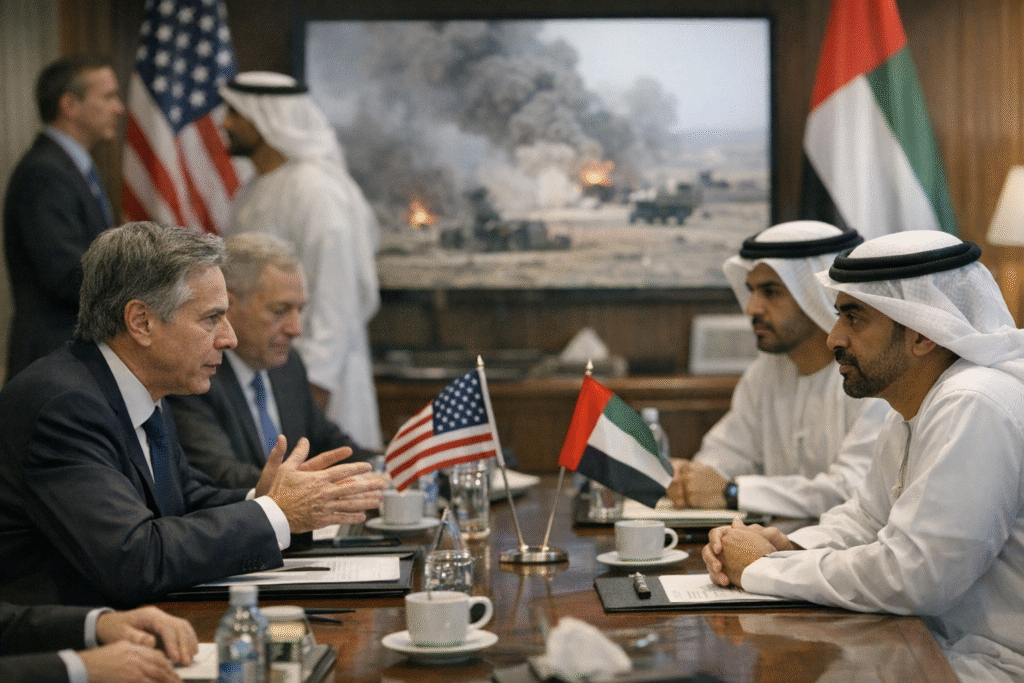
According to a report by The Wall Street Journal titled “U.A.E. Asks U.S. for a Wartime Financial Lifeline,” officials from the United Arab Emirates have approached Washington with a request for financial support mechanisms that would help stabilize the country’s economy in the event of a major regional conflict. The discussions reflect growing concern among Gulf states about the economic fallout from escalating geopolitical tensions across the Middle East.
The Journal reports that Emirati officials are seeking assurances that, in a crisis scenario, the United States would be prepared to provide liquidity support similar to arrangements offered to allies during past periods of instability. Such measures could include currency swap lines or other financial backstops designed to maintain confidence in domestic markets and protect access to U.S. dollar funding, which is critical for banking systems in the region.
The request underscores how increasingly interconnected financial systems have made even wealthy oil-exporting nations vulnerable to global shocks. While the UAE maintains substantial sovereign wealth reserves, its role as a regional financial hub leaves it exposed to capital flight and market disruptions in times of conflict. Policymakers in Abu Dhabi appear to be preparing for scenarios in which military escalation—whether involving Iran or broader regional actors—could trigger volatility in energy markets, shipping routes, and investor sentiment.
U.S. officials, according to the report, have not publicly committed to any specific arrangement, and discussions remain at an exploratory stage. Any agreement would likely carry political and strategic implications, reflecting Washington’s broader security partnerships in the Gulf as well as its interest in maintaining stability in global energy and financial markets.
The Journal’s reporting highlights a shift in how Gulf allies are thinking about security, extending beyond traditional military cooperation to include financial resilience. It also points to a broader recognition that modern conflicts can rapidly spill into economic domains, where the availability of dollar liquidity and investor confidence can become as consequential as troop deployments.
While no immediate crisis has prompted the request, the move signals that regional governments are actively planning for worst-case scenarios. The outcome of these discussions may shape not only bilateral relations between the United States and the UAE, but also the contours of financial preparedness across the Middle East as uncertainty persists.