States Across Party Lines Move to Cut Income Taxes
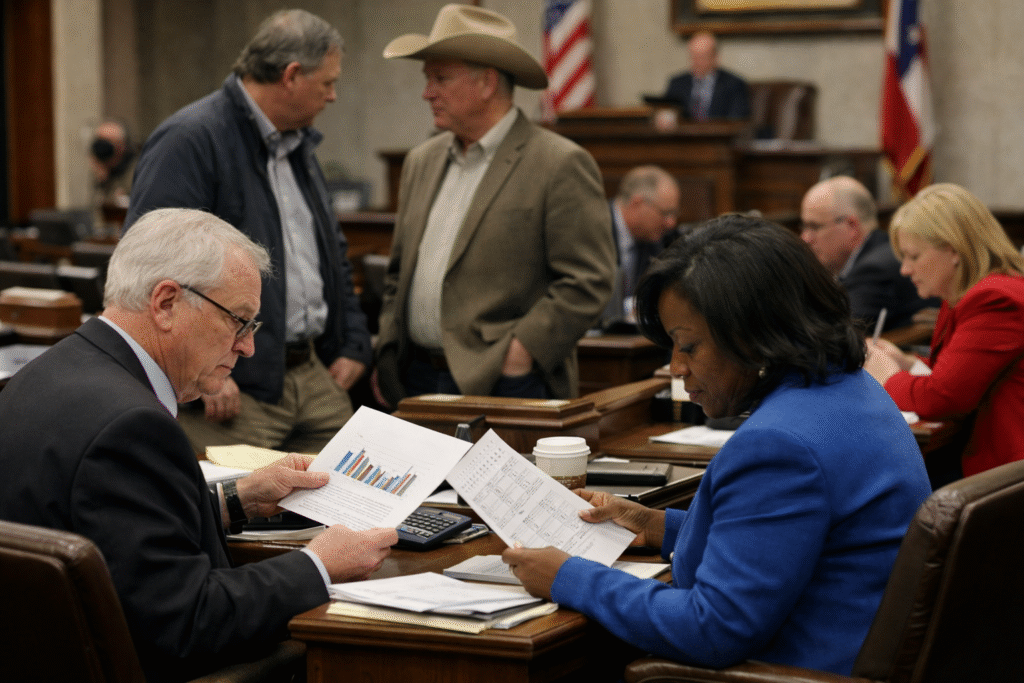
Across the United States, a growing number of state governments are moving to reduce or eliminate individual income taxes, reflecting a policy shift that increasingly crosses party lines. What was once seen primarily as a conservative economic strategy is now attracting support from Democratic leaders in several states, highlighting how fiscal conditions and interstate competition are reshaping tax policy debates.
As reported by The Wall Street Journal in its article titled “Republican and Democrat State Income-Tax …,” lawmakers from both parties are embracing income-tax reductions as states contend with surplus revenues, economic migration, and pressure to remain competitive with neighboring jurisdictions. The trend reflects the accumulation of strong state finances in recent years, fueled by pandemic-era federal aid, robust consumer spending, and unexpectedly strong tax receipts.
Republican-controlled states have long favored cutting income taxes as a central economic policy. Over the past several years, legislatures in states such as Florida, Texas, and Tennessee—none of which levy personal income taxes—have attracted residents and businesses from higher-tax states. Republican lawmakers argue that eliminating income taxes entirely can stimulate economic growth, attract investment, and reduce the financial burden on residents.
More recently, however, Democratic leaders in some states have also begun pursuing reductions. In some cases, these efforts are framed not as a step toward eliminating income taxes entirely but as targeted relief designed to address affordability concerns, boost middle-class incomes, or distribute surplus revenue back to taxpayers. Democratic governors and legislators have often paired tax cuts with investments in public services, aiming to balance fiscal relief with continued spending on education, health care, and infrastructure.
Competition between states has intensified the political pressure to lower taxes. Population shifts over the past decade have shown significant migration from higher-cost states to areas with lower taxes and living expenses. Policymakers worry that maintaining relatively high income-tax rates could accelerate outmigration among businesses and high-earning individuals, particularly in an era when remote work makes relocation easier.
Still, economists and budget analysts caution that sustained tax cuts carry risks if economic growth slows. State budgets are highly sensitive to downturns, and income taxes represent a significant and often volatile revenue source. Several analysts warn that permanent tax reductions could constrain future spending or force governments to consider alternative tax increases if revenues decline.
There is also debate about the distributional impact of income-tax cuts. Critics argue that large reductions can disproportionately benefit higher-income households and reduce funding available for social programs. Supporters counter that broad-based tax relief can stimulate economic activity while returning excess revenue collected during periods of strong growth.
The evolving mix of policy approaches suggests that state tax politics is entering a new phase, one shaped less by traditional partisan divides than by fiscal circumstances and economic competition. While the ultimate impacts of widespread income-tax reductions remain uncertain, the current wave of policy changes underscores how state governments are experimenting with new strategies to retain residents, attract investment, and manage post-pandemic finances.
The Wall Street Journal article highlights how the bipartisan nature of these moves marks a significant shift in American state fiscal policy, suggesting that the politics of taxation may be undergoing a period of realignment as governments reassess how best to balance economic competitiveness with long-term fiscal stability.