Street Takeovers Challenge US Cities and Police
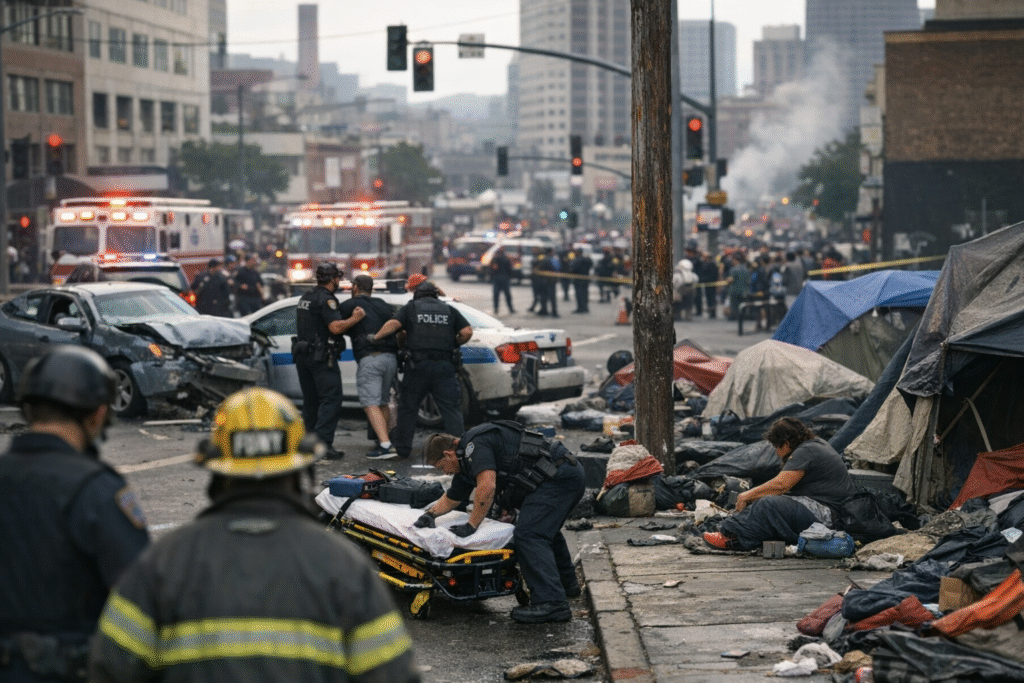
Across cities in the United States, a form of underground car culture known as “street takeovers” is increasingly testing the limits of local law enforcement and public safety. The phenomenon, in which groups of drivers illegally block intersections and perform dangerous stunts such as drifting and spinning in the middle of city streets, has spread rapidly through social media and late-night networks. As participants grow bolder and crowds larger, officials are warning that the gatherings are evolving into volatile public safety threats.
A recent article titled “The Growing Lawlessness of America’s Street Takeovers,” published by the website of The Wall Street Journal, highlights how these events have escalated in scale and aggression in recent years. Once limited to relatively small gatherings of car enthusiasts, many of today’s takeovers attract hundreds of people and dozens of vehicles at a time. Organized through messaging apps and social platforms, locations are often shared moments before the event begins, making it difficult for police to anticipate or intercept them.
Street takeovers typically unfold late at night at busy intersections, warehouse districts, or commercial corridors. Vehicles block incoming traffic while drivers perform donuts, burnouts, and other high-speed maneuvers inside a ring of spectators. Bystanders frequently crowd close to the spinning cars, using their phones to record videos that are quickly uploaded online. The spectacle is part performance, part competition, and increasingly, part confrontation with law enforcement.
Authorities say the risks extend far beyond traffic disruption. Spectators have been struck by spinning vehicles, and guns have occasionally appeared during the chaos. Police officers responding to break up gatherings sometimes face fireworks, rocks, or other projectiles. In some cases, patrol cars attempting to disperse crowds have been surrounded or vandalized.
Cities such as Los Angeles, Oakland, Houston, and Philadelphia have reported repeated incidents, sometimes multiple in a single weekend. Law enforcement agencies say the events are difficult to control because participants quickly relocate when police arrive. Organizers may designate backup intersections in advance, sending crowds moving from location to location.
Officials also point to the influence of internet culture in accelerating the trend. Dramatic footage of smoking tires, cheering crowds, and near collisions often spreads quickly across social media platforms, attracting millions of views. The visibility can encourage copycat events in other cities or motivate drivers to perform even riskier stunts in pursuit of online recognition.
In response, some states and municipalities are tightening penalties associated with street takeovers. Proposed or enacted measures include vehicle impoundments, harsher fines, and criminal charges for organizing or participating in the events. Certain police departments have begun using helicopters, drones, or coordinated task forces to track gatherings across jurisdictions.
Even with increased enforcement, however, officials face a delicate balance. Large-scale crackdowns can be resource-intensive and risk escalating confrontations with crowds that sometimes number in the hundreds. Some communities have also explored prevention strategies, including improved lighting, traffic design changes, or barriers that make intersections harder to block.
Car culture itself is not new in the United States, and legal motorsport events continue to flourish in controlled environments such as racetracks and sanctioned exhibitions. But authorities say the takeover phenomenon differs fundamentally because it transforms ordinary streets into arenas for high-risk behavior without any of the safeguards associated with sanctioned competitions.
As highlighted in The Wall Street Journal’s website article “The Growing Lawlessness of America’s Street Takeovers,” the growing frequency and brazenness of these events have left city leaders grappling with how to respond. For many communities, the challenge is not only stopping a disruptive trend but also addressing the broader social dynamics that allow it to flourish across neighborhoods and online networks alike.