Rivian Bets on Affordable R2 in Cooling EV Market
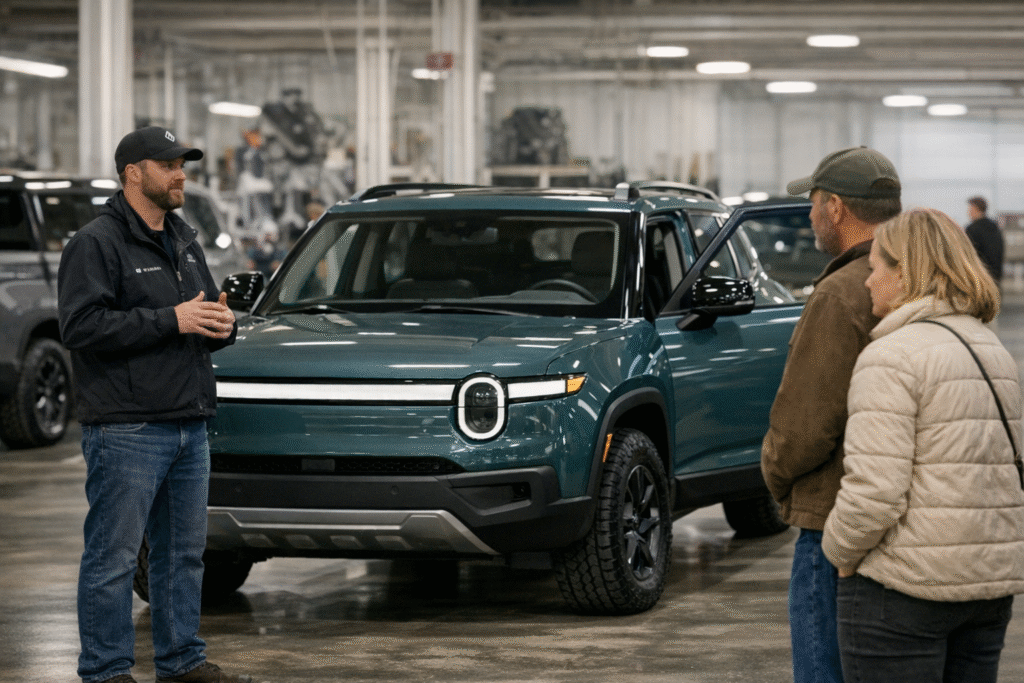
The electric vehicle startup Rivian is preparing to introduce a more affordable model at a moment when the EV industry has entered a more uncertain phase, marked by slowing demand growth, rising competition, and shifting consumer expectations. The company is betting that its upcoming R2 sport-utility vehicle will move it beyond the niche segment of premium electric trucks and SUVs and into a broader, more competitive market.
In an article titled “Rivian’s R2 Arrives at a Tougher Moment for the EV Market,” published by The Wall Street Journal, the automaker’s strategy is framed as both an opportunity and a risk. The R2 is designed to be smaller and significantly less expensive than Rivian’s current vehicles, the R1T pickup and R1S SUV, which start well above the prices of many mainstream electric models. Rivian has indicated the R2 will begin around $45,000, a price point aimed at attracting a wider base of customers and positioning the company against established EV leaders.
The R2 represents a pivotal step for Rivian, which has spent several years building its brand around premium adventure-oriented vehicles. While those models generated strong interest and positive reviews, their high price tags limited volume, and the company has struggled to translate enthusiasm into sustainable profitability. Like many EV startups, Rivian has faced persistent losses as it invests heavily in manufacturing capacity, supply chains, and product development.
The broader market conditions into which the R2 will launch have also shifted. After several years of rapid expansion, electric vehicle sales growth has begun to moderate in key markets, including the United States. Some automakers have scaled back their most aggressive EV production targets amid higher borrowing costs, price competition, and consumer concerns about charging infrastructure and affordability.
At the same time, Rivian increasingly faces competition not only from traditional automakers ramping up EV offerings but also from Tesla, whose Model Y remains the dominant electric SUV in the U.S. market. Tesla’s repeated price reductions have intensified pressure across the industry, forcing rivals to find ways to lower production costs while still differentiating their vehicles.
To improve the economics of the R2 program, Rivian has adjusted its manufacturing plans. Instead of initially producing the vehicle at a planned factory in Georgia, the company intends to start production at its existing facility in Normal, Illinois. Executives have said the shift will reduce capital spending and allow the company to bring the model to market sooner.
For Rivian, the stakes surrounding the R2 are significant. The company ended recent quarters with billions of dollars in cash but continues to burn through sizable amounts as it scales operations. Success with a more affordable vehicle could expand its customer base and move the company closer to achieving the production volumes necessary for long-term viability.
Industry analysts see the R2 as Rivian’s attempt to transition from a specialty manufacturer into a more mainstream automaker. Whether the company can execute that shift amid intensifying competition and a cooling EV market may determine its trajectory over the coming years. As the vehicle approaches production, investors and industry observers will be closely watching whether Rivian can translate its brand appeal and engineering reputation into a product that resonates with a broader audience.