Ukraine War Exposes Truths of Modern Warfare
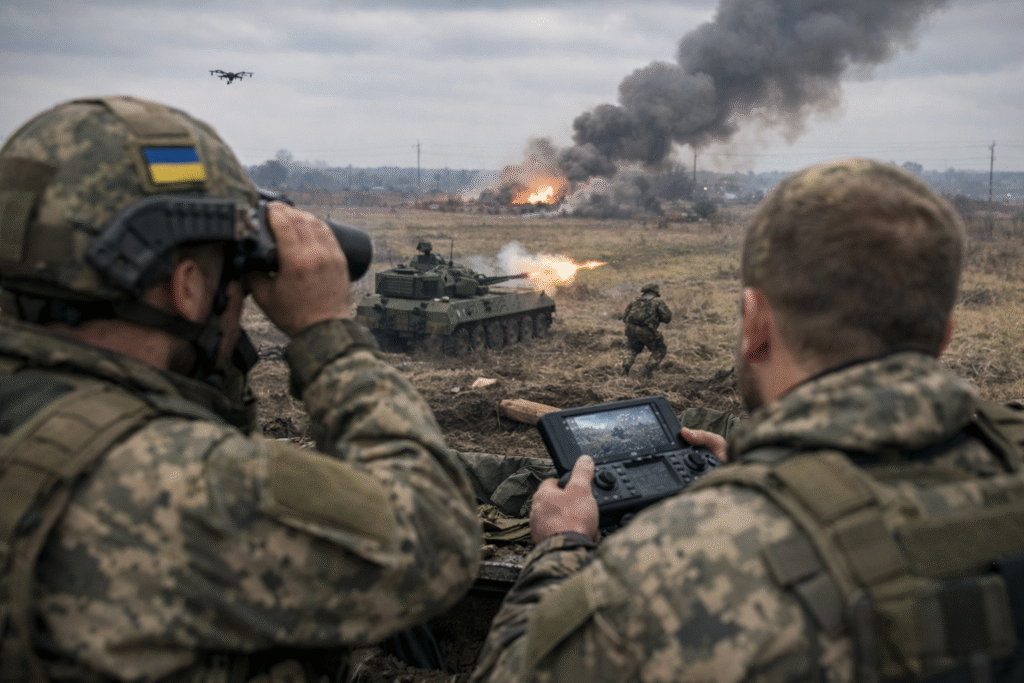
The war in Ukraine has become an unusually transparent laboratory for modern warfare, exposing both strengths and weaknesses in military doctrine, technology, and leadership. In an essay titled “War Reveals the Truth: Russian and …,” published on the Spencer Guard Substack, the author argues that the battlefield has stripped away many long‑held assumptions about the Russian military, while at the same time complicating optimistic Western narratives about Ukraine’s capabilities and the nature of contemporary war.
The article contends that large‑scale conflict functions as a harsh corrective to peacetime military theory. For years, analysts debated the effectiveness of Russian reforms and modernization programs launched after the failures of the 2008 war with Georgia. The invasion of Ukraine in 2022, however, revealed deep structural weaknesses within Russian forces, including logistical failures, poor coordination, and rigid command structures. Early operations, in particular, highlighted deficiencies in planning and combined‑arms integration, challenging earlier perceptions of a vastly modernized Russian military.
Yet the Substack essay stresses that the war’s lessons are not as simple as portraying Russian forces as wholly ineffective. Over time, Russian units adapted, improving defensive engineering, drone integration, and artillery coordination. The article argues that Moscow’s ability to absorb losses and adjust tactics demonstrates a form of institutional resilience that is often underestimated in Western commentary.
Ukraine’s performance has likewise been more complex than widely portrayed. While Ukrainian forces demonstrated remarkable flexibility and determination, their success has depended heavily on external support, especially in intelligence, advanced weaponry, and financial resources. According to the article, the war illustrates how modern conflicts can become hybrid enterprises, blending local manpower and motivation with foreign technological and logistical backing.
One of the central themes highlighted in the Spencer Guard analysis is the decisive role of relatively inexpensive technologies, particularly drones. The widespread use of unmanned systems for reconnaissance and strikes has reshaped the battlefield, making traditional armored formations more vulnerable and placing unprecedented emphasis on surveillance and rapid targeting. The essay suggests that this trend may represent a broader transformation of warfare, where the balance between cost and effectiveness increasingly favors smaller, networked systems.
The article also points to the enduring importance of industrial capacity and attrition. Despite frequent discussions in Western defense circles about high‑tech precision warfare, the conflict in Ukraine has resembled a grinding industrial struggle characterized by artillery barrages, fortified lines, and sustained manpower demands. In this environment, the capacity to produce ammunition, repair equipment, and mobilize personnel can prove just as decisive as advanced weapon systems.
Ultimately, the Spencer Guard essay argues that the war in Ukraine has exposed the danger of simplistic narratives on all sides. Military reputations built during peacetime analysis have been tested under fire, revealing both unexpected competence and surprising vulnerability. As the conflict continues, the author writes, its most enduring legacy may be the reminder that war remains an unforgiving instrument for measuring the true capabilities of states and their armed forces.