Rising Tensions Threaten Stability in Strait of Hormuz
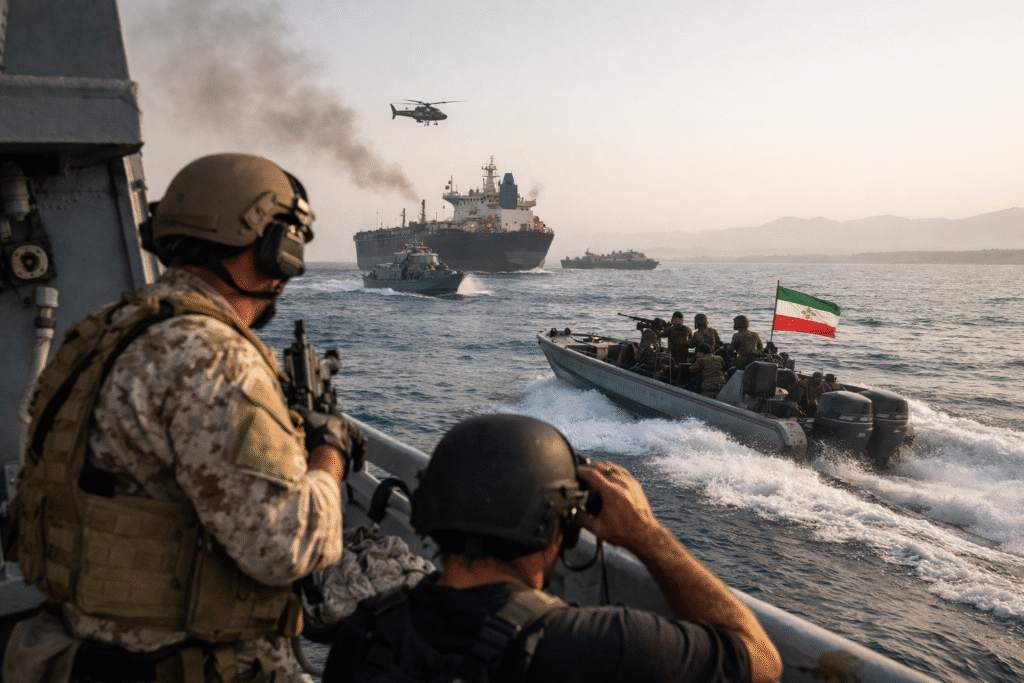
The risk of a sustained disruption in one of the world’s most critical energy chokepoints has come back into focus as tensions in and around the Strait of Hormuz intensify, raising fears of a prolonged crisis that could reverberate through global energy markets and international trade.
In a report titled “Escalating Hormuz Crisis Raises Specter of Prolonged Closure,” published by The Wall Street Journal, analysts and officials warn that the confrontation unfolding in the narrow waterway between Iran and the Arabian Peninsula could develop into a drawn-out standoff rather than a brief disruption. The strait, which connects the Persian Gulf to the Gulf of Oman and the Arabian Sea, carries roughly a fifth of the world’s seaborne oil supplies, making it one of the most strategically vital passages in global commerce.
Security incidents in the region have multiplied in recent weeks, including attacks on commercial vessels and the threat of mine deployments, prompting insurers to raise premiums and shipping companies to reconsider passage through the corridor. According to The Wall Street Journal’s reporting, even intermittent interference is enough to push up prices for transporting crude and refined products, raising costs across the energy supply chain.
Market analysts note that a full closure of the strait remains unlikely for long periods, largely because of the economic risks it would pose not only to oil-importing countries but also to exporting states in the Gulf. However, the Journal described growing concern that Iran could pursue a strategy of persistent disruption rather than an outright blockade—targeting tankers, deploying drones, or threatening maritime traffic in ways designed to keep markets unstable while avoiding a decisive military confrontation.
Such tactics could make the crisis difficult to resolve quickly. A prolonged phase of insecurity in the waterway would complicate operations for the United States and its allies, who maintain naval forces in the region tasked with safeguarding commercial shipping. Any effort to clear mines or escort vessels through contested waters would carry the risk of direct clashes between regional actors.
The potential economic consequences are significant. Energy traders and government officials are closely watching for signs that shipping volumes might decline or that insurance and freight costs could surge further. Even modest restrictions in flows through the strait could tighten global oil supplies, particularly at a time when geopolitical tensions and production policies have already contributed to volatile markets.
While some Gulf producers have invested in alternative export routes—such as pipelines that bypass the strait—these options remain limited compared with the massive volume of crude shipped daily by tanker through the narrow passage. As noted in The Wall Street Journal’s coverage, such infrastructure can only partially offset disruptions, leaving much of the region’s oil exports still dependent on safe transit through Hormuz.
Diplomatic efforts to prevent further escalation are ongoing, but the complexity of regional rivalries and broader geopolitical rivalries has made de‑escalation uncertain. With naval patrols increasing and shipping companies monitoring the situation closely, the possibility of a drawn-out standoff in the Strait of Hormuz remains a central concern for policymakers and markets alike.
The developments described in The Wall Street Journal’s article underscore the enduring fragility of a maritime corridor that has repeatedly been at the center of geopolitical flashpoints. Any sustained deterioration in security there could quickly extend beyond the region, affecting energy prices, shipping routes, and economic stability far beyond the waters of the Persian Gulf.