Inside the Opening Strategy of the US–Israel War
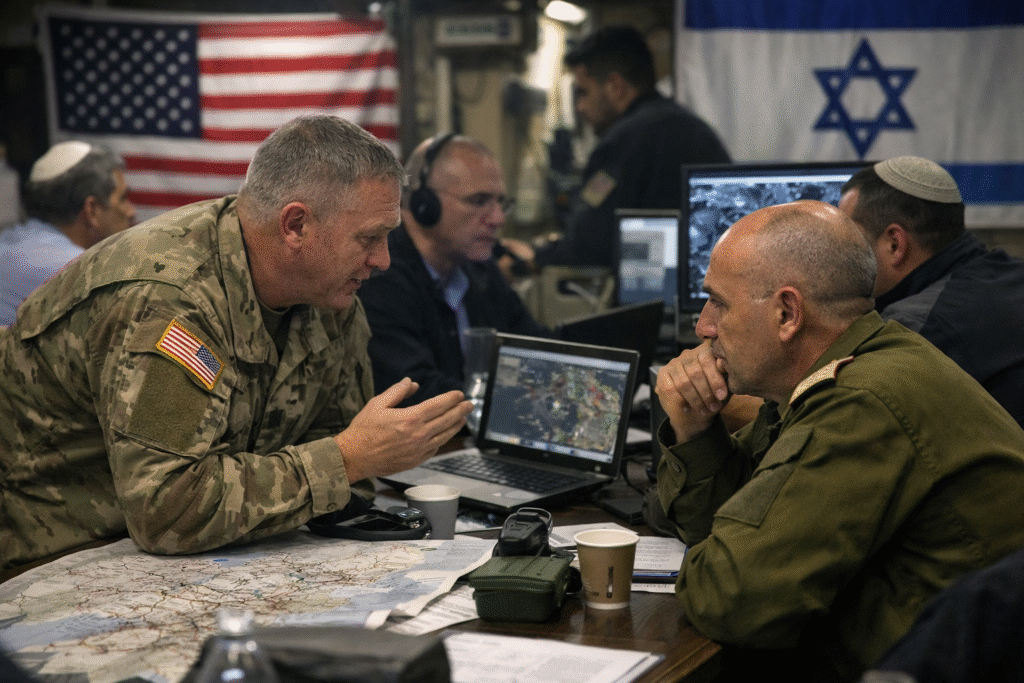
An analysis published on the Spencer Guard website argues that the first week of the widening U.S.–Israel war reflects a coordinated strategy aimed at rapidly degrading the military capabilities of Iran and its regional allies while attempting to control the pace of escalation. The article, titled “Day 7 of the US–Israel War: The Strategy,” presents the conflict’s early phase as a deliberate campaign built on airpower, intelligence coordination, and pressure across multiple fronts.
According to the piece, the opening days of the war have been marked by extensive Israeli air operations supported by American military assets. The author contends that the joint effort has focused heavily on precision strikes against missile infrastructure, air-defense systems, and command locations believed to be tied to Iranian and proxy forces. The objective, the article claims, is to blunt the adversary’s ability to launch large-scale retaliatory attacks while creating operational freedom for continued strikes.
The Substack analysis argues that this approach reflects a familiar doctrine in modern high-intensity warfare: gain rapid air dominance, disrupt command-and-control networks, and systematically remove enemy launch capabilities before expanding the campaign to broader strategic targets. The author suggests that Israel’s intelligence capabilities, combined with American surveillance and logistical support, have enabled a tempo of operations designed to overwhelm defensive responses during the conflict’s opening phase.
Beyond airstrikes, the article describes a broader regional strategy intended to contain the conflict geographically while simultaneously targeting allied groups aligned with Iran. Pressure on armed organizations in neighboring theaters, according to the analysis, is meant to prevent those groups from effectively coordinating attacks that could stretch Israeli and American defenses. The piece argues that the strategy is designed to keep engagements fragmented rather than allowing the conflict to turn into a fully synchronized regional war.
The author also frames the campaign as one shaped by political as well as military calculations. The Spencer Guard article suggests that Washington’s involvement signals not only support for Israel but also a demonstration of deterrence to other regional actors. At the same time, the strategy described in the piece appears intended to avoid actions that could trigger broad international intervention or cause the conflict to spiral into a direct, multi-state confrontation.
A key element highlighted in “Day 7 of the US–Israel War: The Strategy” is time pressure. The analysis contends that Israeli and American planners are likely aiming for rapid operational gains before diplomatic pressure intensifies. Historically, the author notes, international calls for ceasefires and negotiations grow louder as civilian and infrastructure damage accumulates, potentially constraining military options.
The article also raises the possibility that the campaign could evolve as the war continues. Early strikes aimed at disabling military systems may eventually give way to deeper operations targeting logistical networks and leadership nodes if the conflict persists. According to the analysis, such a shift would signal an attempt to reshape the strategic balance in the region rather than merely respond to immediate threats.
While the Substack piece presents its interpretation as a coherent strategic framework guiding the first week of the conflict, it acknowledges that many variables could alter the trajectory of the war. The responses of regional armed groups, the actions of outside powers, and domestic political pressures in Washington and Jerusalem all remain uncertain factors.
For now, the article concludes that the events of the first seven days suggest a carefully sequenced campaign rather than a series of improvised reactions. Whether that strategy succeeds in limiting the scope of the conflict—or instead draws additional actors into the fighting—remains an open question as the war enters its second week.