“U.S.-Iran Tensions Escalate Amid Regional Unrest”
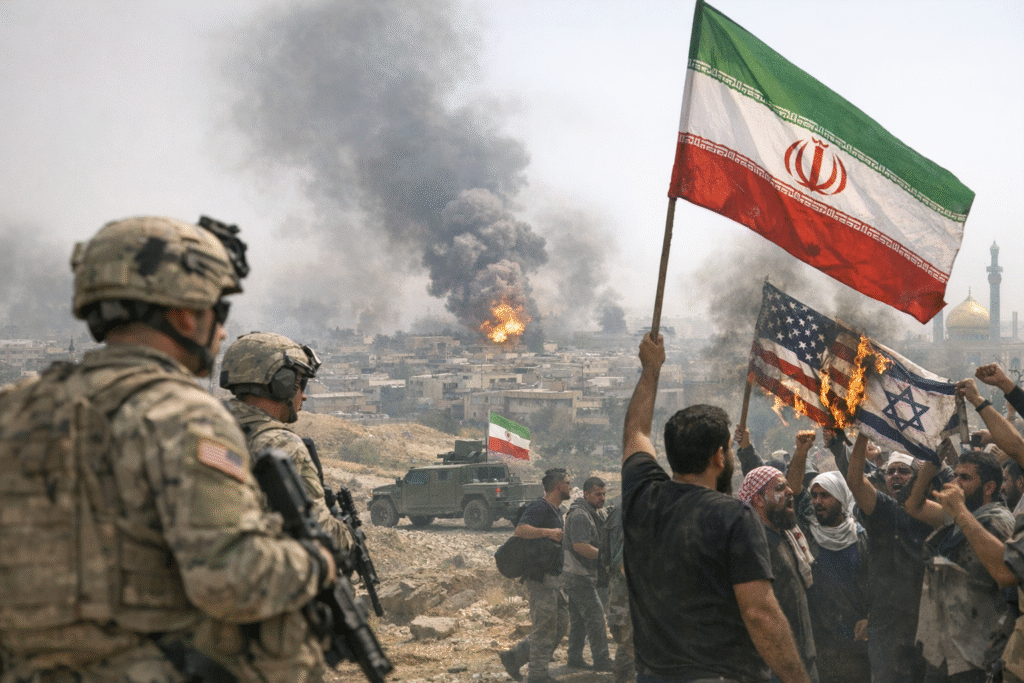
In a rapidly shifting geopolitical landscape, the United States and Iran find themselves once again on a precarious collision course. As highlighted in the Wall Street Journal article titled “Iran and U.S. Warn War in Middle East Could Expand,” the specter of conflict looms large, with both nations navigating a labyrinth of strategic considerations that could reverberate throughout the Middle East.
Tensions between the two countries have simmered for decades, punctuated by sporadic escalations that serve as stark reminders of the fragile peace. The complexity of their relationship is accentuated by a myriad of factors, including longstanding political enmity, divergent regional interests, and an atmosphere of mutual distrust that often undermines diplomatic overtures.
The recent exchanges of rhetoric and posturing are emblematic of a broader narrative that extends beyond bilateral animosities. The Iranian government, emboldened by regional alliances and its strategic calculus, remains steadfast in its pursuit of what it perceives as legitimate defense measures. Conversely, the United States sees itself as maintaining a deterrent stance, determined to curtail what it considers malign activities that threaten not only its allies but the regional equilibrium as a whole.
The potential for an escalation into open conflict raises profound concerns regarding the stability of the Middle East. A direct confrontation would not only disrupt global economic imperatives but also exacerbate humanitarian crises in an already volatile region. Moreover, the implications of such a conflict would extend far beyond the immediate territories, potentially igniting proxy battles and heightening sectarian divides.
In light of these dangers, diplomatic efforts are more crucial than ever. The global community, recognizing the stakes involved, has intermittently sought to mediate tensions. International bodies and influential actors have called for dialogue and restraint, urging both the United States and Iran to explore avenues of peaceful resolution. Yet, meaningful engagement remains elusive, impeded by hardened positions and reciprocal suspicions.
The challenges faced by regional and international actors in brokering a peaceful outcome are substantial. Beyond the immediate geopolitical concerns, any significant progress would necessitate an intricate balancing of interests, where compromise often seems out of reach. The dynamics at play require nothing short of a concerted and sustained effort by all stakeholders to avert a scenario that could have catastrophic consequences.
As tensions continue to simmer, the prospect of expanding conflict serves as a sobering reminder of the precariousness that characterizes the current geopolitical order. Navigating this fraught landscape demands a nuanced approach, fostering not just dialogue but a deeper understanding of the historical and strategic underpinnings that influence national policies. The goal remains clear: to avert war and cultivate a more stable and peaceful Middle East.