Narrative Warfare: Shaping Minds in Modern Conflicts
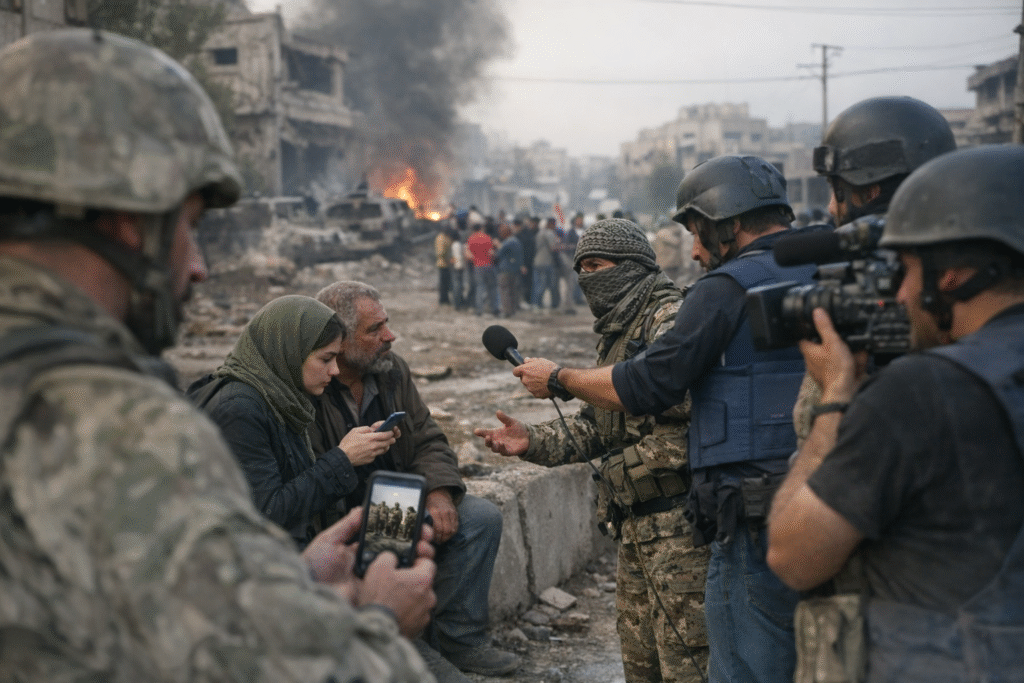
In an age where information flows as freely as air, the battle for control over narratives has emerged as a defining element of modern warfare. A recent article titled “Information Warfare: How Narratives Own You” published on the Substack platform by Andrew Fox dives deeply into this contemporary battlefield, shedding light on the ways information is being weaponized.
The rise of information warfare has transformed the nature of conflicts worldwide. This form of warfare is less about physical confrontations and more about influencing minds and swaying opinions. Andrew Fox scrutinizes how narratives, carefully constructed and disseminated, can shape perceptions and alter realities on a large scale. His analysis is both timely and relevant, given the increasing pervasiveness of digital platforms in distributing information quickly and widely.
The primary mechanism of information warfare, as highlighted by Fox, involves the creation of compelling stories or narratives that align with strategic objectives. These narratives are not spontaneously generated; they are meticulously crafted to resonate with particular audiences, taking into account cultural, social, and psychological factors. Once these narratives take hold, they can be incredibly challenging to dislodge, often taking on a life of their own as they spread across various channels.
Fox points to real-world examples where information warfare has played a crucial role. In political arenas, for instance, narratives can be deployed to influence electoral choices or undermine opponents, often bypassing traditional media gatekeepers. Moreover, in geopolitical conflicts, narratives can serve as tools to destabilize competitor nations, sway international opinion, or rally domestic support. The effectiveness of these narratives hinges on their ability to simplify complex issues, reduce them to easily digestible terms, and tap into existing biases.
This brings us to the ethical dimensions of information warfare, a matter Fox tackles with rigorous analysis. The deployment of narratives raises fundamental questions about truth, objectivity, and the societal impacts of manipulated information. As narratives increasingly dominate public discourse, the line between reality and fictional constructs can become perilously blurred. This poses profound risks not only to democratic processes but also to the fabric of societies that rely on informed citizenry to function effectively.
Another facet considered by Fox is the role of technology in amplifying narratives. The proliferation of social media platforms and the use of algorithms to target specific segments of the population have exponentially increased the reach and speed of narrative dissemination. These technological capabilities make it easier for state and non-state actors alike to conduct information warfare campaigns.
The challenges posed by information warfare invite an urgent response from policymakers, media organizations, and civil society. Developing resilient structures to critically evaluate and counter misleading narratives is paramount. At the same time, promoting transparency and enhancing media literacy among the public can serve as bulwarks against the corrosive effects of misinformation.
In conclusion, Andrew Fox’s article on Substack serves as a thought-provoking exploration into the world of information warfare, a domain that demands close scrutiny. As the dynamics of global conflicts evolve, understanding the power and implications of narrative control is essential. The ongoing struggle for narrative dominance represents both a threat and an opportunity—one that will define the contours of 21st-century conflicts and the prospects for global peace and stability.