“Ukraine’s Tactical Shift: From Troops to Tech”
As Ukraine’s struggle against Russian aggression evolves, so too does the nature of its military tactics and capabilities, signaling a pivotal transformation in modern warfare. The shifting dynamics were highlighted in Defense News in an article titled “‘We Don’t Have Infantry’: Ukraine’s War Machine Evolves into Machine War.” As the conflict oscillates between entrenched battlegrounds and high-tech warfare, this evolution has brought unforeseen challenges and innovative strategies to the forefront.
In recent years, Ukraine’s military operations have increasingly leaned towards mechanized warfare, largely driven by necessity. The country faces a significant infantry shortfall, compelling its armed forces to rely more on technology and mechanization. This strategic shift is not simply a choice but rather a pragmatic adaptation to the dwindling number of available soldiers, exacerbated by the ongoing war.
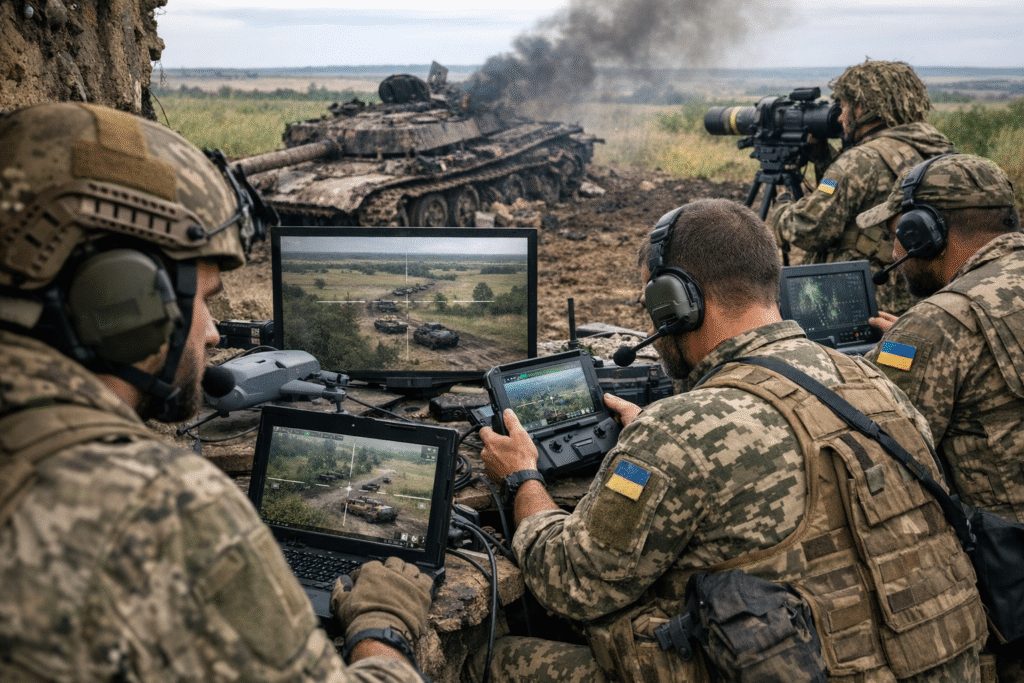
With the shortage of infantry, Ukraine has seen a surge in its utilization of drones, armored vehicles, and artillery systems, all playing a crucial role in countering Russian advances. The integration of these technologies into Ukraine’s military strategy marks a notable pivot from traditional ground forces to machine-centric warfare. The adaptation reflects both a response to immediate battlefield requirements and a broader understanding of modern military engagements’ evolving nature.
The emphasis on technology over manpower underlines an emerging military doctrine that prioritizes precision, agility, and effectiveness over sheer numbers, adapting to the intricacies of contemporary conflict. Ukraine’s emphasis on drones, for instance, has provided significant tactical advantages, offering enhanced surveillance, intelligence-gathering capabilities, and precision targeting without endangering soldier lives.
This evolution underscores a broader theme in modern military science, where technology serves as both force multiplier and equalizer, enabling nations with limited resources to potentially rival more formidable adversaries. However, this shift also brings inherent challenges. The integration of advanced systems demands significant training, technical support, and financial investment, all of which can strain a nation’s resources. Moreover, reliance on technology presents vulnerabilities, such as the risk of cyberattacks or technological failures that can have devastating repercussions on the battlefield.
Ukraine’s military transformation also holds implications for its allies and international partners. As Western nations continue to support Ukraine, this shift necessitates a reevaluation of military aid, focusing more on technological assistance, expertise, and capacity-building rather than just traditional weaponry.
This ongoing transformation within Ukraine’s military strategy stands as a testament to the resilience and adaptability of its armed forces amidst an enduring and arduous conflict. It signals a noteworthy shift in military doctrine, one that embraces technology not merely as a supplemental tool but as a cornerstone of operational strategy. As this conflict endures, Ukraine’s experience may serve as a template for other nations grappling with similar military challenges in the twenty-first century.