“US Boosts Missile Support to Philippines, Alarms China”
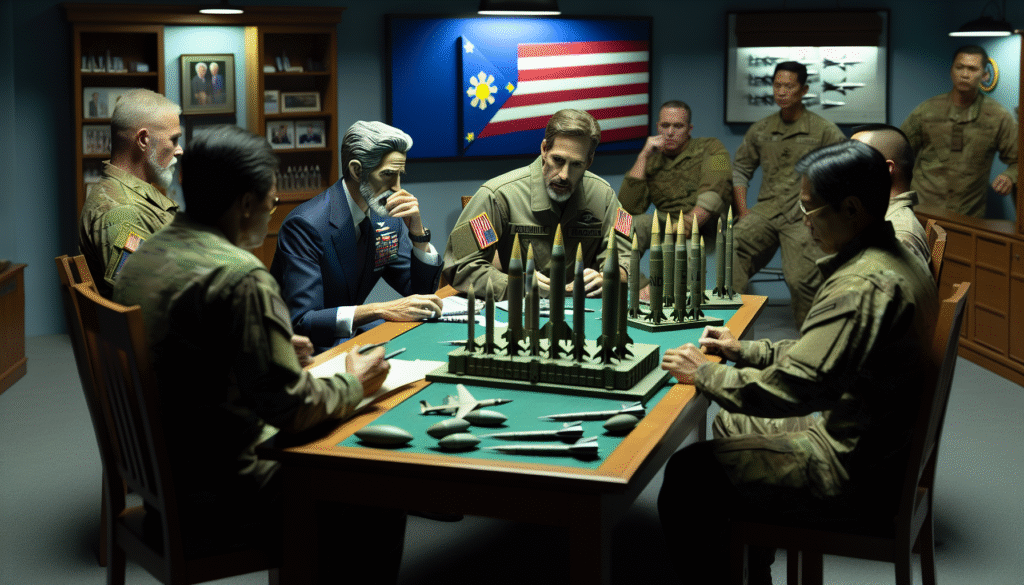
The United States has announced plans to supply additional missile launchers to the Philippines, a move that has drawn significant attention and concern from China. As reported in Military Times under the title “US to send more missile launchers to the Philippines, despite China’s alarm,” this decision underscores the deepening military collaboration between Washington and Manila, as both nations aim to bolster regional security amid rising tensions in the Asia-Pacific.
The decision to augment the Philippines’ arsenal comes against the backdrop of China’s growing assertiveness in the South China Sea, a critical maritime route rich in resources and strategic importance. Beijing’s expansive territorial claims and its construction of military installations on artificial islands in the region have alarmed neighboring countries and prompted the U.S. to reinforce its alliances in the area.
The deployment of additional missile systems is viewed as a clear signal of the U.S. commitment to fortifying its defense partnerships in Southeast Asia. This development follows the earlier transfer of defense capabilities, highlighting a trend towards increasing military support for the Philippines. The U.S. Department of Defense has emphasized that these efforts are aimed at enhancing the Philippines’ self-defense capabilities and ensuring stability in a region marked by complex geopolitical dynamics.
China has expressed strong opposition to these military enhancements, warning that such actions could inflame tensions and destabilize the region. Chinese officials have repeatedly called for dialogue and peaceful negotiations to resolve regional disputes, framing foreign military interventions as counterproductive to these efforts. However, the United States and its allies argue that a robust security presence is essential to counterbalance China’s military activities and deter potential conflicts.
The strengthened U.S.-Philippines defense ties come at a time when both nations are recalibrating their military strategies. For the Philippines, the bolstering of its defense systems through U.S. assistance offers a crucial deterrence factor, enabling it to better safeguard its interests and assert its sovereign rights in disputed waters.
Simultaneously, the move aligns with the U.S.’s broader Indo-Pacific strategy, which aims to promote regional cooperation and maintain open sea lanes, vital for global trade. The enhanced military footing in the region serves as a clear diplomatic message that the United States is committed to upholding international norms and supporting its allies.
As the situation continues to evolve, the international community is closely watching the developments in the South China Sea. The interplay of military deployments, diplomatic negotiations, and regional geopolitics will likely define the trajectory of security in this strategically pivotal area. If managed carefully, the collaboration between the United States and the Philippines could indeed serve as a stabilizing force, although it is undeniable that the balancing act amid rising tensions requires cautious and astute handling by all parties involved.