“US Army Prepares for Future European Conflict Challenges”
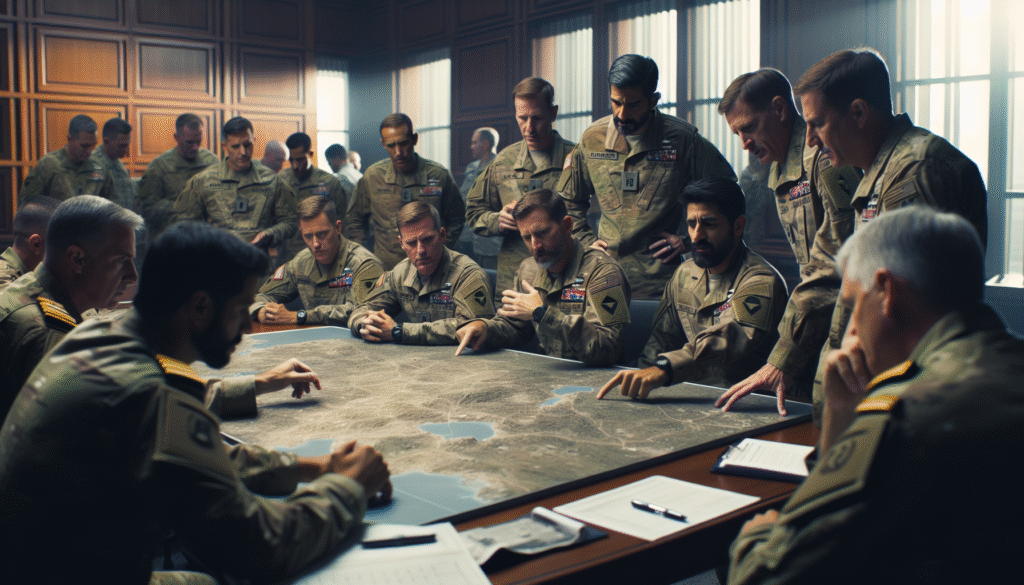
In a bold assessment of potential future conflicts, U.S. Army leaders have outlined the staggering challenges that may lie ahead for military operations in Europe. According to a recent article titled “US Army leaders say future European fight could mean 1,500 targets daily,” published by Military Times, military strategists anticipate an unprecedented scale of engagement that demands critical innovation and readiness in tactics and technology.
The announcement underscores the evolving nature of warfare, where the complexity and scope of operations are intensifying. Army Commanders expect that in future conflicts, such as a possible large-scale confrontation with near-peer adversaries, the U.S. Army could be required to manage and neutralize around 1,500 targets each day. This daunting projection reflects a considerable expansion in the operational tempo compared to previous conflicts, driven by advanced enemy capabilities and the vast array of threats that modern militaries face.
The discussion took place during military strategy briefings, where leaders emphasized the importance of preparing for high-intensity conflicts in Northwestern Europe. These scenarios are marked by rapid advances in technology and communication that have altered the battlefield landscape dramatically. The potential for asymmetric threats, cyber warfare, and the extensive use of unmanned aerial systems has redefined how military power must be projected and sustained.
U.S. Army officials have been vocal about their efforts to adapt to these changes. The necessity for rapid decision-making is apparent as military strategists push for enhancements in the Army’s capacity to execute integrated, multi-domain operations. This includes the utilization of space-based assets for surveillance, reconnaissance, and precise targeting, which are integral to addressing the anticipated operational demands.
A significant focus is also placed on logistics and resource allocation. With the potential for high daily target counts, the Army is investing in innovative logistics solutions to ensure sustained operations without faltering under the weight of demand. Agile and flexible supply chains, bolstered by artificial intelligence and autonomous systems, are being considered to maintain efficiency and effectiveness.
Training programs are being expanded to incorporate scenarios that simulate intensive target handling, preparing personnel for the stress and complexity of such operations. Adapting to the mental and physical demands of modern combat is necessary to enhance resilience and proficiency among troops.
Furthermore, U.S. Army leaders are advancing international collaboration with allied forces to bolster regional security and readiness. By strengthening partnerships, the Army aims to create a unified front capable of deterring aggression and executing coordinated responses to conflicts in Europe and beyond.
In conclusion, the discussion highlighted in the Military Times article illuminates the Army’s intensive focus on preparing for future European confrontations. As military leaders strategize to meet these challenges head-on, the emphasis remains on leveraging technological innovation, fostering international alliances, and maintaining a state of readiness that matches the potential scale and scope of modern warfare. These efforts are vital in securing peace and stability amidst an increasingly complex global security environment.